
Introduction
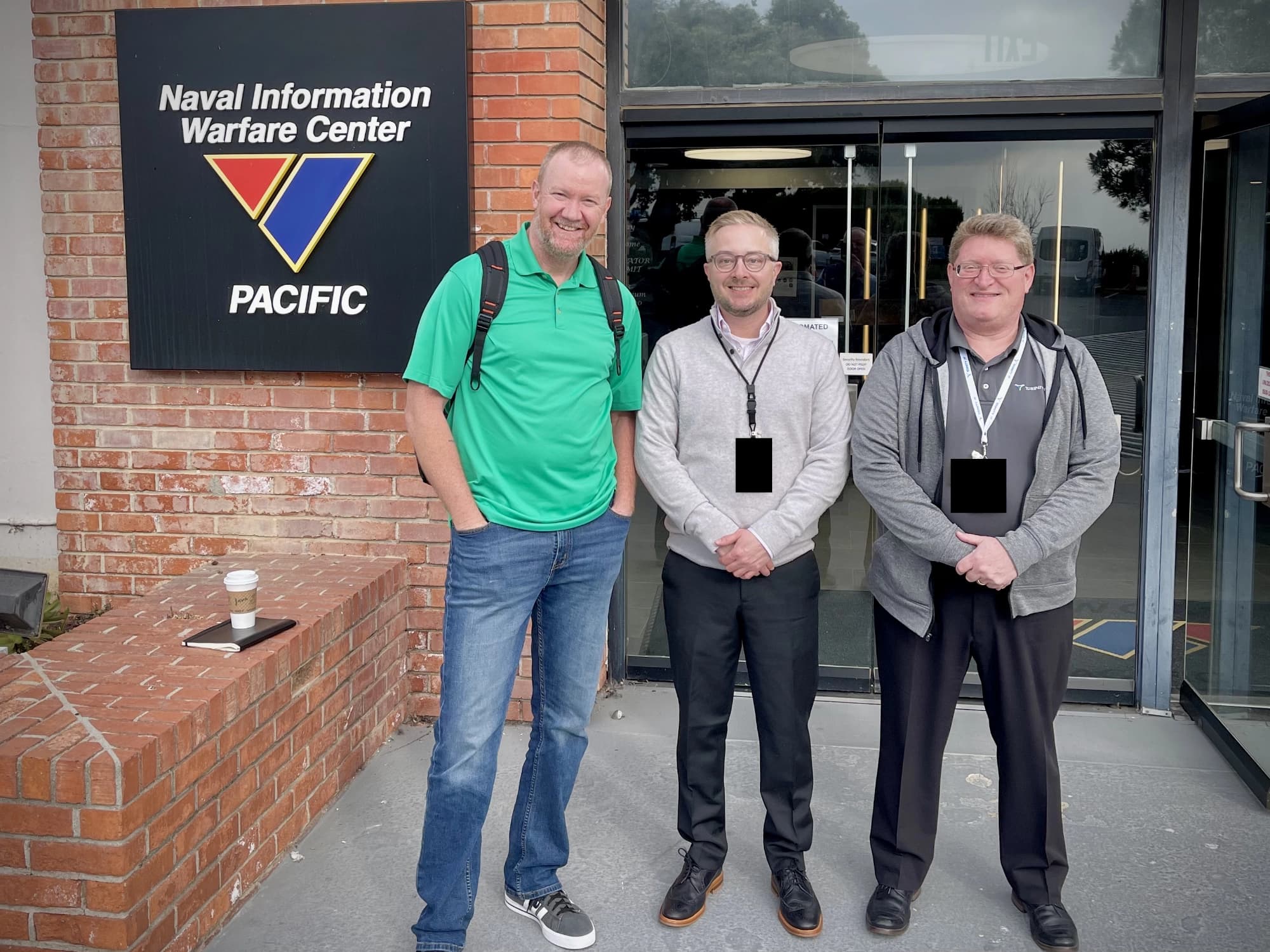
The Naval Information Warfare Center Pacific (NIWC-PAC) is a hub for developing cutting-edge technologies that support U.S. military warfighters and our allies. With a deep-rooted commitment to preserving national security, the center has been at the forefront of leveraging information technology to meet the challenges of modern warfare for over 80 years. The rapid evolution of technology demands constant innovation, and NIWC-PAC rises to the challenge by organizing its efforts around five strategic focus areas: Culture, Think Big, Go Fast, Think Warfighter, and Go Tough.
I recently had the opportunity to visit NIWC-PAC's headquarters to learn about the exciting projects and research happening within the Intelligence, Surveillance, and Reconnaissance (ISR) and the Command & Control and Enterprise Engineering (C2E2) departments. As a member of the Cyber / Science and Technology (S&T) department, this visit allowed me to explore how our team could collaborate across NIWC-PAC's departments to better meet the needs of today's warfighters. By aligning with the NIWC-PAC strategic focus areas, we aim to accelerate innovation and enhance our capabilities, ensuring that we continue to provide the tools needed for the battlefield of tomorrow. This visit exemplified these focus areas.
The reflections and summaries I've shared stem from my personal experience and do not reflect the opinions of my employer or others.
Culture
Inspire a culture of agility, innovation, and high performing teams.
During this visit to NIWC-PAC headquarters, I was struck by the vibrant culture that permeates the organization. From the moment I stepped into the badging office to the tours and leadership meetings, everyone was welcoming and passionate about their work. It was a pleasure to engage with teams from Old Town Campus to Topside, Seaside, and Tidepools; each person displayed an enthusiasm that was both contagious and inspiring.
I had the opportunity to meet some key leaders at NIWC-PAC, who graciously took time out of their busy days to chat with us "Philly guys" about our projects and work. It was clear that collaboration was at the heart of their culture, with individuals and teams eager to connect and empower each other to pursue excellence. The openness to share knowledge and insights was refreshing, making it evident that fostering a supportive and high-performing culture is a top priority for NIWC-PAC.
I recently wrote about the essence of "Organizational Culture", diving into its significance and impact. The post explores how some teams achieve a synergy that exceeds the sum of their individual contributions, while others falter due to ineffective culture. It provides strategies for fostering a positive culture and avoiding common pitfalls that lead to toxicity, showing how a well-nurtured culture can drive sustainable success and enhance employee well-being.
Think Big
Discover, innovate, and advance unmatched and disruptive technology.
At NIWC-PAC, I was captivated by the power of visionary storytelling. For over two decades, the center has been creating videos that imagine the world 20 years into the future. The latest video, Conflict 2043, was a prime example, brilliantly illustrating a world shaped by advanced technology and envisioning a future filled with innovation. The presentation was expertly delivered, capturing the audience's attention and motivating every project to align with the vision it portrayed.
The video wasn't just a glimpse into a distant future; it was a vivid depiction of what NIWC-PAC aspires to achieve. It was an engaging and inspiring call for every project to think big and work toward making this ambitious vision a reality. The production quality was exceptional, making us feel like we were witnessing a Hollywood blockbuster while sparking innovative ideas about how to achieve this vision.
The experience was incredibly motivational, and every NIWC-PAC employee and partner should book the Command Visioneer to present this. While I can't get into the details, it is well worth it, and I'm sure everyone will find something in it that pertains to their domain and interests.
For my team, it was a timely reminder of the importance of our own vision and inspired us to connect with new collaborators to help us bring it to life. The presentation ignited our creativity and reaffirmed the importance of thinking big as we strive to align with the center's vision for the future.
Go Fast
Be agile, innovative, disruptive, and risk tolerant to deliver capability at the speed of relevance.
The "Go Fast" mantra was powerfully brought to life during the NAVWAR Autonomy and Machine Learning Replicator Summit, led by RADM Doug Small and RADM Eric Ruttenberg. Both admirals captured the core of the center's culture while also challenging us to move fast, emphasizing the critical need for urgency. The Replicator initiative, which is part of a broader DoD effort spearheaded by Deputy Secretary Hicks, comes with significant funding—this is no hallucination, meaning requirements are backed by actual financial support.
The Replicator initiative is DoD's effort to accelerate delivery of innovative capabilities to the warfighter at speed and scale through senior leader focus on solving a specific operational challenge.
The summit didn't just paint a big picture of the threat; it outlined the actionable steps we must take to move quickly. The message was clear: we need to be agile, adopt new technologies rapidly and affordably, and iterate as we go. Taking calculated risks is essential to achieving this, and we need to do so without overspending. The old approach of developing exquisite solutions that take 5-10 years and millions of dollars simply won't work here.
I echoed these sentiments in my recent blog post, "Raindrops Keep Falling," where I stressed the importance of agility and innovation in delivering the right capabilities at the speed of relevance.
Think Warfighter
Be in the mind of the warfighter—to know the threats they face and the mission—in order to anticipate technologies and deliver systems that are easy to use and easy to maintain.
Both admirals emphasized the critical importance of experiencing firsthand the world of the warfighter—sensing their needs and challenges to develop empathy and understanding for their goals. Getting aboard a ship to observe, listen, and engage directly with the warfighters is crucial. This allows us to respond with relevant solutions and continue iterating based on feedback. This approach, which I've championed for over a decade, has been emphasized at the center in recent years with balanced, cross-functional product teams practicing user-centered design, lean principles, and agile mindsets.
Agile and DevOps offer a cadence of iterative delivery with the flexibility to adapt quickly. Lean principles help teams focus on what truly matters, while Design Thinking ensures the work done has real value. Lean emphasizes the importance of the Gemba, or "the actual place" where value is created. In our field, this means getting to the heart of operations and observing firsthand how technology serves warfighters.
This approach, often termed a "Gemba Walk," means stepping away from desks and conference rooms to witness the actual processes in action, understanding workflows, and learning directly from those on the ground. Michael Brenner identifies three key reasons for conducting these walks: clarifying purpose by learning why people are performing their tasks, understanding processes by observing the effectiveness of interdepartmental work activities, and engaging people to discover barriers that prevent them from doing their best work.
This is exactly what my team and I did during the time at NIWC-PAC that week. I took the opportunity to visit and tour multiple labs and project offices to understand what NIWC-PAC is building, researching, and experimenting with, and why it is so important. It was a valuable chance to see these innovative projects in action and learn from the engineers and researchers directly involved.
Our team met with one of the Data Scientists at Sea, who was looking for individuals to board ships and shadow warfighters to develop solutions tailored to their needs. This opportunity is incredibly exciting, and I quickly sought more information, knowing my team would be eager to participate. This type of direct engagement exemplifies the "Think Warfighter" ethos, aligning technology with the needs of those it is designed to serve.
Last year, I wrote a blog post titled "Site Visit: JAC Molesworth," where I detailed our visit to the Joint Intelligence Operations Center Europe (JIOCEUR) Analytic Center (JAC) in Huntingdon, UK. During our visit, we gained invaluable insights into the daily challenges faced by the JAC warfighters. Our goal was to deeply understand their needs and develop a product that truly aids them, transcending bureaucratic limitations. Drawing inspiration from Jennifer Pahlka's book, Recoding America, the trip underscored the importance of prioritizing user needs over government protocols. As we work to rebuild trust in governmental digital solutions, this visit reinforced the significance of empathy and genuine partnerships.
Go Tough
Deliver systems engineered to survive and win.
In the "Go Tough" focus area, we see the importance of delivering systems engineered to survive and win. A significant aspect of the Replicator initiative is the concept of "attritable" solutions, which means they should be expendable without compromising our capabilities or secrets. This requires a shift in mindset. If we lose a piece of technology, it should be designed so that the enemy can't gain any valuable intelligence from it, and our capabilities remain intact. Additionally, if these systems are cost-effective and rapidly producible, losing them won't have significant impacts.
We've set a big goal for replicator: to field attritable, autonomous systems at a scale of multiple thousands [and] in multiple domains within the next 18-to-24 months ... The 'replication' isn't just about production. We also aim to replicate and inculcate how we will achieve that goal, so we can scale whatever is most efficient, effective and relevant in the future, again and again.
During our lab visits, we witnessed how engineers and developers are incorporating fault tolerance, scrutinizing supply chains, and building MIL-Spec hardware into their designs. Toughness is embedded in the DNA of the warfighter, and our systems need to reflect this. We need to design solutions that can withstand harsh conditions and continue to support the warfighter whenever and wherever they need it, rapidly and at scale.
San Diego Tourism
San Diego is a city that never fails to charm, with its perfect weather year-round and a plethora of things to see and do. From the fascinating USS Midway Museum that takes you back through naval history to the vibrant life and scenic beauty of Mission Beach, there's something for everyone. And let's not forget the incredible food scene, where every bite is a reminder of the rich culinary diversity this city has to offer. San Diego never disappoints, offering a mix of history, coastal bliss, and delectable flavors that keep me coming back for more.
USS Midway Museum
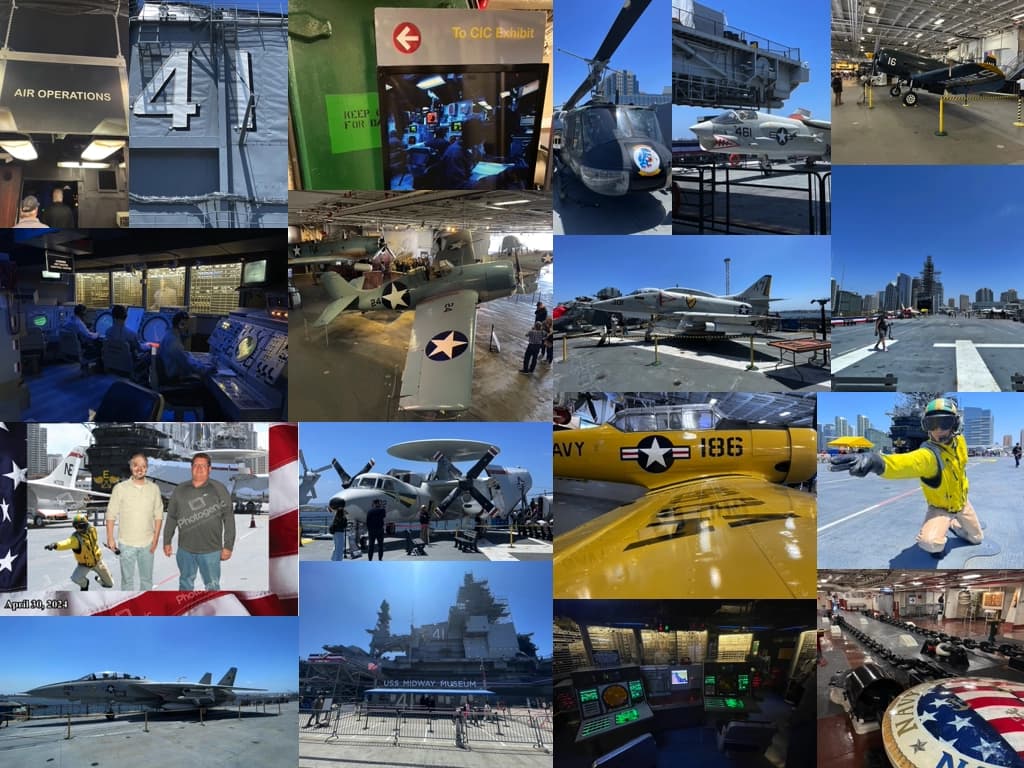
Visiting the USS Midway Museum in San Diego was like stepping into a living time capsule of naval history. Commissioned in 1945, the USS Midway served as a flagship during the Vietnam War and was actively deployed in Operation Desert Storm before becoming the incredible museum it is today. Standing on its deck, overlooking the San Diego skyline, you get a real sense of the vastness of this aircraft carrier and the impressive teamwork it takes to keep these massive machines operating.
One of the most captivating parts of the tour was exploring the Combat Information Center (CIC), where legacy systems on display were precursors to the technology we build today. The CIC is like the ship's brain, a nerve center where crucial decisions were made using radar systems, communication gear, and tracking equipment. Seeing these systems up close offered a humbling perspective on how far technology has come since the Midway's active years.
Exploring the ship further, I ventured into the berthing areas, which gave a glimpse of the cramped quarters where sailors once lived and slept. From there, heading up to the command center and then finally out onto the flight deck, where fighter jets, helicopters, and various aircraft are showcased, was awe-inspiring. The sight of these platforms, against the stunning backdrop of San Diego, showed just how crucial every inch of this vessel was for the operations it supported.
It's incredible to think of the coordination required to keep everything running smoothly - from the pilots who manned the aircraft to the deck crew managing takeoffs and landings. The sheer size of the ship and the complexity of its operations were truly impressive. The visit offered not just a glimpse into the past but also a deep appreciation for the innovation and teamwork that went into operating this iconic aircraft carrier.
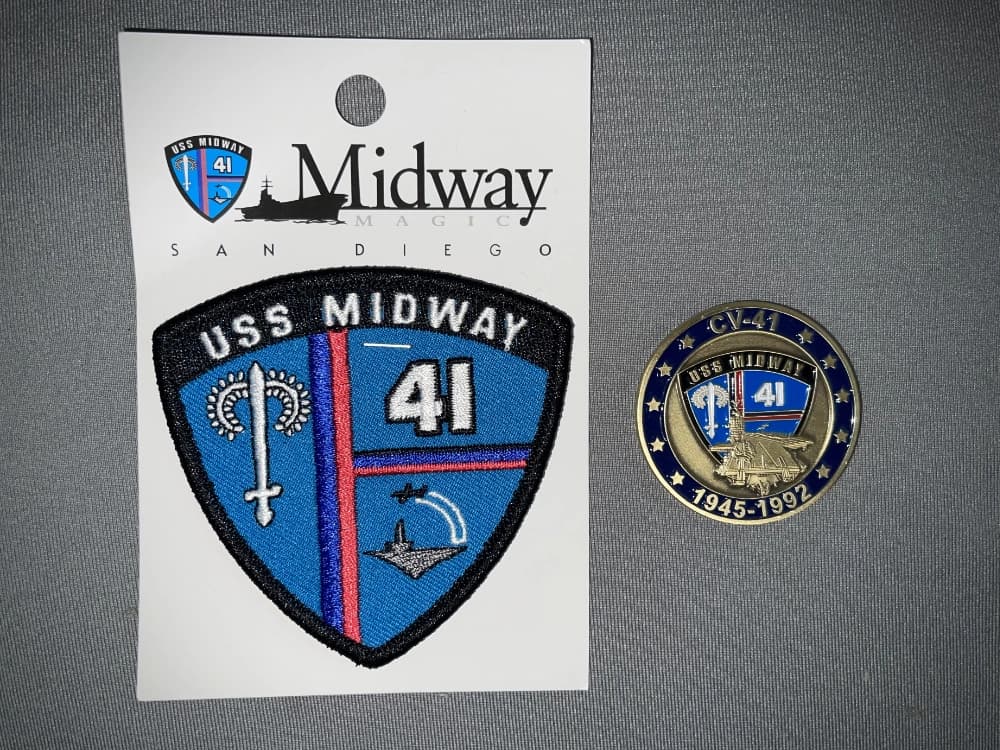
Before leaving, I couldn't resist picking up a little piece of history. I grabbed some merch, including a USS Midway patch and coin, as a reminder of this impressive naval landmark and the stories it holds.
Mission Beach
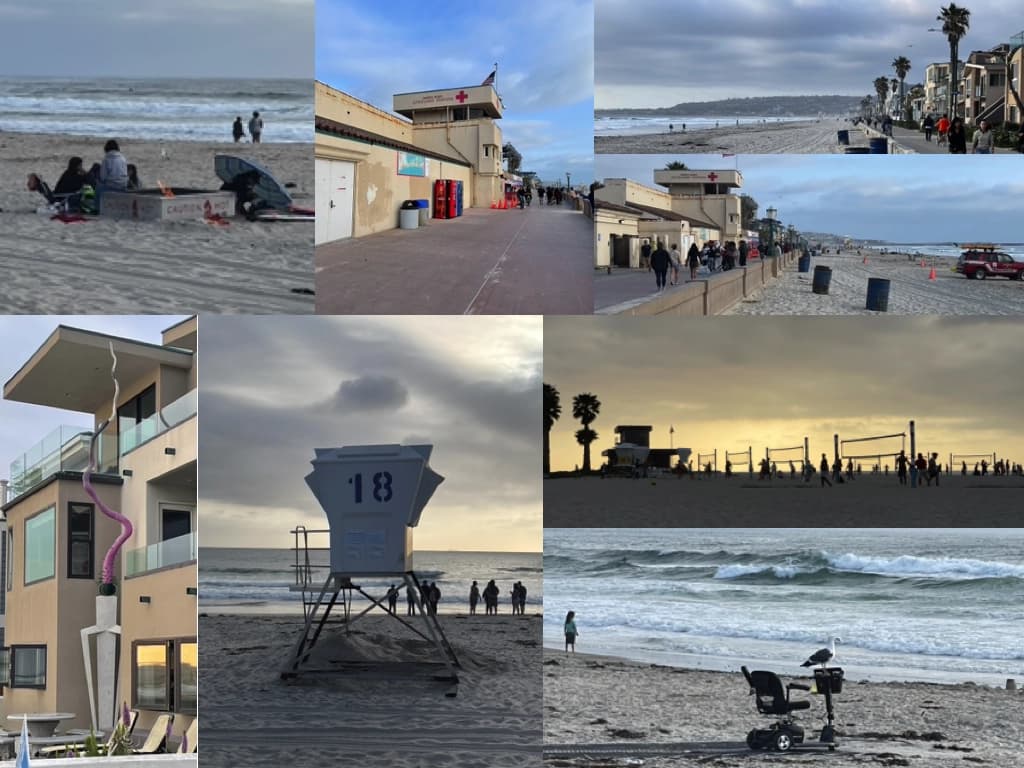
As someone who has visited San Diego more than 20 times, it's almost comical to admit that I hadn't set foot on a beach until this recent trip. Determined to change that, I made my way to Mission Beach, a classic California beach known for its lively boardwalk and vibrant surf culture.
Mission Beach, built on a narrow strip of land between the Pacific Ocean and Mission Bay, has a rich history as a popular destination for beachgoers since the early 20th century. Its iconic Belmont Park and the historic Giant Dipper roller coaster add to its nostalgic charm.
Walking along Mission Beach felt like entering a different world. The beach was buzzing with life - volleyball games in full swing, people lounging by the firepits, and surfers catching waves. The ocean breeze was perfect, just cool enough to keep you comfortable under the warm California sun. As I strolled along the boardwalk, soaking in the sights and sounds, I stumbled upon an intriguing sculpture that looked like something straight out of the movie Beetlejuice. It was quirky, slightly surreal, and had my team and I laughing.
Mission Beach, with its laid-back vibe and postcard-worthy views, was a perfect slice of coastal paradise. I'm glad I finally made the effort to experience this San Diego gem, adding another layer to my many memories of this city.
Food
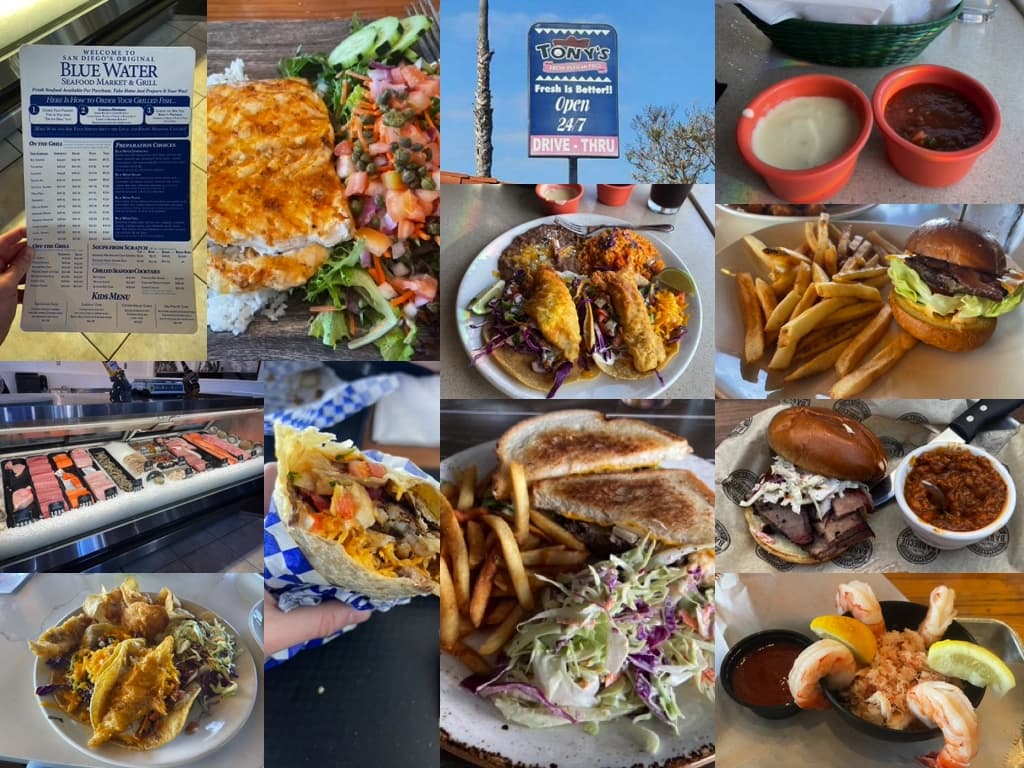
I swear I must have put on at least 10 pounds during this visit to San Diego, thanks to the incredible food. Every trip I make to this city involves a stop at Miguel's Cocina in Old Town, where I indulge in their fish tacos drenched in that creamy white sauce with jalapeños. I never leave San Diego without a taste of it.
Another highlight was dining at Ketch Grill and Taps and Brigantine on Shelter Island, both offering a beautiful view with delicious seafood. But a real standout was Tony's Fresh Mexican Food, tucked away on Rosecrans Street. My coworker, filled with nostalgia, took us there for the famous one-pound carne asada California Burrito stuffed with fries. He swears by this place and has a deep connection with it since his days stationed here when it was still called Santana's.
My new favorite, though, has to be Blue Water Seafood Market & Grill. Their chilled seafood cocktail with crab and medium shrimp was refreshing and flavorful. I followed it up with a plate of bourbon buttered local halibut that was absolutely delicious.
Over in Mission Beach, I found myself at Coaster Saloon (also known as Coasters), where I couldn't resist their BBQ Brisket sandwich with a side of coleslaw. The brisket was perfectly pink, juicy, and tender - a real treat for the taste buds.
Back at the Courtyard in Old Town, where I stayed, I grabbed a few meals at their Bistro, mainly breakfast. Their breakfast sandwiches were spot-on every morning, providing just the right kick to start each day in this food lover's paradise.
See the associated LinkedIn post.
Comments
To leave feedback or questions, simply login using your preferred social network. I will read and answer your comments promptly, but please keep in mind that they will be public.