

Introduction
In this post, we will delve into understanding what culture is and why it is so important. We'll explore why certain groups collectively exceed the sum of their individual parts, creating a synergistic effect, while others fall short, leading to diminished collective efficacy. We'll discuss strategies for nurturing a positive culture and highlight key pitfalls to avoid, particularly those that lead to toxic environments. The impact of culture is profound - it's a significant driver of employee turnover and plays a crucial role in shaping employees' perceptions and career choices.
Culture is, indeed, one of the most potent forces within any organization. Its presence is palpable in high-performing teams, just as its negative effects are unmistakable in toxic environments. This exploration aims to provide insights into how culture influences every aspect of organizational life and how its careful cultivation can foster sustainable success and enhance employee well-being. By understanding and harnessing the power of culture, organizations can unlock their full potential and create a thriving, productive workplace.
A Shared Ethos
Defining culture can be challenging due to its complex and multifaceted nature, and there isn't a universal model for its development and management. At its core, workplace culture shapes the collective mindset and actions of employees, providing context for an organization's mission, vision, and objectives. By deeply understanding the 'why' behind their roles, employees gain a sense of purpose and engagement, crucial for sustaining motivation and commitment. Therefore, investing time and effort in nurturing a positive and cohesive culture is essential for an organization's long-term success and resonance with both employees and customers.
Organizational culture is the pattern of basic assumptions that a given group has invented, discovered, or developed in learning to cope with its problems of external adaptation and internal integration, and that have worked well enough to be considered valid, and, therefore, to be taught to new members as the correct way to perceive, think, and feel in relation to those problems.
To grasp the abstract concept of organizational culture, imagine it as a specific creature. For example, picturing your organization as a wolf might indicate a culture of teamwork and collaboration, emblematic of a wolf pack's dynamics. Contrastingly, envisioning an eagle could reflect a culture that prizes independence and individual achievement. Think about how this creature behaves, adapts, and interacts, as these traits can reveal insights into your organization's approach to teamwork, change, and competition, providing a tangible way to understand and articulate the nuances of your workplace culture. Workplace culture is essentially an organization's personality.
The Bedrock of Organizational Performance
Culture, often acknowledged as the cornerstone of any organization, can be easily underestimated or overlooked. A critical warning in organizational management is that if you don't intentionally create a culture, one will inevitably form on its own, and it may not align with your vision or goals. This notion reflects the idea that culture is an organic and powerful force within any group or organization.
Exploring the intricate relationship between organizational culture and performance, a longitudinal study focusing on automobile dealerships provides compelling insights. The study's findings, as articulated below, challenges traditional views and emphasizes the significance of culture in driving performance.
Our study adds important evidence of a longitudinal culture-to-performance relationship to the research literature (Sackmann, 2011; Wilderom et al., 2000), indicating that higher intensity of positive organizational culture traits among automobile dealerships leads to greater customer satisfaction in later years. Moreover, culturally based gains in customer satisfaction led to small but reliable improvements in subsequent vehicle sales. On the other hand, no evidence of a performance-to-culture feedback loop was found, thus failing to support a reciprocal or reverse causality model. Therefore, in response to our initial causal priority question, we conclude from our study that it is culture that comes first, with performance levels to follow.
Understanding and cultivating a strong organizational culture is paramount due to its profound impact on various facets of business performance. Culture, characterized by the attitudes, behaviors, beliefs, norms, and shared values within a group or organization, significantly influences productivity, innovation, and profitability. It's the guiding force behind ethical compliance and a determinant of how effectively an organization executes its strategies and achieves its goals. Furthermore, culture serves as a key competitive advantage, distinguishing an organization from its competitors and embedding a unique identity. Culture is the bedrock of organizational performance.
The Driving Force Beyond Strategy
Culture eats strategy for breakfast.
Peter Drucker, a luminary in management theory, encapsulated the profound impact of culture with his statement, "culture eats strategy for breakfast." This quote highlights that culture is far more than just superficial benefits (e.g., foosball tables, fresh food, comfy chairs) or social gatherings (e.g., happy hours, pizza parties) in the workplace. It delves deep into how employees react during critical situations, their methods of handling stress, their approaches to overcoming challenges, and the way they interact with customers, partners, and each other. The essence of Drucker's words lies in the understanding that the real power of any strategic plan is inextricably linked to the team's cultural alignment. If team members do not embody the appropriate values and principles, even the most well-structured strategies are prone to failure.
Navigating Corporate Cringe - The Pitfalls of Forced Gatherings and Fun
Beware the pitfalls of 'corporate cringe,' especially in the form of forced gatherings and mandatory fun. While well-intentioned, these activities can sometimes miss the mark, leading to discomfort and disengagement among employees. Authenticity is key. It's crucial for organizations to understand their teams' dynamics and preferences. Forced fun can often feel inauthentic and may not resonate with everyone's idea of enjoyment or team bonding. Encourage genuine connections and foster a culture where employees feel comfortable and valued, rather than obligated to participate in activities that don't align with their interests or the company's core values. Remember, the best kind of team engagement is voluntary and arises from a true understanding of your workforce.
This perspective underscores that the true strength of any organization lies not in its strategic plans or policies, but in the attitudes, values, and behaviors of its people. A robust organizational culture, therefore, is not just a component of human resources; it's a strategic imperative for long-term success and sustainability. It's about creating an environment where the right culture flourishes, ensuring that the team's values align with the organization's goals and objectives. Neglecting to actively shape this culture risks the emergence of an undesired one, which can significantly derail an organization's path to success.
Defining Your Organization's North Star
Defining your organization's mission, principles, and values, along with establishing a North Star metric, is crucial as they significantly shape your organization's culture and provide measurable goals aligned with your long-term vision. It's important to recognize the distinction between values (what your organization believes in) and culture (how these beliefs are manifested in behaviors and decisions). Take time to reflect on your organization's current culture and values. Assess if they are effectively aligned and if they truly represent the direction in which your organization aims to move. This alignment is key to ensuring that your team's daily actions resonate with your overarching goals and principles.
Organizational Typologies

In the realm of organizational development, understanding different organizational typologies is crucial for fostering high-performance environments. This section delves into various models, including Westrum's organizational topologies, a framework that categorizes organizations based on their communication patterns and attitudes towards information flow. We'll also explore the traditional concept of bureaucracies, often characterized by rigid structures and hierarchical decision-making, and contrast it with the ideal of generative organizations. Generative organizations are lauded as the epitome of high performance, promoting open communication, adaptability, and a strong focus on mission and goals. By examining these typologies, I aim to shed light on how different organizational structures influence performance, employee engagement, and overall success.
Westrum Organizations
In their quest to define a measurable and predictive model of culture within the scientific literature, Nicole Forsgren, PhD, Jez Humble, and Gene Kim discussed the Westrum typology of organizational culture in their book "Accelerate: the Science of Lean Software and DevOps: Building and Scaling High Performing Technology Organizations." They discovered that many existing definitions of culture were intangible and not easily quantifiable. However, the Westrum typology, created by sociologist Ron Westrum in 1988 and detailed in his 2004 health industry paper, provided a well-defined and measurable model.
| Pathological | Bureaucratic | Generative |
|---|---|---|
| Power-oriented | Rule-oriented | Performance-oriented |
| Low cooperation | Modest cooperation | High cooperation |
| Messengers "shot" | Messengers neglected | Messengers trained |
| Responsibilities shirked | Narrow responsibilities | Risks are shared |
| Bridging discouraged | Bridging tolerated | Bridging encouraged |
| Failure leads to scapegoating | Failure leads to justice | Failure leads to inquiry |
| Novelty crushed | Novelty leads to problems | Novelty implemented |
Westrum classified organizations into three categories:
- Pathological (power-oriented) organizations, where fear and threat are prevalent, information is often hoarded or distorted for political gain.
- Bureaucratic (rule-oriented) organizations, which protect departmental interests and adhere rigidly to their own set of rules.
- Generative (performance-oriented) organizations, focused on mission and performance, where everything is subordinated to achieving organizational goals.
Bureaucracy: The Unintended Culture Crusher
Bureaucracy, often born from a desire for efficiency and order, can unintentionally erode the very essence of a vibrant workplace culture. It's a subtle yet powerful force that can transform an agile, dynamic environment into one that's rigid and stifling.
In a scenario where a company's culture subtly deteriorates, it often starts with a small team that operates in a high-trust, low-process environment. In such a setting, mistakes are openly addressed and seen as opportunities for learning, fostering a strong sense of ownership among team members.
Whenever you have a team of people who are passionately committed to achieving a mission and who have the right skills and abilities, it's dangerous to bet against them, because they'll move heaven and earth to make it happen.
However, as the team grows, even slightly, this dynamic can shift due to a single incident. For instance, if a team member makes a minor error, it might lead to the implementation of new, more restrictive policies. This reaction is akin to the saying my coworker often uses: "One person shits the bed and now we all have to wear diapers." It humorously but accurately captures the overcorrection that sometimes occurs in response to a single mistake.
As a result of this overcorrection, the once nimble and autonomous team may find itself mired in a web of red tape. Procedures that used to be simple and direct now require multiple levels of approval, slowing down the pace of work and dampening enthusiasm. This tends to snowball. The very flexibility and freedom that once empowered employees and drove innovation are now curtailed, replaced by a culture of caution and conformity.
This shift can have significant consequences:
- Reduced Autonomy and Creativity: Team members may lose the ability to act independently and innovatively, as they now operate within a more rigid framework.
- Decreased Efficiency and Morale: The increased bureaucracy can lead to frustration and a decline in morale, as employees feel their ability to contribute effectively is hampered.
- Loss of Organizational Agility: The organization becomes less agile and slower to respond to changes and opportunities, potentially impacting its competitiveness and success.
- Security Risks from Complacency: A lax organizational culture can lead to serious security breaches, as complacency and inadequate supervision allow for the mishandling or unauthorized sharing of sensitive information.
Case Study in Organizational Culture and Security
A striking instance within the United States Air Force highlights the critical impact of organizational culture on security. An internal investigation led to the discipline of 15 Air National Guard members. The root cause? A "lack of supervision" and a "culture of complacency." This environment facilitated a 21-year-old airman's ability to share hundreds of classified documents online, underscoring how vital it is to maintain a vigilant and proactive culture in handling sensitive information.
For more details on this case, visit The Washington Post.
To prevent this cultural shift, organizations need to strike a balance between necessary oversight and maintaining the agility and openness that foster a vibrant workplace culture.
Fight bullshit and bureaucracy every time you see it and get other people to fight it too. Do not let the org chart get in the way of people working productively together.
Overcoming bureaucracy, especially in larger organizations, requires deliberate effort and strategic thinking. Here are some effective ways to reduce bureaucratic obstacles and foster a more dynamic and efficient work environment:
- Streamline Processes: Regularly review and simplify processes to eliminate unnecessary steps. This can involve automating routine tasks, removing redundant approval layers, and ensuring that procedures are clear and straightforward.
- Empower Employees: Grant team members more autonomy to make decisions within their area of expertise. This not only speeds up processes but also boosts morale and a sense of ownership among employees.
- Encourage Open Communication: Create an environment where feedback is valued and acted upon. Encourage employees at all levels to share their ideas on how to improve processes and reduce red tape.
- Focus on Outcomes, Not Just Procedures: Shift the focus from strictly adhering to processes to achieving desired outcomes. This allows for more flexibility and creativity in how tasks are accomplished.
- Promote a Culture of Trust and Accountability: Build a workplace culture where employees are trusted to do their jobs effectively without excessive oversight. Encourage accountability for results rather than just following processes.
- Implement Lean Management Principles: Adopt lean management techniques that focus on value creation and waste elimination. This approach helps in identifying and removing non-value-adding activities.
- Foster Collaborative Problem-Solving: Encourage teams to work together in identifying bureaucratic hurdles and finding practical solutions. Collaboration can often lead to more efficient ways of working.
- Leadership Commitment: Ensure that leaders at all levels are committed to reducing bureaucracy. Leaders should model the behavior they wish to see, demonstrating a commitment to efficiency and employee empowerment.
- Regular Training and Development: Provide ongoing training and professional development opportunities to help employees adapt to more efficient ways of working and to stay up-to-date with new tools and methodologies.
- Use Technology Wisely: Implement technology solutions that can streamline processes, improve communication, and reduce manual work. However, be mindful not to introduce technology as a band-aid for poor processes.
- Continuous Improvement: Adopt a mindset of continuous improvement where processes are regularly evaluated and improved. Encourage employees to be on the lookout for ways to do things better, faster, and more efficiently.
By implementing these strategies, organizations can combat the growth of bureaucracy and maintain a work environment that is agile, innovative, and responsive to change.
Discover additional solutions to the problems of bureaucracy in Rise8's insightful article, titled "Overcoming the 5 Major Problems of Bureaucracy."
Cultivating High-Performance Cultures
Westrum's research, particularly relevant in high-tempo and high-consequence environments like aviation and healthcare, noted that an organization's culture significantly influences information flow. Characteristics of effective information include being timely, answering necessary questions, and being presented in a usable format. He emphasized that good information flow is crucial for the safe and effective operation of organizations, particularly in technology sectors.
Key aspects of a generative organization include:
- Performance-Oriented: Emphasizing goal attainment, a generative organization aligns team efforts towards efficiency and mission success, such as using metrics-driven strategies to boost productivity.
- High Cooperation: Cross-functional collaboration, shared responsibility, and giving everyone a voice.
- Messengers Trained: Emphasizing blameless postmortems, removing fear, and encouraging problem-solving.
- Shared Risks: Promoting shared responsibility in quality, availability, reliability, and security.
- Encouraging Bridging: Breaking down silos and fostering informal communication.
- Failure Leading to Inquiry: Using failures as opportunities for learning rather than blame.
- Implementing Novelty: Encouraging experimentation and rewarding process improvements.
The DevOps Research and Assessment (DORA) Core collection, encompassing several years of study and proven metrics, underscores the significance of a generative organization culture. This high-trust, low-blame approach not only enhances software delivery performance, as highlighted in the 2023 Accelerate State of DevOps Report, but also boosts job satisfaction and facilitates the achievement of organizational goals. These findings collectively affirm that a healthy culture, as defined by the DORA research, directly contributes to an organization's profitability and success.
Developing a generative culture, as outlined in the Westrum model, often encounters specific pitfalls that can derail its successful implementation. One significant challenge is the lack of genuine commitment and understanding from leadership, which can result in superficial adoption rather than a deep, systemic change. Another pitfall is the resistance to change within the organization, where established norms and practices are deeply ingrained and employees might be hesitant to embrace new ways of working. Additionally, organizations often face the obstacle of siloed departments, where collaboration and open communication, essential elements of a generative culture, are hindered. Misalignment between the declared cultural goals and actual practices can lead to cynicism and a lack of trust among employees. Finally, without continuous evaluation and adaptation, efforts to develop a generative culture can become outdated, losing relevance and effectiveness in a rapidly evolving workplace environment.
To change culture, John Shook, a pioneer in Lean manufacturing, suggests that changing behavior is more effective than changing mindset initially. This approach aligns with the idea that actions and practices shape and reinforce organizational culture.
What my NUMMI experience taught me that was so powerful was that the way to change culture is not to first change how people think, but instead to start by changing how people behave — what they do. Those of us trying to change our organizations' culture need to define the things we want to do, the ways we want to behave and want each other to behave, to provide training and then to do what is necessary to reinforce those behaviors. The culture will change as a result.
To instigate real change in organizational culture, it's often more effective to focus on altering behaviors and practices before attempting to change thought patterns. This approach is akin to the principle of 'showing rather than telling'; it's the difference between demonstrating a functional product to a potential customer and simply presenting a PowerPoint on a proposed idea. Trying to shift someone's thinking without tangible actions or evidence can be challenging and often ineffective. It's the tangible changes in behavior and practice that provide a solid foundation for altering mindsets, much like how a working prototype can make a more convincing case than a theoretical presentation.
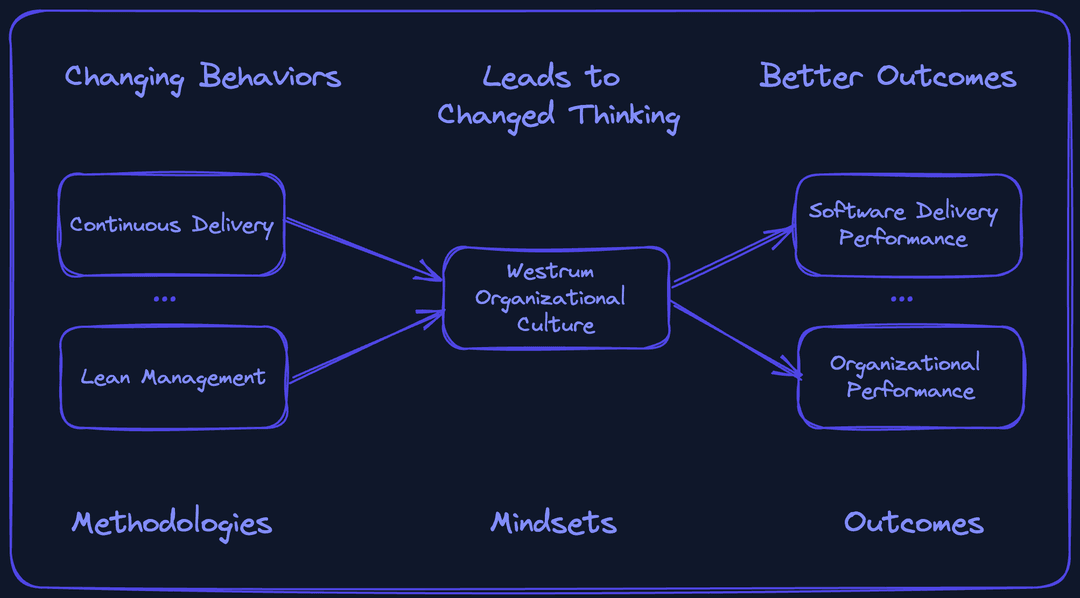
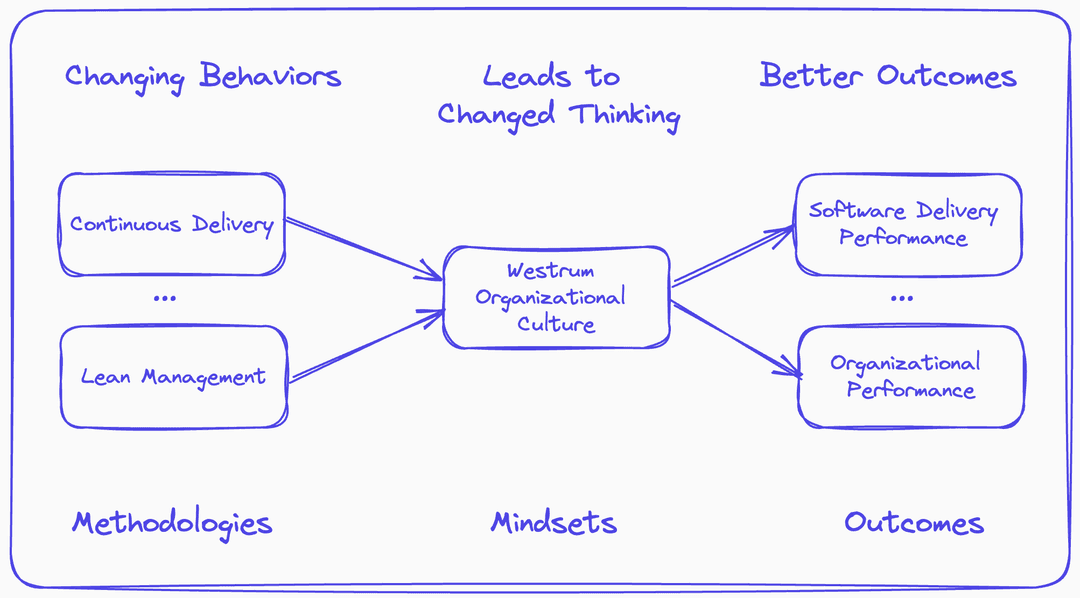
Incorporating the Westrum typology into our understanding of organizational culture provides a clear framework for assessing and shaping the dynamics within an organization, emphasizing the importance of information flow and behavior in creating a high-performing, collaborative, and innovative work environment.
Culture of Safety

In today's fast-paced and complex work environments, establishing a culture of safety is more than a compliance checklist; it's about building a workspace where people are empowered to think, collaborate, and innovate freely. The essence of a culture of safety lies in creating conditions where employees can perform their best without fear, recognizing that while our external environments have evolved, our brains are still wired to perceive and react to threats as they did thousands of years ago. Modern-day pressures, like the anxiety of missing a deadline, can trigger responses similar to those evoked by physical dangers in ancient times.
A comprehensive culture of safety encompasses several dimensions:
- Physical Safety: the shared belief that everybody is valued, respected, and included.
- Emotional Safety: the shared belief that all emotions are valid and the expression of any emotion is welcome.
- Psychological Safety: the shared belief that no one on the team will embarrass or punish anyone else for admitting a mistake, asking a question, or offering a new idea.
The concept of culture is a formidable force, shaping our perceptions and experiences in any organizational setting. We instinctively feel when a culture is nurturing or toxic. Central to shifting a culture towards safety is understanding the role of fear. Often, fear arises from the deep-rooted apprehension that our fundamental needs - for security, connection, and autonomy - might be threatened. Historically, workplaces, structured during the industrial revolution, were designed for efficiency in manual tasks, often overlooking the human element of creativity and emotional expression. This approach treated workers as mere cogs in a machine, stifling innovation and expression.
However, the landscape of work has dramatically shifted. The majority of modern work involves complex thinking and creativity. People are not just resources; they are creative, trustworthy individuals capable of contributing innovative ideas. They seek meaningful connections and wish to be seen as accountable yet human, capable of making mistakes. In such an environment, the best ideas can emerge from anywhere within the organization.
At its core, a culture of safety revolves around our inherent need for human connection. We are wired to bond with others, and it is this connection that gives us purpose and meaning. Building a culture that prioritizes safety requires courage and a willingness to step away from the familiar. It involves recognizing and harnessing the transformative power of our connections and the collective intelligence within an organization. As John Augustus Shedd famously said, "A ship is safe in a harbor, but that is not what ships are made for." Similarly, a workplace that prioritizes safety is not just about avoiding risks but about embarking on a journey of growth, connection, and innovation.
Project Aristotle
In 2012, Google embarked on a comprehensive study named Project Aristotle, aiming to decode the DNA of successful teams. This ambitious endeavor delved deep into the dynamics of team performance, challenging traditional assumptions about team composition and management styles. Led by Julia Rozovsky and extensively covered in Charles Duhigg's New York Times Magazine article, the study spanned over two years and involved 180 teams. It adopted a data-centered approach, focusing on identifying tangible factors that contribute to effective teamwork. This project was driven by Google's recognition of the evolving nature of work, where collaborative efforts have increasingly overshadowed individual tasks, making the understanding of successful team dynamics crucial in modern workspaces.
The whole is greater than the sum of its parts.
Initially, the Project Aristotle team hypothesized that factors like team composition, members' backgrounds, or their socializing habits might influence team effectiveness. However, their extensive analysis of 180 diverse teams across Google debunked these assumptions. Contrary to expectations, no specific pattern emerged that clearly distinguished high-performing teams from the rest based on these variables.
The Project Aristotle team identified several factors that were initially thought to be crucial but turned out to have less impact on team effectiveness:
- Team Composition: Simply assembling a team with high performers or experienced managers wasn't enough to guarantee success.
- Access to Resources: Having unrestricted access to company resources did not directly correlate with team performance.
- Collocation of Teammates: Teams being physically in the same location was not a significant factor.
- Consensus-Driven Decision Making: The method of making decisions, whether by consensus or not, wasn't a key determinant.
- Extroversion of Team Members: The individual extroversion levels of team members had little effect on team success.
- Individual Performance: The performance levels of individual team members did not directly predict the effectiveness of the team as a whole.
- Workload Size, Seniority, Team Size, and Tenure: These factors, often considered in team building and management, were not major predictors of team effectiveness according to Project Aristotle's findings.
The turning point in Project Aristotle came with the introduction of the concept of psychological safety. Psychological safety refers to a team environment where individuals feel safe to take risks and be vulnerable in front of each other. It's a space devoid of fear of embarrassment or retribution for admitting mistakes, asking questions, or proposing new ideas.
It describes a team climate characterized by interpersonal trust and mutual respect in which people are comfortable being themselves.
Psychological Safety and Learning Behavior in Work Teams by Amy Edmondson
In addition to psychological safety, Project Aristotle uncovered four other key factors that contribute to effective teams: dependability, structure and clarity, meaning, and impact. Dependability refers to team members reliably completing quality work on time. Structure and clarity are about having clear roles, plans, and goals. Meaning involves finding personal significance in the work, and impact is the belief that the work matters and makes a difference.
The study revealed that the effectiveness of a team is less about who is on the team and more about how the team members interact with each other. The key findings from Project Aristotle include:
- Psychological Safety: Team members feel safe to take risks and be vulnerable in front of each other. This aspect is crucial as it allows for open communication and innovative thinking without the fear of ridicule or backlash.
- Dependability: Reliability within the team, where members complete quality work on time, forms a foundation of trust and efficiency.
- Structure and Clarity: Having clear roles, plans, and goals ensures that everyone understands their responsibilities and how they contribute to the team's objectives.
- Meaning: Personal importance of the work to each team member, leading to greater engagement and dedication.
- Impact: The belief among team members that their work makes a significant contribution to the organization's goals.
Project Aristotle's findings are particularly relevant in today's evolving work environment, where remote work and virtual collaboration have become more common. The study found that the physical co-location of team members didn't significantly impact team effectiveness. What mattered more was the quality of interactions and the presence of psychological safety, whether in person or remotely.
A great site for reference material filled with valuable information on product management and team dynamics, which includes insights from Project Aristotle and Psychological Safety is Google's re:Work. However, please note that the website has recently undergone changes, including the redirection of its English content to the Japanese version. I remain hopeful that the comprehensive English content will be reinstated, despite their track record. Until then, you can use a browser's translation feature to access and understand the insights available on the Japanese version of the site.
Psychological Safety
Google's Project Aristotle unearthed a crucial revelation: psychological safety is the most significant factor contributing to a team's effectiveness. This discovery underscores the importance of cultivating an environment where team members feel confident and secure in sharing their thoughts and ideas without fear of negative consequences.
Psychological safety, as explored in Amy Edmondson's "The Fearless Organization," is about creating a culture where individuals feel they won't be punished or humiliated for speaking up with ideas, questions, concerns, or mistakes. It's a fundamental human need in workplace settings, vital for ensuring that employees feel comfortable expressing themselves openly.
Key aspects of psychological safety include:
- Modeling Openness and Vulnerability: Leaders and team members must demonstrate openness and vulnerability. This sets a precedent that it's safe to express doubts and concerns.
- Fostering Inclusion and Managing Conflict: Encouraging diverse perspectives and effectively managing disagreements are crucial for psychological safety. This approach helps in creating a balanced environment where different viewpoints are valued.
- Clear and Respectful Communication: Consistent, transparent communication is key. It's also important to ensure that all voices are heard and respected in discussions.
- Continuous Measurement and Improvement: Regularly assessing the level of psychological safety through surveys and feedback mechanisms helps in identifying areas of improvement.
- Creativity, Innovation, and Reduced Absenteeism: High psychological safety correlates with increased creativity, innovation, and a reduction in sickness and absenteeism.
It's important to recognize that psychological safety varies across teams and organizations. Therefore, leaders should continuously seek ways to foster this environment through team meetings, planning sessions, and one-on-one interactions. This involves listening deeply, acknowledging different viewpoints, and creating a space where failure is viewed as a learning opportunity.
The following diagram from Amy Edmondson's book illustrates the crucial relationship between psychological safety and performance standards in the workplace. It's important to note that psychological safety is not about lowering standards or creating a relaxed environment. Instead, it's about fostering an atmosphere where honesty and openness are valued, and where high standards are pursued alongside a supportive culture. This diagram categorically dispels the notion that psychological safety equates to leniency or diminished accountability. Rather, it emphasizes that psychological safety and high performance standards are two distinct, yet equally vital dimensions that collectively enhance team and organizational effectiveness.
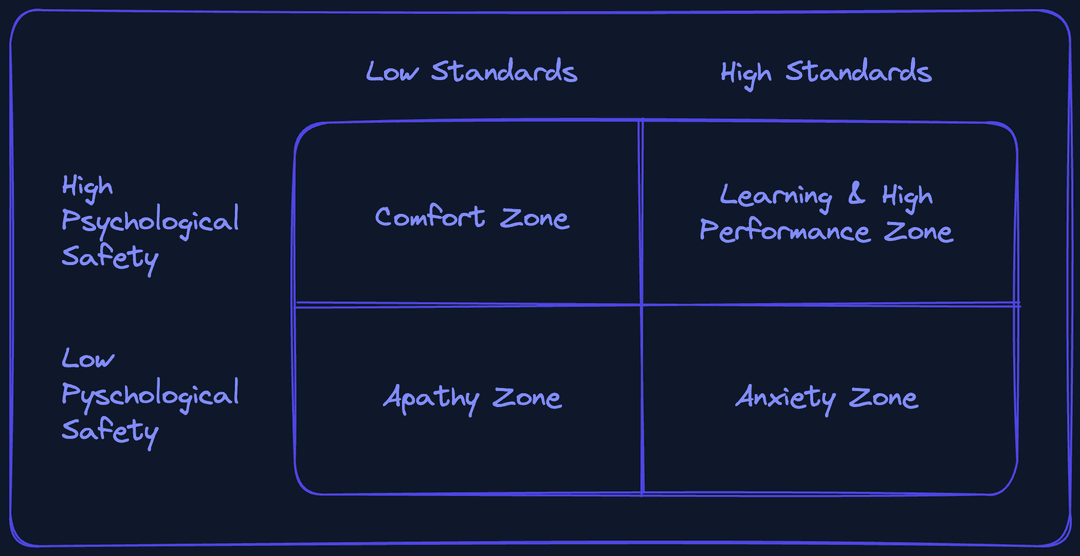
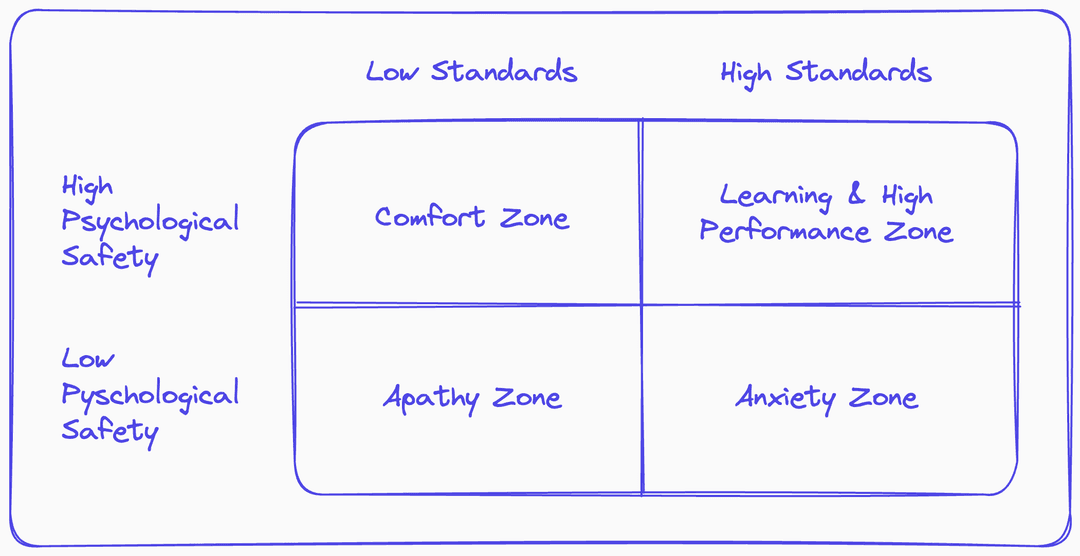
Incorporating insights from Timothy R. Clark's "The Four Stages of Psychological Safety," we can further enrich our understanding of creating a culture of safety within organizations. Clark's model provides a progression through different stages, each building upon the other to create a comprehensive environment of psychological safety:
- Inclusion Safety: This foundational stage ensures individuals feel safe, accepted, and valued for their unique qualities within the group. It's about fostering a sense of belonging where everyone feels included.
- Learner Safety: In this stage, employees feel comfortable engaging in the learning process. They can ask questions, seek feedback, experiment, and even fail without fear of retribution or ridicule.
- Contributor Safety: Here, individuals feel empowered to use their skills and abilities to make a meaningful contribution. They are confident that their efforts are recognized and valued.
- Challenger Safety: The highest level, where team members feel safe to challenge the status quo and advocate for change. This stage involves questioning established norms or authority to drive innovation and improvement.
Building psychological safety within an organization involves a variety of strategies:
- Fostering Open Communication: Encourage an environment where dialogue is open and everyone feels comfortable to speak up, ask questions, and share concerns.
- Leadership Engagement: Leaders must model vulnerability, acknowledge their own mistakes, and welcome feedback, creating a trickle-down effect of psychological safety.
- Creating a Learning Environment: Normalize the idea that perfection is not expected. Emphasize learning from failures and mistakes as a path to growth.
- Inclusivity in Decision-Making: Actively seek and value diverse viewpoints in decision-making processes to ensure a wide range of perspectives are considered.
Amy Edmondson's 'The Leader's Toolkit for Building Psychological Safety' offers practical strategies for leaders seeking to establish and maintain a psychologically safe workplace environment.
| Category | Setting the Stage | Inviting Participation | Responding Productively |
|---|---|---|---|
| Leadership Tasks | Frame the Work - Set expectations about failure, uncertainty, and interdependence to clarify the need for voice Emphasize Purpose - Identify what's at stake, why it matters, and for whom | Demonstrate Situational Humility - Acknowledge gaps Practice Inquiry - Ask good questions - Model intense listening Set up Structures and Processes - Create forums for input - Provide guidelines for discussion | Express Appreciation - Listen - Acknowledge Destigmatize Failure - Look forward - Offer help - Discuss, consider, and brainstorm next steps Sanction Clear Violations |
| Accomplishes | Shared expectations and meaning | Confidence that voice is welcome | Orientation toward continuous learning |
To measure psychological safety, tools such as surveys or anonymous feedback mechanisms can be employed. Edmondson's 7-item team survey is one such practical tool that helps gauge the level of psychological safety within a team. This measurement can provide critical insights into areas needing improvement and help track progress over time. Encourage your team to assess their agreement with each statement using a 7-point Likert scale, ranging from 'strongly disagree' to 'strongly agree'. This approach effectively quantifies their perceptions and attitudes. It's important to note that three statements are positively worded and three are negatively worded (indicated by 'R' for reverse). For accurate analysis, reverse scoring should be applied to the negatively worded items, converting higher scores to lower ones and vice versa.
- If you make a mistake on this team, it is often held against you. (R)
- Members of this team are able to bring up problems and tough issues.
- People on this team sometimes reject others for being different. (R)
- It is safe to take a risk on this team.
- It is difficult to ask other members of this team for help. (R)
- No one on this team would deliberatively act in a way that undermines my efforts.
- Working with members of this team, my unique skills and talents are valued and utilized.
In essence, building psychological safety in the workplace is centered on fostering an environment where employees feel valued and respected, and are empowered to contribute their best. It involves nurturing a sense of belonging and shared purpose, encouraging vulnerability and trust among team members. Such an environment not only elevates team effectiveness but also propels organizational success, as employees are inspired to engage fully and bring their whole selves to work.
Diversity, Equity, Inclusion, Belonging, and Accessibility

In the context of organizational culture, Diversity, Equity, Inclusion, and Belonging plus Accessibility (DEIB+A) are pivotal elements that contribute significantly to creating a vibrant, innovative, and high-performing workplace. Prioritizing DEIB+A is not just a moral imperative but a strategic one, as it enhances an organization's ability to attract and retain diverse talent. In today's workforce, employees are increasingly seeking out employers whose values align with their own, particularly in the areas of diversity and inclusivity.
It's not just something that has to be done because of some type of cultural ideology or culture wars that are going on — that's not the case at all. It is, again, not diversity for diversity's sake ... I want people to see [diversity, equity and inclusion] as another tool in the toolkit and another way of solving these problems.
To fully appreciate the impact and importance of DEIB+A within an organization's culture, it's essential to delve into the nuances of each component. These key aspects, while interconnected, stand unique in their contributions to fostering an inclusive and dynamic workplace:
- Diversity: This encompasses the rich array of differences in the workforce, including, but not limited to, variations in race, gender, religion, sexual orientation, disability, class, and cultural background. Embracing diversity means recognizing and valuing these differences as a source of strength and innovation.
- Equity: This involves understanding and addressing the unique challenges and barriers faced by individuals. Equity recognizes that equal treatment does not always result in equality of outcome and seeks to provide resources and opportunities tailored to individual needs.
- Inclusion: True inclusion goes beyond merely inviting diverse individuals to the table. It involves actively valuing, recognizing, and leveraging the talents and perspectives of all employees. It's about ensuring that everyone feels heard, valued, and given the opportunity to contribute meaningfully.
- Belonging: Belonging is the emotional and psychological result of effective DEIB+A efforts. It's the sense of security and support an individual feels when fully accepted and included in their authentic form within a group or organization.
- Accessibility: Ensuring that all environments, systems, and processes are designed to be accessible to everyone, including those with disabilities. This involves creating inclusive spaces and tools that accommodate a diverse range of physical and cognitive abilities, ensuring that every individual has equal opportunity to contribute, participate, and succeed in the workplace.
These elements, while interconnected, are distinct and should not be used interchangeably. The benefits of embedding DEIB+A into an organization's culture are profound. It leads to a more creative and innovative workforce, as employees who feel deeply respected and appreciated are more likely to share open, honest, and vulnerable ideas. This openness fosters a culture where innovation flourishes, and unique perspectives are not only welcomed but celebrated.
Simon Sinek, in his discussion on What Diversity & Inclusion is REALLY About, explains that diversity of thought is critical for success, as it challenges and motivates teams to excel. A strong DEIB+A focus in an organization's culture ensures that all team members feel they belong and are valued for their unique contributions. This sense of belonging and appreciation is critical in building a cohesive, collaborative, and resilient workforce. By embracing and integrating DEIB+A principles into the very fabric of organizational culture, companies not only enhance their appeal to a broader talent pool but also drive towards greater innovation, productivity, and ultimately, success.
Proven Benefits
In understanding the vital role DEIB+A plays in shaping an organization's culture, it's crucial to consider the research backing its importance. The significance of diversity and inclusion as a business priority is well-documented.
- Forbes' article, "Diversity Confirmed To Boost Innovation And Financial Results," supports this, stating that diversity is a key driver of innovation and directly correlates with better financial performance.
- Josh Bersin emphasizes in his article "Why Diversity and Inclusion Has Become a Business Priority," that diverse and inclusive companies are better positioned to adapt to rapid changes, innovate, and capture new markets.
- Research from Cloverpop highlights in "Diversity + Inclusion = Better Decision Making At Work" that inclusive teams make better business decisions up to 87% of the time.
- Additionally, Deloitte's insights on "The Workforce Well-Being Imperative" demonstrate how DEIB+A contributes significantly to employee well-being, leading to enhanced productivity and retention.
- Heather C. McGhee's TED Talk on "Racism has a cost for everyone" illustrates the broader societal impacts of exclusion and the benefits of embracing diversity.
- Books like "The Loudest Duck" by Laura A. Liswood, and "Belonging At Work" by Rhodes Perry, provide valuable insights into cultivating inclusivity and belonging in the workplace.
Moreover, Maya Angelou's poem "On the Pulse of Morning" beautifully encapsulates the essence of human diversity and the collective potential to create a better world.
We all should know that diversity makes for a rich tapestry, and we must understand that all the threads of the tapestry are equal in value no matter what their color.
Through these resources, we see a comprehensive picture of why DEIB+A is not just a moral imperative but a strategic one that directly impacts an organization's culture, innovation, decision-making, and overall success.
ODEI and DoD DEIA Strategic Plan
The Office for Diversity, Equity, and Inclusion (ODEI) operates under the Office of the Under Secretary of Defense (Personnel and Readiness). ODEI is dedicated to developing and implementing diversity management and equal opportunity policies and programs. This impacts active duty and reserve component military personnel, along with DOD civilian employees.
Additionally, the Department of Defense has outlined its commitment to these values in the Department of Defense Diversity, Equity, Inclusion, and Accessibility Strategic Plan 2022-2023. This strategic plan sets forth mission and vision statements, applies to the entire DoD workforce, establishes DoD-specific DEIA principles, and provides a roadmap for implementing DEIA goals and objectives. It also outlines the current maturity state of DoD DEIA efforts and the steps forward to enhance DEIA across the Department.
Finally, the Department of Defense (DoD) is committed to ensuring that all its digital and information technology is accessible to people with disabilities, in compliance with Section 508 standards. This commitment reflects the DoD's dedication to creating an inclusive environment where everyone has equal access to information and technology, irrespective of their abilities.
Embracing Uncertainty

Embracing a culture of continuous learning is crucial in today's ever-changing landscape, marked by constant uncertainty and the need for adaptability. This approach, highlighted in the book "Sense & Respond: How Successful Organizations Listen to Customers and Create New Products Continuously" by Jeff Gothelf and Josh Seiden, focuses on the importance of learning over mere delivery. In a traditional setting, organizations often concentrate on building and delivering products or services based on preconceived plans. However, this method risks creating offerings that may not align with evolving customer needs or market dynamics.
The most dangerous phrase in the language is, 'We've always done it this way,'
The essence of continuous learning lies in prioritizing exploration and understanding before committing to a specific path of action. It's about starting a dialogue with customers, using small-scale experiments and feedback loops to sense and respond to their needs, preferences, and behaviors. This approach significantly reduces the risk of investing in products or services that lack market relevance. By continuously learning from the market, teams can make informed decisions, adjust their strategies in real-time, and navigate through the fog of uncertainty with more confidence.
A culture of continuous learning acknowledges that uncertainty is a constant in business. Instead of rigidly adhering to plans, it values the process of questioning and discovery. This mindset requires a shift from traditional management styles, where long-term plans and fixed outcomes are the norms. In a learning-oriented culture, the focus is on flexible strategies and adapting to new information. This approach fosters a more dynamic, responsive, and innovative organizational environment, where teams are empowered to experiment, learn, and evolve in response to ongoing changes in the market and customer needs.
Fostering a Learning Culture
Continuous improvement is better than delayed perfection.
Embarking on the journey of continuous learning within an organization involves embracing seven fundamental elements, each playing a critical role in nurturing a culture that values growth, adaptability, and innovation.
- Humility: Recognizing the limits of our knowledge and being open to new insights and continuous learning.
- Permission to Fail: Creating a safe environment where risks are acceptable, and failures are viewed as opportunities for learning and growth.
- Self-Direction: Empowering individuals to take initiative and direct their learning journeys, based on the evolving understanding of their work and its impact.
- Transparency: Encouraging open sharing of information and insights, fostering an environment where learnings are disseminated and leveraged broadly.
- Bias Toward Action: Emphasizing the importance of action and experimentation as key drivers of learning and discovery.
- Empathy: Cultivating a deep understanding of customer needs and experiences, driving the development of solutions that deliver real value.
- Collaboration: Promoting teamwork and leveraging diverse perspectives to tackle challenges more creatively and effectively.
Growth Mindset
In the realm of organizational culture and personal development, the concept of growth mindsets, as popularized by psychologist Carol Dweck, stands out as a transformative approach. It contrasts sharply with the idea of a fixed mindset and has significant implications for both individual and organizational growth.
You don't stop learning because you grow old. You grow old because you stop learning.
A growth mindset, characterized by the belief that intelligence and abilities can be cultivated through effort, hard work, and learning, embraces challenges, perseveres through obstacles, learns from criticism, and finds motivation in others' success. This perspective is pivotal in fostering resilience and continuous learning, crucial for innovation and adapting to change. Conversely, a fixed mindset, which views intelligence and abilities as unchangeable traits, leads to avoiding challenges, giving up easily, seeing effort as pointless, disregarding constructive criticism, and feeling threatened by others' achievements. Such a mindset can hinder risk-taking and restrict both personal and professional development.
| Aspect | Fixed Mindset | Growth Mindset |
|---|---|---|
| Challenges | Avoids challenges, fearing failure | Embraces challenges as opportunities to learn |
| Obstacles | Gives up easily in the face of obstacles | Perseveres through difficulties |
| Effort | Views effort as fruitless or worse | Sees effort as a path to mastery |
| Criticism | Ignores or takes offense to criticism | Learns from criticism |
| Success of Others | Feels threatened by others' success | Finds lessons and inspiration in others' success |
| Belief in Abilities | Believes abilities are fixed traits | Believes abilities can be developed |
| Approach to Learning | Avoids learning due to fear of failure | Continuously seeks to learn and grow |
| Response to Failure | Sees failure as a limit of their abilities | Views failure as an opportunity to grow |
A growth mindset unlocks numerous advantages, enhancing personal and professional development in various impactful ways. Here are some key benefits:
- Enhances Learning and Resilience: Encourages continuous learning and adaptability, crucial in today's rapidly changing world.
- Fosters Innovation: Promotes creative problem-solving and openness to new ideas.
- Improves Collaboration: Leads to a more collaborative environment where ideas and feedback are shared openly.
- Increases Motivation and Achievement: Fuels a desire to learn and improve, leading to higher levels of achievement.
- Builds Persistence: Encourages persistence in the face of setbacks and challenges.
Adopting a growth mindset can profoundly impact an organization's culture, driving innovation, resilience, and a collaborative spirit that propels the organization forward. This mindset not only benefits the individual but also contributes significantly to the collective success and adaptability of the organization in an ever-changing business landscape.
Conclusion
As we conclude this exploration of organizational culture, it's important to reflect on the transformative power culture holds within any organization. From defining core values to shaping day-to-day interactions, culture is the invisible force that guides, motivates, and influences every aspect of organizational life.
Pragmatic Culture Building
Cultivating an organizational culture often requires navigating away from idealized theories or 'consultant speak,' especially in environments unlike early-stage Google, where unique circumstances played a significant role in shaping culture. While theoretical models and evidence-backed methodologies offer useful frameworks, they aren't universal solutions due to the dynamic nature of businesses. For example, many startups, particularly in fields like AI, often build effective cultures without strictly adhering to structured theories, relying instead on their inherent agility and responsiveness.
When beginning the journey of shaping your organization's culture, it's important to start small and be adaptable. Begin by identifying core values that resonate with your team and goals. Implement cultural initiatives in phases, starting with practices that align closely with your organizational goals and current culture. Regularly assess the impact of these changes and be prepared to pivot as needed. Gradually foster a culture of learning and experimentation, acknowledging that this is a process that evolves over time.
It's also crucial to avoid the trap of simply mimicking successful companies. Instead, focus on developing a culture that reflects your organization's unique context, challenges, and aspirations. Be wary of quick fixes and understand that real cultural change is a gradual, organic process.
Steering Clear of Cargo Cult Culture, Dogma, and Innovation Theater
Beware of falling into 'cargo cult' culture, dogma, and 'innovation theater' in your organization. Cargo cult culture arises when companies mimic successful practices without understanding their underlying principles, while dogma stifles creativity by rigidly adhering to established methods. Innovation theater focuses on appearances rather than real progress. These trends can lead to an ineffective culture and misaligned strategies, resulting in employee disillusionment. To combat this, foster a culture that values genuine innovation, adaptability, and critical thinking. True progress is achieved by understanding your organization's unique challenges and opportunities, not just by imitating others or being bound to past successes.
As your organization grows, maintaining and scaling culture becomes challenging. Ensure that the core values and cultural practices that worked at the outset are adapted and reinforced. Involve employees at all levels in shaping the culture and invest in training and orientation programs for new members that align them with your cultural values. Stay flexible and ready to evolve your cultural practices as the business landscape changes.
In conclusion, cultivating an organizational culture is a unique journey for each business. It's about balancing aspirational models with the realities of your specific environment. By starting with practical steps and being open to learning and adaptation, you can develop a culture that drives success and resonates authentically with everyone in your organization.
Key Takeaways
Here are the key takeaways from each section of our discussion:
- Introduction: Defining Culture and Its Impact on Performance - Culture is not just a part of the organization; it is the organization. It influences performance, innovation, and even the success of strategies. Understanding and cultivating the right culture is crucial for long-term success.
- Organizational Typologies: From Pathological to Generative Cultures - The research of Ron Westrum emphasizes the significance of organizational typologies. Moving away from bureaucratic models towards generative cultures is essential for nurturing high performance, adaptability, and innovation.
- Culture of Safety: Insights from Google's Project Aristotle - Psychological safety, a key finding of Google's Project Aristotle, is foundational for team success. Creating an environment where team members feel safe to express themselves fosters collaboration, innovation, and effective problem-solving.
- Diversity, Equity, Inclusion, Belonging, and Accessibility - DEIB and accessibility are not just moral imperatives; they are organizational strengths. Empirical evidence shows that embracing these principles leads to more creative, innovative, and effective organizations.
- Embracing Uncertainty: Cultivating a Culture of Learning and Experimentation - In a rapidly changing world, fostering a culture that values continuous learning, experimentation, and growth mindsets is vital. It enables organizations to adapt, innovate, and thrive amidst uncertainty.
In summary, an organization's culture is its lifeblood. It can either propel an organization to new heights or become a hindrance to its progress. Understanding, shaping, and nurturing the right culture is a continuous journey, one that requires commitment, insight, and a willingness to adapt and grow.
See the associated LinkedIn post.
Comments
To leave feedback or questions, simply login using your preferred social network. I will read and answer your comments promptly, but please keep in mind that they will be public.