
Introduction
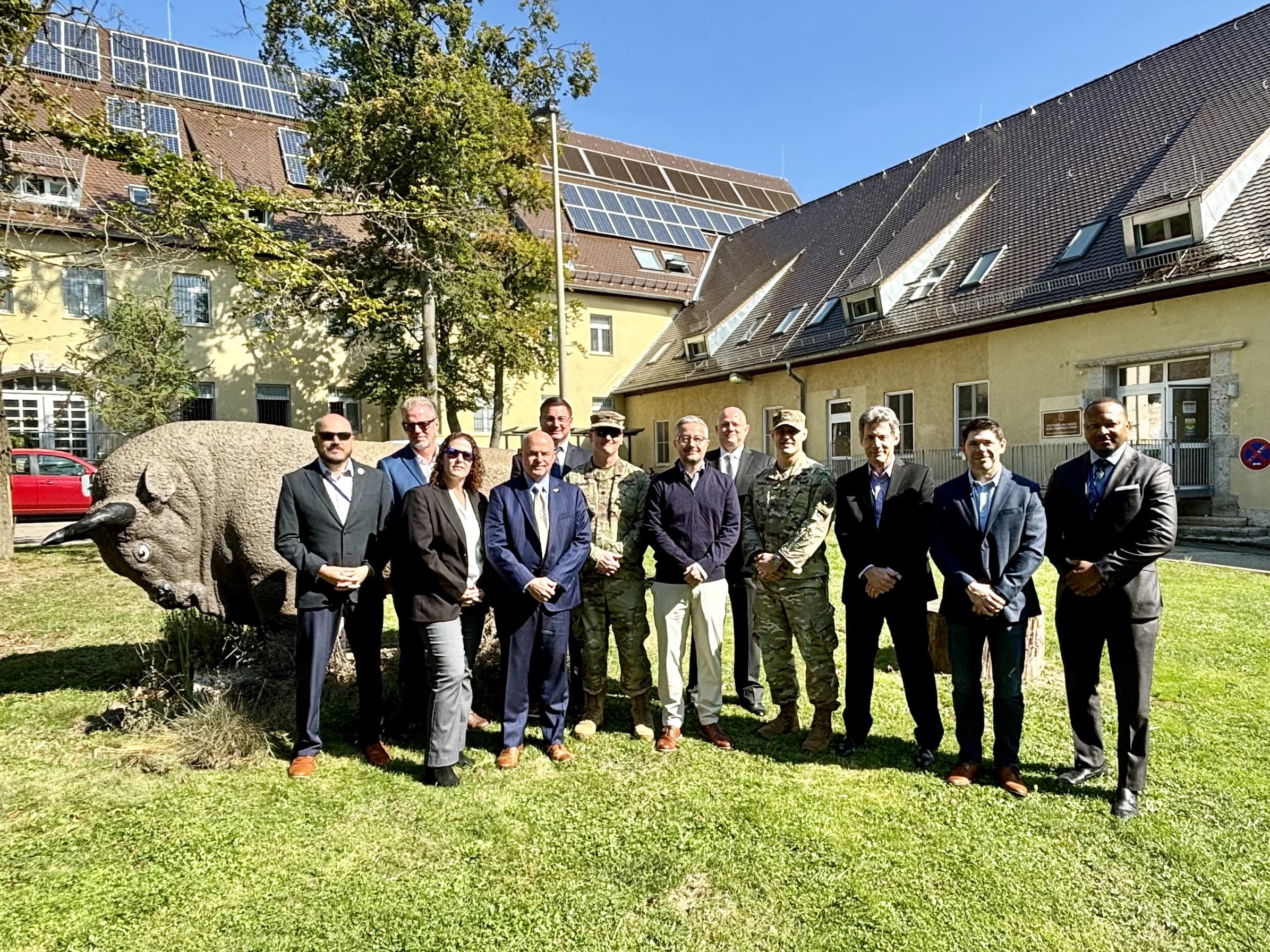
It was my first time in Germany, and as the plane touched down, I could feel the anticipation in my chest—something between curiosity and excitement. There's something about arriving somewhere entirely new, especially when it's tied to a mission that matters. Driving out of Stuttgart, the landscape opened up, rolling past us with bursts of autumn color and orderly stretches of farmland. Our team, made up of some of the best folks from the Joint Staff, was quiet but focused as we headed toward our destinations, weaving through small German towns and the open countryside.
The next few days would take us to military commands at the heart of operations and intelligence for Europe and Africa. I knew we'd be stepping into high-tempo environments and tight schedules, meeting the people responsible for critical decision-making. But as we pulled closer to our first stop, I wondered how all this training, knowledge, and technology would actually look in practice. What happens when theory meets the realities of world events and changing demands? It was time to find out.
Staff Assist Visit (SAV)
The Staff Assistance Visit (SAV) to Stuttgart, Germany, was a deep dive into the capabilities and readiness of United States (US) European Command (USEUCOM), the 603rd Air Operations Center (AOC), and US Africa Command (USAFRICOM) to manage the critical elements of the Common Operational Picture (COP) and Common Intelligence Picture (CIP). These visits are part of a series that the Joint Staff conducts year-round, assessing and supporting Combatant Commands (CCMDs) worldwide to enhance their situational awareness and operational readiness. Tasked under the directive of CJCSI 3151.02A, the SAV aims to ensure each command can meet the reporting standards outlined in CJCSI 3151.01D, evaluating everything from Manning and Training Requirements to Command Data Management and Security Implementation.
For this SAV, we had a talented, collaborative team of Joint Staff Subject Matter Experts (SMEs), including individuals from the J2, J3, J6, and J7 sections, each bringing unique expertise to the table. I had the privilege of representing the Joint Deployable Intelligence Support System (JDISS) office with the J2 team, learning firsthand from some of the best in the field. Their professionalism and dedication to improving capabilities across the commands were evident from the start. They weren't just there to check boxes; they wanted to share knowledge and make meaningful improvements that would support the mission at every level.
In the sections that follow, I'll share insights from our time with USEUCOM, the 603rd AOC at Ramstein Air Base, and USAFRICOM. Each stop offered a unique look into how these commands execute their CIP/COP responsibilities, adapting to ever-evolving requirements to support effective Command and Control (C2) operations.
United State European Command (USEUCOM)
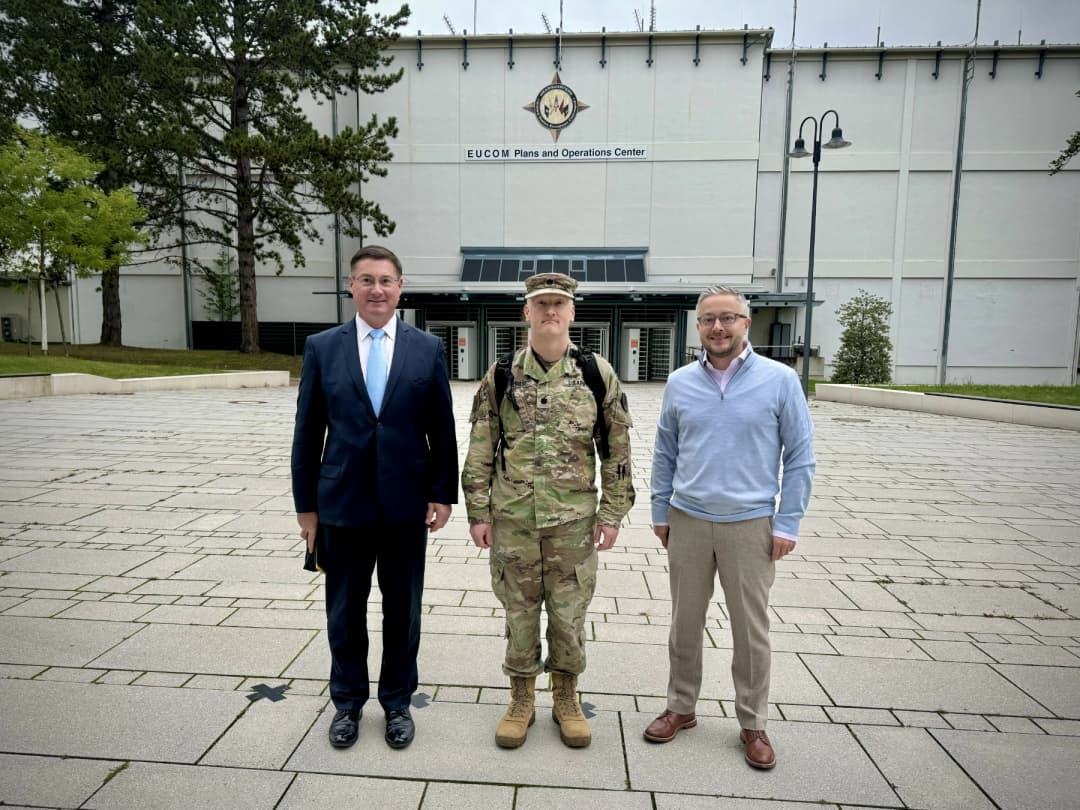
Nestled within Patch Barracks in Stuttgart, Germany, US European Command (USEUCOM) has a storied history dating back to its establishment in the post-WWII era, when it was created to oversee American forces in Europe and stabilize the region. Over time, USEUCOM's role has evolved significantly. Today, it is responsible for a diverse and expansive Area of Responsibility (AOR) encompassing 51 countries across Europe, the Caucasus, and parts of the Arctic, with a critical focus on supporting NATO and ensuring regional security.
USEUCOM's mission has taken on a new urgency amid Russia's ongoing invasion of Ukraine. As the conflict presses on, USEUCOM is tasked with not only supporting Ukraine through intelligence and logistical aid but also preparing to secure NATO's eastern flank, which is closer to Russian influence than ever. This tense security climate requires constant vigilance, rapid information-sharing, and strategic alignment with European allies to deter further aggression and maintain stability.
During my time with the European Command (EC) J2 team, we had engaging discussions on their Intelligence Support to Command and Control (ISC2) and targeting efforts. They gave me insight into their tools, workflows, pain points, and many recent successes. I observed the daily operations firsthand on the Joint Operations Center (JOC) watch floor during a command briefing, where intelligence and operational updates were presented, providing a comprehensive picture of ongoing activities. I also connected remotely with the Joint Intelligence Operations Center (JIOC) team in the United Kingdom, which underscored the seamless collaboration between USEUCOM and its allied partners across Europe.
One highlight was seeing a dedicated team of in-house developers creating and refining custom software solutions, tailored directly to the needs of commanders and warfighters. Their work underscores USEUCOM's commitment to adaptive, real-time solutions—turning around capabilities with remarkable speed and agility.
USEUCOM's partnerships are vital, particularly as it collaborates with NATO and allied forces to coordinate intelligence, strategy, and operational support. Though specifics are classified, it's clear USEUCOM has made impressive strides in recent years, continuously evolving to meet the demands of a complex and shifting security landscape. With a highly capable team, innovative approaches, and solid alliances, USEUCOM stands prepared to defend and support NATO forces and respond decisively should the need arise.
603rd Air Operations Center (AOC)
Nestled in the scenic German countryside, Ramstein Air Base has served as a pivotal hub for US air operations in Europe since its establishment in the early 1950s. Originally developed as a key site for NATO operations, Ramstein has grown into a strategic focal point for both the US European Command (USEUCOM) and US Africa Command (USAFRICOM). Within this historic base lies the 603rd Air Operations Center (AOC), the core of air component operations for both commands. The 603rd AOC is tasked with the vital mission of managing the air picture and supporting joint operations across two major theaters, seamlessly providing situational awareness and command and control for air operations spanning two continents.
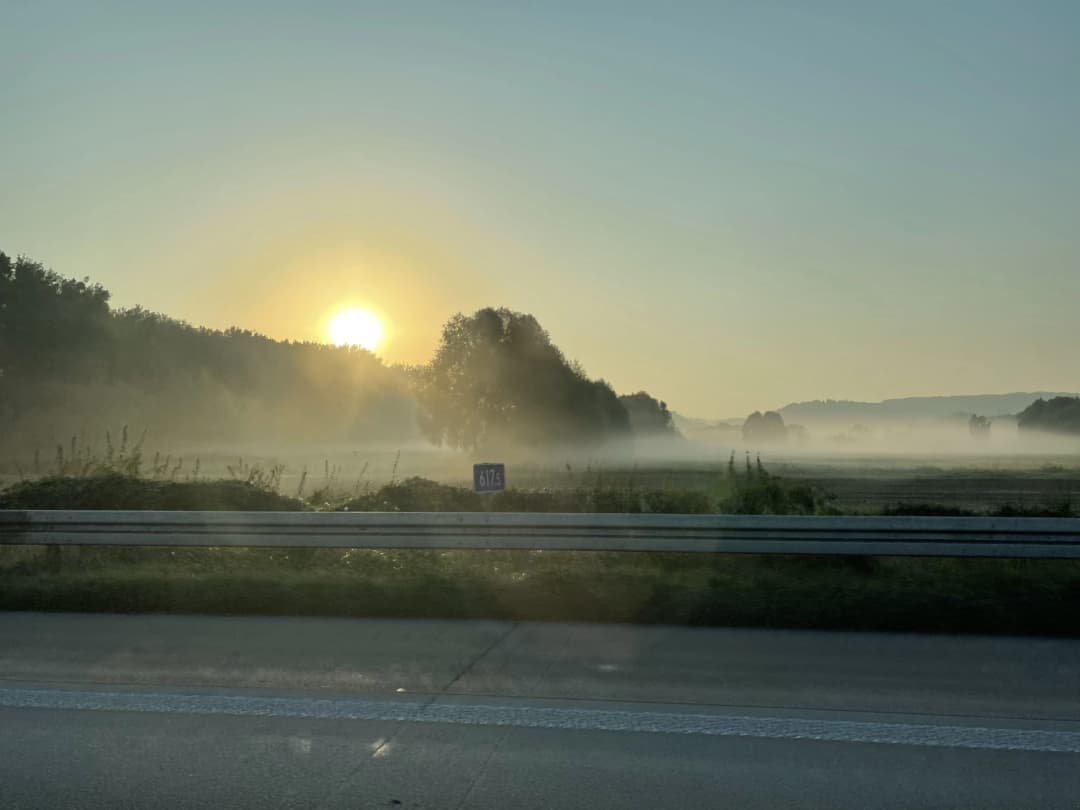
Driving over two hours from Stuttgart to Ramstein midweek, we took in views of the Rhine River and Germany's rolling countryside—a moment of calm before arriving at the high-tempo world of the 603rd AOC. Upon arrival, our subset of the Joint Staff team joined the watch floor, where we met with the team managing the air component's operations, witnessing firsthand how the 603rd AOC delivers the comprehensive air picture required by both USEUCOM and USAFRICOM.
We learned about their coordination with Distributed Common Ground System (DCGS), and their DGS units which are essential for analyzing and relaying critical intelligence and imagery to inform decisions. These units serve as the backbone of the 603rd's air intelligence capabilities, transforming raw data into actionable intelligence that enables the air component to provide real-time support to Combatant Commanders. The collaboration and precision needed to ensure a clear, accurate air picture were evident in every detail, from their workflows to the tools and technologies they use.
Seeing the 603rd AOC in action underscored its pivotal role in supporting both USEUCOM and USAFRICOM's missions. Despite the demanding operational scope, the 603rd AOC team displayed an impressive level of professionalism and adaptability. Their work ensures that commanders have the situational awareness needed to make informed decisions, protect allied airspace, and remain agile in the face of evolving threats—a testament to the dedication and capability that define the air component's critical mission at Ramstein.
United States Africa Command (USAFRICOM)
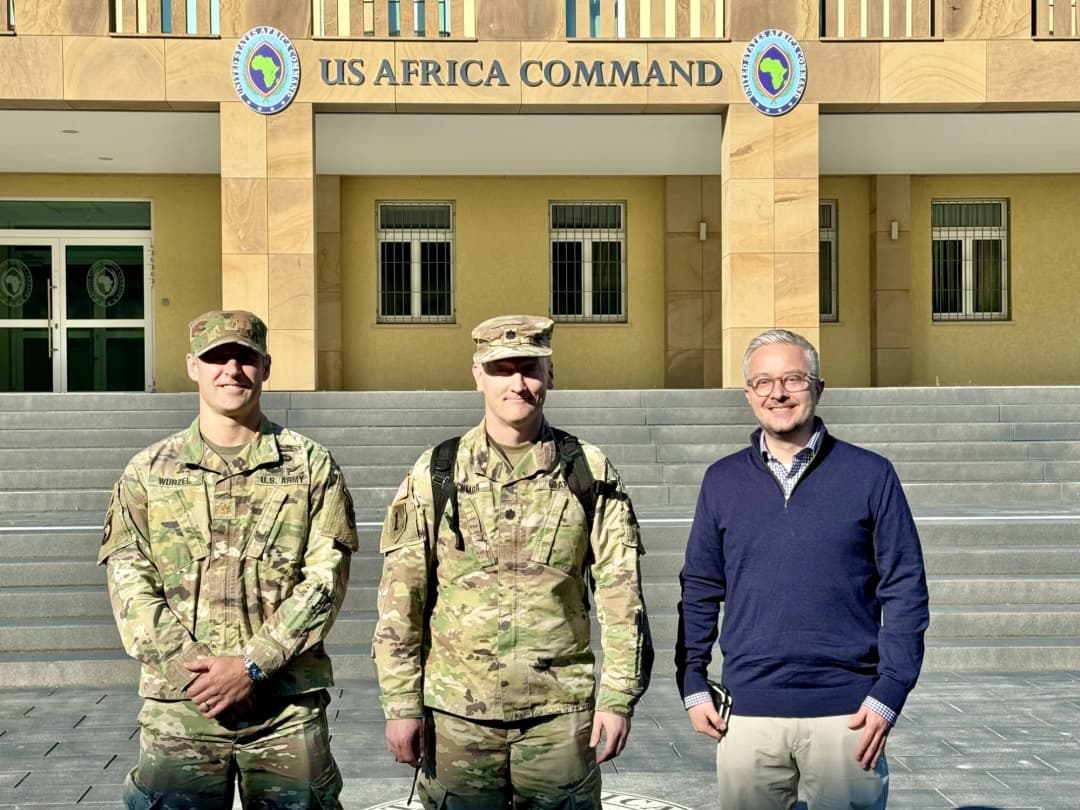
Located at Kelley Barracks in Stuttgart, Germany, US Africa Command (USAFRICOM) is a unique and dynamic Combatant Command (CCMD) established in 2007 to address security and stability needs across the African continent. Unlike other commands, USAFRICOM's mission is not solely about military power; it often involves partnerships with civilian agencies, foreign governments, and multinational organizations to address the complex security landscape of Africa. USAFRICOM's Area of Responsibility (AOR) spans 53 African nations and focuses on helping African partners build their own capacity to counter regional threats, promote stability, and respond to crises.
In recent years, USAFRICOM has been active in various conflicts and operations across the continent and beyond. In West Africa, USAFRICOM supports efforts against violent extremist organizations; in East Africa, the Combined Joint Task Force - Horn of Africa (CJTF-HOA) provides critical support amid regional instability, including threats from pirates in the Gulf of Aden and ongoing tensions in the Red Sea due to the conflict in Yemen. These issues highlight USAFRICOM's unique role, emphasizing intelligence-sharing, diplomacy, and coordinated action.
During our visit to Kelley Barracks, I was impressed by USAFRICOM's extensive Joint Operations Center (JOC) watch floor, a hub of activity where intelligence, operations, and real-time updates intersect to provide a comprehensive picture of the command's responsibilities. Our discussions with the Africa Command (AC) J2 team shed light on the challenges they face and the successes they have achieved. Given the complexity of their mission, USAFRICOM places a significant emphasis on Open Source Intelligence (OSINT) and relies on low and unclassified data-sharing to strengthen partnerships with allies and regional stakeholders. These requirements are paramount to their efforts in such a diverse and interconnected AOR.
Later, I had the privilege of sitting in on a briefing with Major General Tina B. Boyd, Deputy Director of Operations (J3) at USAFRICOM, where our team presented the SAV findings. Major General Boyd's insight into her command's successes, challenges, and needs was remarkable. Her leadership demonstrated a clear vision to elevate USAFRICOM's capabilities, showing a commitment to harnessing intelligence and operational support to bolster security across Africa. Her sharp understanding of the SAV findings underscored her dedication to driving USAFRICOM's mission forward, ensuring they are equipped for the complex tasks they face daily.
Swag
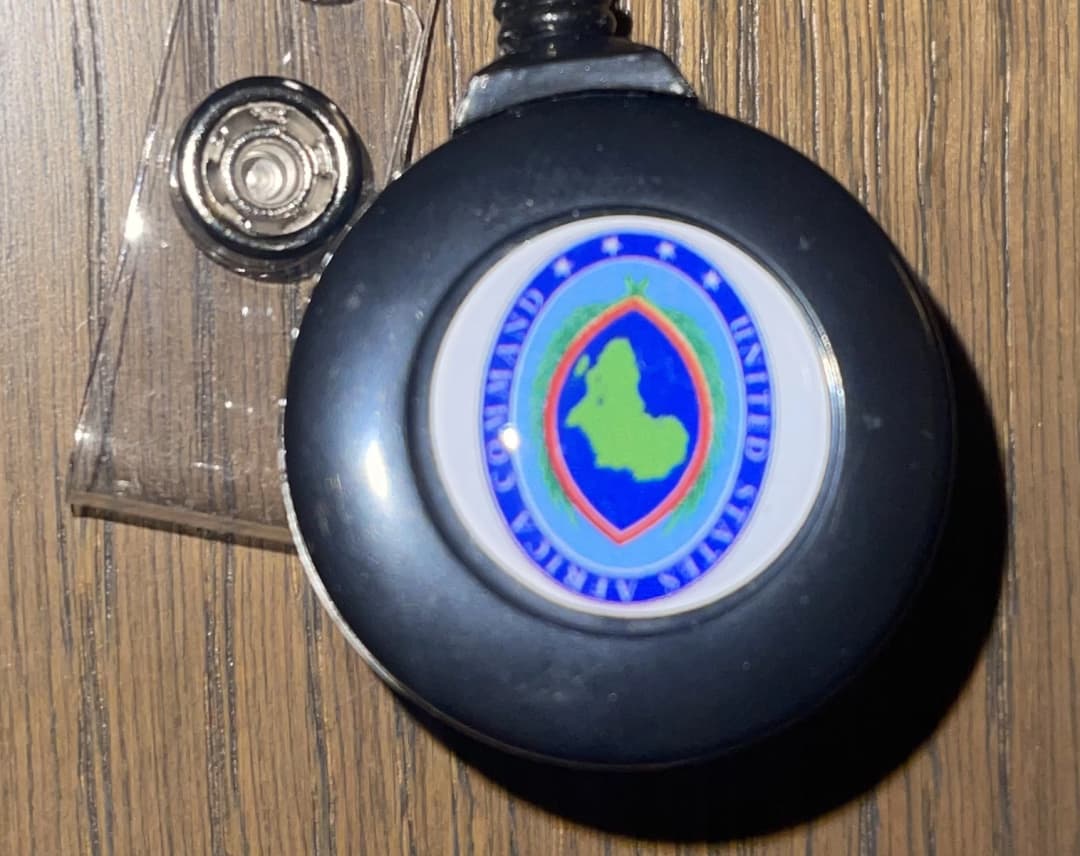
Every time I travel, I try to pick up a few pieces of swag along the way—small souvenirs that capture the spirit of the trip. This time, though, with work keeping me so packed, I didn't manage to gather much. In fact, my most notable souvenir from the trip was a retractable badge holder from USAFRICOM! Not exactly what you'd call a prized collectible, but hey, sometimes it's the small victories.
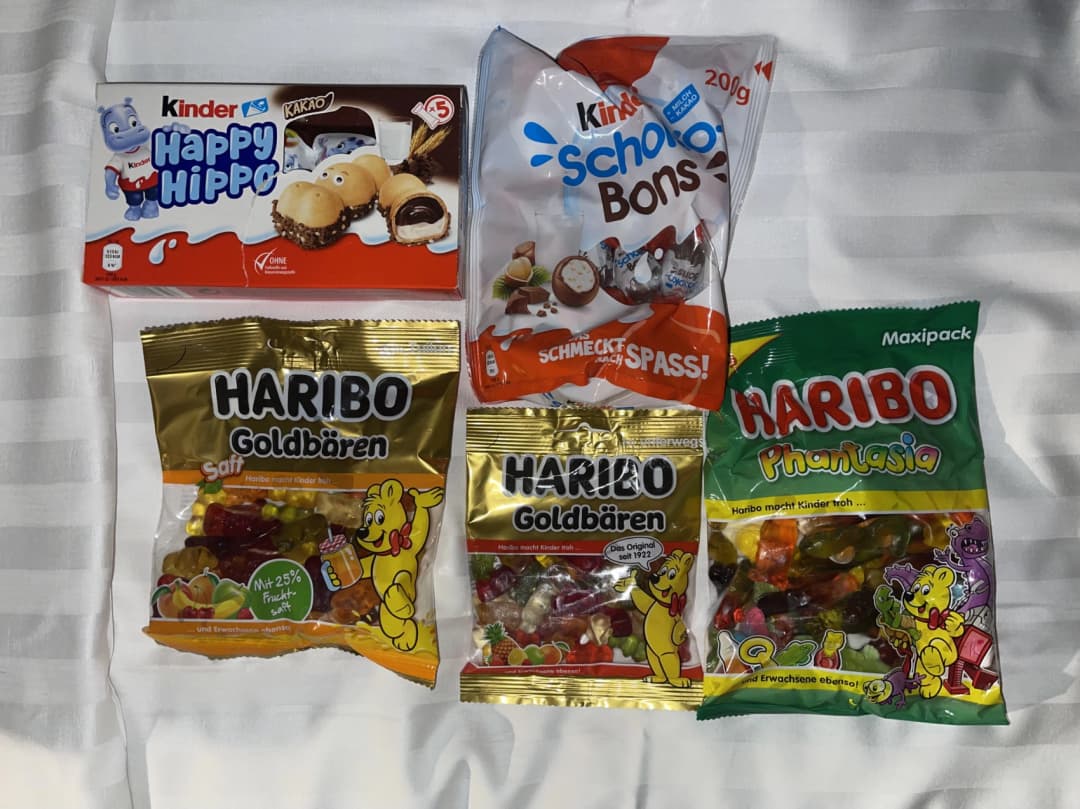
Even though my own swag haul was light, I made sure to bring back a few treats for my daughter. Germany is famous for its sweets, and I couldn't resist grabbing a variety of Haribo gummies (they make so many flavors over there that you can't find in the U.S.), along with Kinder chocolate and some fun little trinkets from my travels. One of my favorites was a small bottle of Nutella—a playful nod to the fact that even the candy and snacks in Germany feel healthier. They have much stricter regulations on food ingredients, banning many additives that are common in the U.S. I could taste the difference, even in the sweets.
So while I may not have a suitcase full of swag, I did bring back a piece of Germany's "healthier" approach to food for my daughter to enjoy, and a few memories of the treats I sampled along the way.
Stuttgart, Germany Tourism
While the main focus of our trip was fitting in Staff Assist Visits (SAVs) for not one but two major combatant commands, there were still moments where we managed to squeeze in some adventure. The schedule was packed, and downtime was limited, but that didn't stop a few of us from making the most of what Stuttgart and the surrounding region had to offer. Some of the team found their way to the serene Black Forest, while others explored castles, palaces, and monasteries that dotted the landscape. Even though we missed Oktoberfest by a week, the beer we did have was nothing short of excellent.
Though time for tourism was scarce, I made sure to carve out a couple of key experiences that left a lasting impression: visiting the iconic Mercedes-Benz Museum and driving out to Ludwigsburg for the whimsical Pumpkin Festival. Each outing offered a glimpse into the heart of Germany, from its cutting-edge automotive history to its quaint, festive traditions. And of course, I couldn't pass up the chance to explore the local food scene, where hearty Swabian dishes took center stage.
Here's a look at the memorable moments I managed to fit in between the work and the whirlwind schedule.
Mercedes-Benz Museum
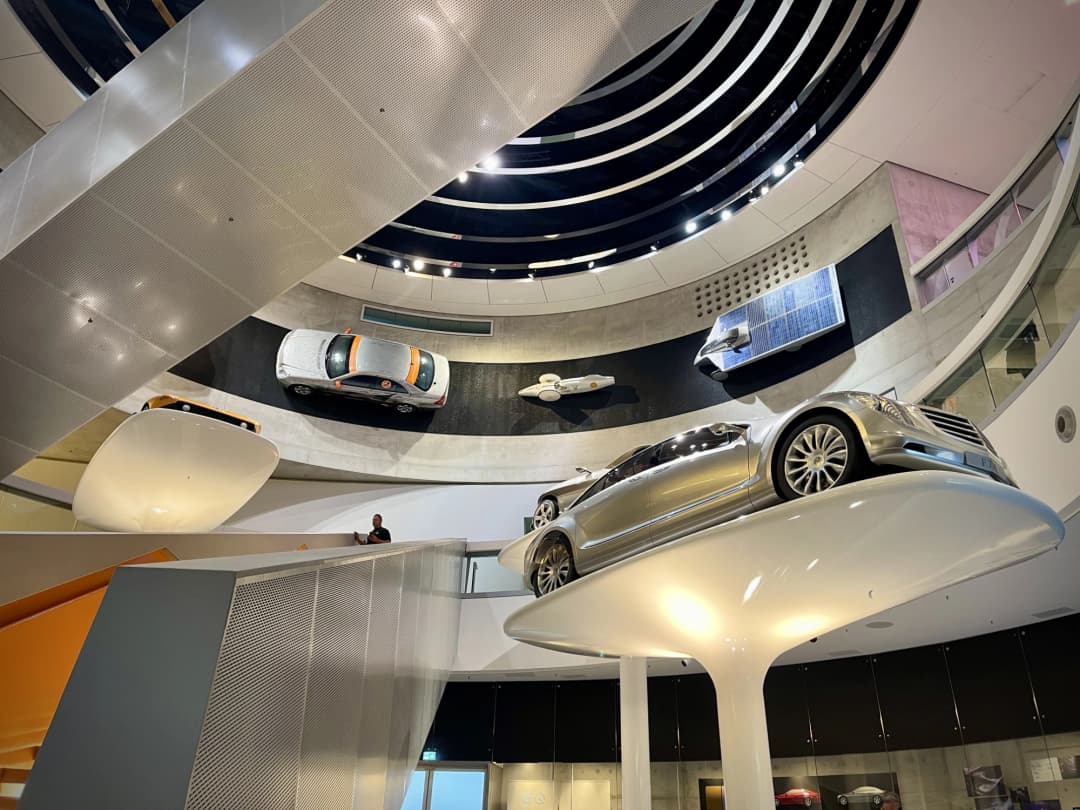
After a long journey with connections through London-Heathrow, I finally touched down in Stuttgart, eager to start the trip. Unfortunately, I arrived a bit too early to check into the hotel, but instead of letting that slow me down, I decided to dive right into some local tourism. The Mercedes-Benz Museum was the perfect spot to kick things off.
Nestled in the vibrant part of Stuttgart near a large stadium, the museum stands like a modern architectural marvel. Its sleek, futuristic design immediately grabs your attention. As soon as you enter, you're greeted by stunning modern elevators—smooth and futuristic, they whisk you up to the top floor where the journey begins. The museum is laid out in a spiral, guiding you down through the decades as you explore the history of Mercedes-Benz.
Inside, the design of the building feels just as impressive as the cars on display. The smooth curves of the walls and walkways make you feel like you're walking through a timeline of innovation. Each era of Mercedes-Benz vehicles is beautifully showcased, from the early classics that defined the brand to the cutting-edge technology of their latest models. The cars aren't just museum pieces—they feel alive, each telling its own story about where it fit in history.
What really made the visit memorable was the energy outside. It was a Sunday, and the area around the museum was buzzing. Car enthusiasts had gathered in droves, showing off their own prized vehicles, creating an impromptu car show of sorts. Right across from the stadium, crowds gathered, chatting, laughing, and taking in the scene. The whole area was vibrant, filled with people enjoying a shared passion for automobiles. It was the perfect welcome to Stuttgart and a great way to shake off the travel fatigue.
Ludwigsburg Pumpkin Festival
Midweek brought a perfect opportunity to escape the city and take a scenic drive out to Ludwigsburg for its famous Pumpkin Festival. After settling into the rhythm of the trip, I was ready for a change of pace and a little bit of autumn festivity. And what better way to get there than by hitting the Autobahn?
The drive itself was an experience. The Autobahn isn't a single road but rather a vast network of highways covering the country. While parts are known for having no speed limits, many sections are tightly regulated with speed cameras—a fact I became well aware of, thanks to Waze, which saved me more than once. Still, I found a few stretches where the limits lifted, giving me a chance to push the rental car and feel the thrill of cruising at high speed. German drivers' lane discipline made the whole experience smooth and exhilarating.
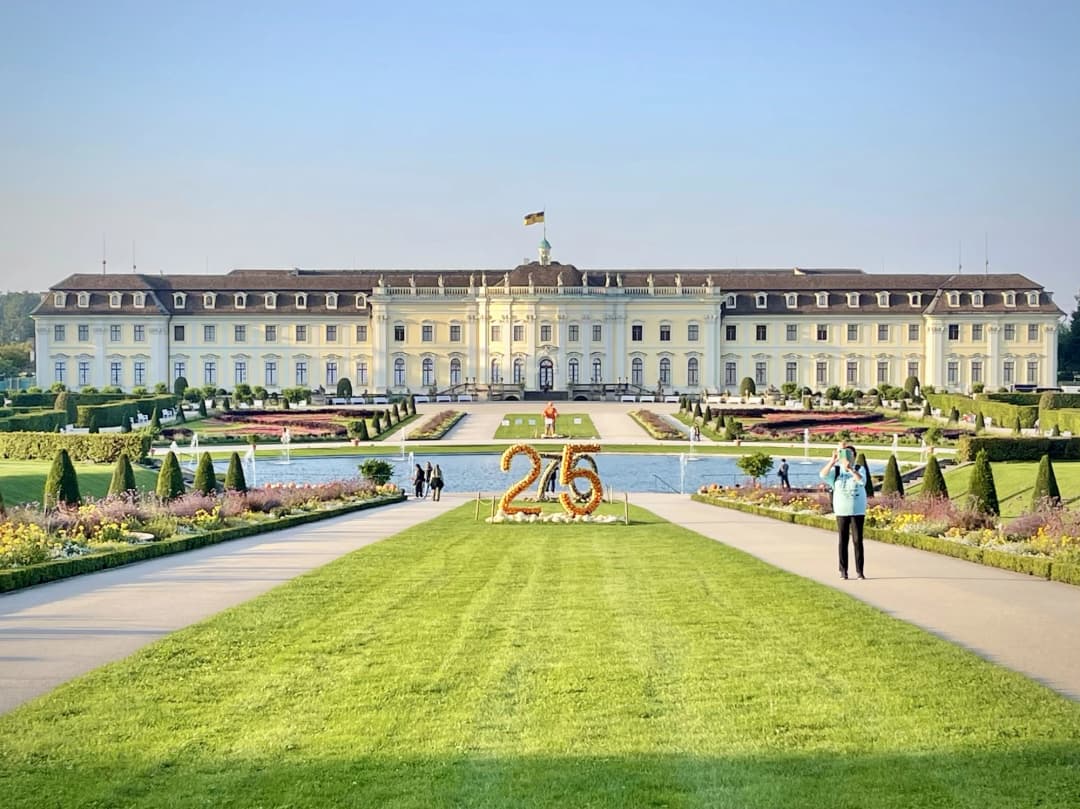
When I arrived in Ludwigsburg, I was immediately struck by the grandeur of Ludwigsburg Palace, one of the largest Baroque-style palaces in Germany. The sheer scale of it, surrounded by expansive, manicured gardens, was stunning. The palace exudes old-world elegance, standing proudly as a reminder of the area's rich history. But this wasn't just a typical visit to a historical site—this time, the palace grounds were transformed by the annual Ludwigsburg Pumpkin Festival.
The festival is world-renowned, and it's easy to see why. Spread throughout the gardens were thousands of pumpkins, artfully arranged into creative displays, from whimsical sculptures to intricate designs that seemed to belong in an art gallery. Pumpkin statues towered over festivalgoers, while smaller displays showcased the diverse colors and shapes of this humble vegetable. It was a visual feast, each corner of the garden revealing something new and exciting.
Of course, it wouldn't be a proper festival without some pumpkin-themed treats. Stalls offered everything from classic pumpkin soup to more unusual items like pumpkin-flavored beer. The air was filled with the cozy, earthy scents of autumn, and the festive spirit was palpable. Families strolled through the displays, children darted between the giant pumpkin creations, and the whole area buzzed with life.
The town itself was lively, too, with people filling the surrounding streets, adding to the festival's vibrant atmosphere. Ludwigsburg had an inviting energy that felt both festive and relaxed, a perfect contrast to the adrenaline of the Autobahn.
Walking through the Ludwigsburg Palace gardens, surrounded by creative pumpkin displays and a palpable sense of autumn, was a perfect midweek retreat. It offered a balance of historical grandeur and modern festivity, making the trip out of Stuttgart truly worthwhile.
Food
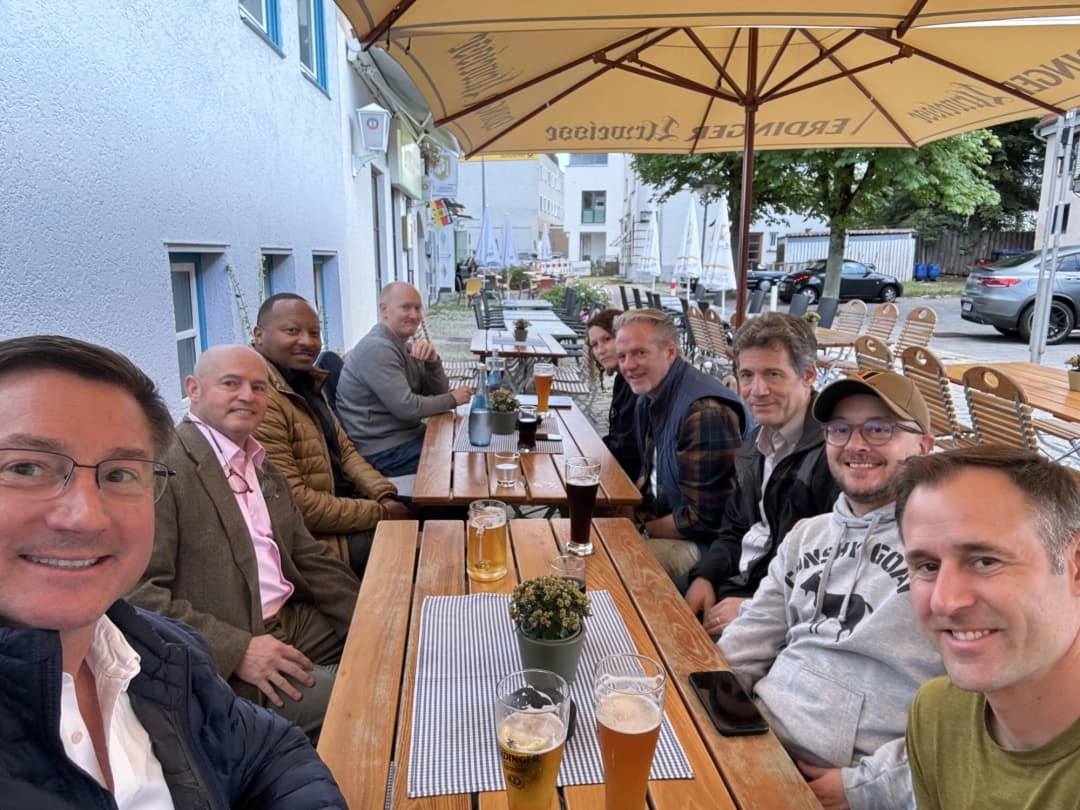
There's something special about traveling through the Swabian region of Germany and experiencing it through its food. In Stuttgart, each meal was a reflection of the region's hearty and comforting culinary traditions, but with its own unique flair that sets it apart from other parts of Germany. Swabian dishes are rich and satisfying, with subtle nuances that make them stand out. Take schnitzel, for example—while elsewhere in Germany it's often served crisp and golden, here in Swabia, I enjoyed a Jägerschnitzel bathed in a creamy mushroom sauce, paired with buttery, soft spaetzle. These small differences in preparation add depth to the experience, connecting you to the region's warmth and character. Whether gathered in a cozy restaurant or sharing a beer in a bustling garden, the food wasn't just about eating—it was about savoring the culture and stories behind each dish. Here's a taste of the culinary adventures that made the trip all the more memorable.
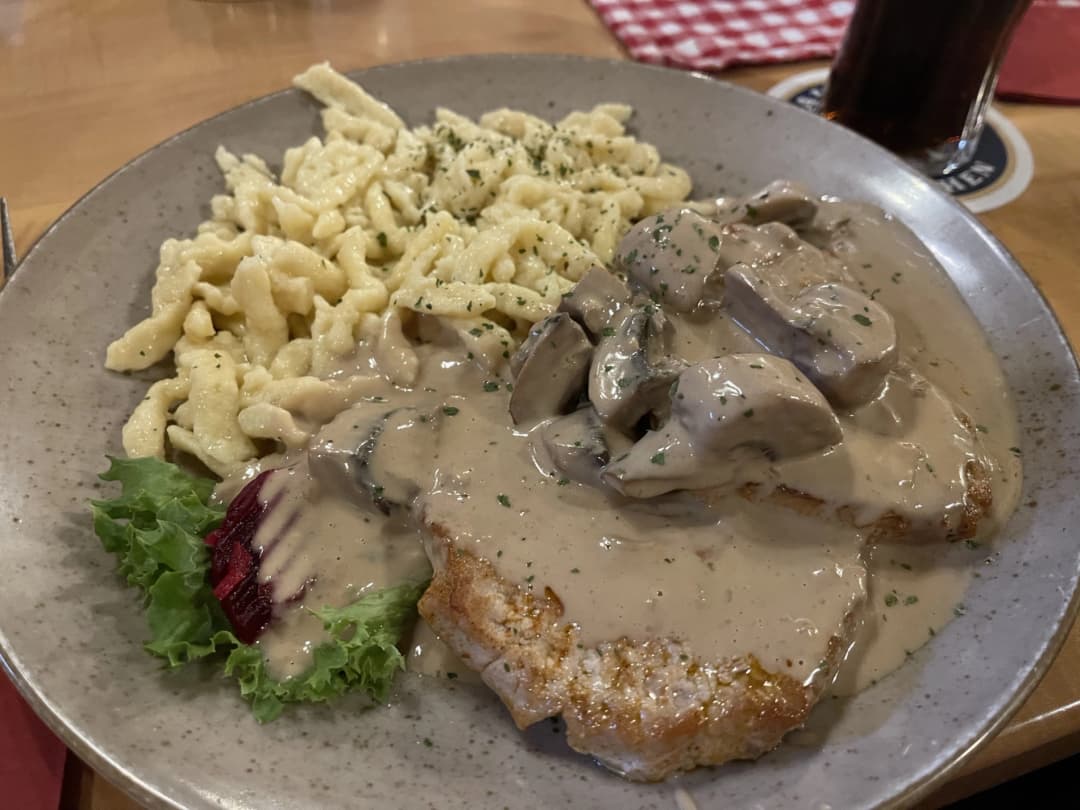
We kicked off our first team gathering on Sunday night at Paulaner Sindelfingen, a cozy restaurant that gave off that traditional Bavarian vibe. I ordered the Jägerschnitzel - a perfectly cooked pork steak smothered in a creamy mushroom sauce, served with Spätzle (those wonderful little egg noodles that soak up every drop of sauce) and a fresh mixed salad. It was a classic, rich, and comforting meal, perfect for settling into the trip.
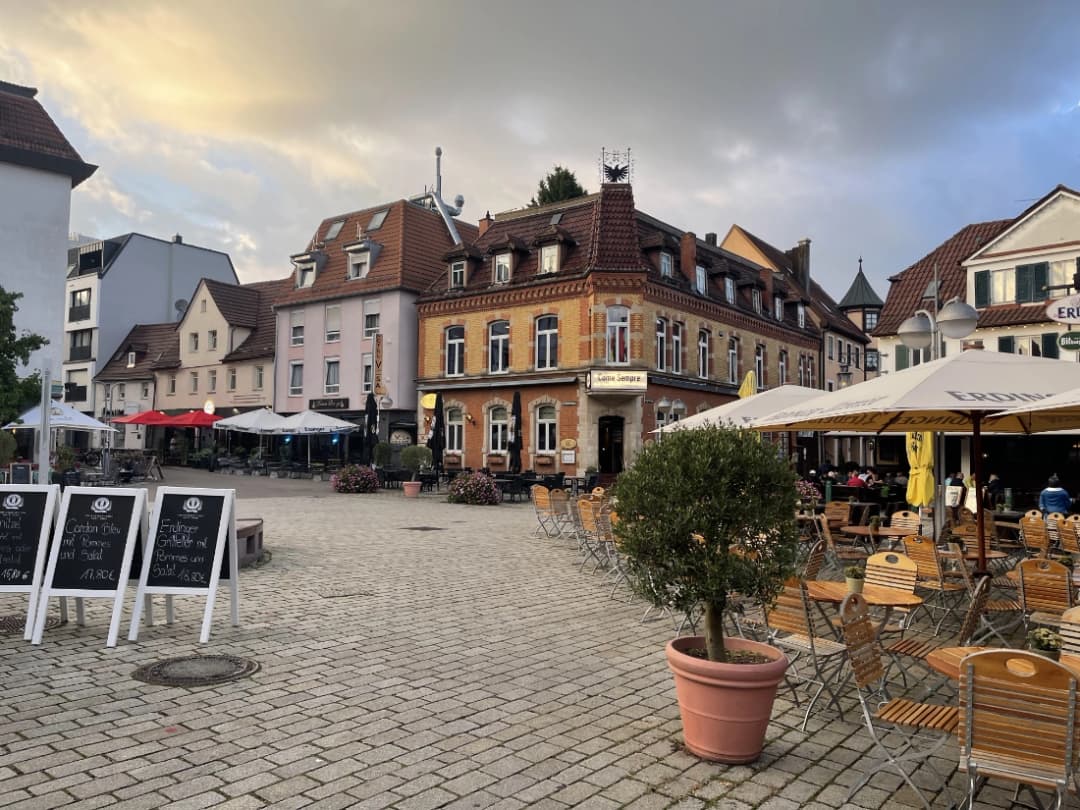
One of the more memorable dinners happened at Wirtshaus Zum Erdinger. I opted for the Lachssteak auf Zitronensauce, or in plain English, salmon steak with a bright lemon sauce, grilled vegetables, and tender boiled potatoes. The food was excellent, but what stood out even more was the ambiance - we dined al fresco in a charming village square while a less-than-talented guitarist serenaded the diners. Even though his performance wasn't exactly a highlight, the whole experience had that magical European charm that made it all worth it.
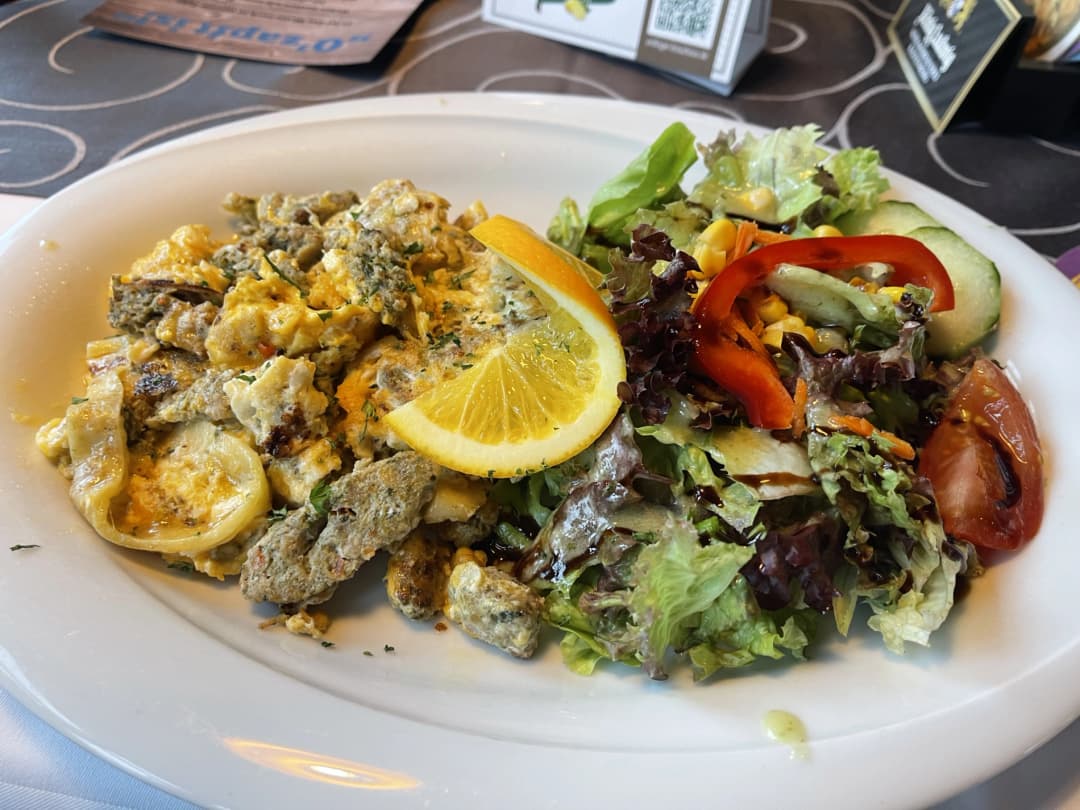
Later in the week, I was lucky enough to have dinner at Gaststätte Goldbachsee, where I tried their Maultaschen - these are like German dumplings filled with meat, fried with eggs, and served with a salad. They reminded me of ravioli, but heartier, with a satisfying rustic edge. This was one of the meals where the recommendations I received from locals really paid off, giving me a chance to try something authentically Swabian.
Breakfasts were a highlight too. Staying at The Local in the Marriott Hotel, I was greeted with a buffet that was a feast in itself. Eggs with rich, orange yolks, Bavarian pretzels, and an assortment of meats and cheeses - it was a spread that left me wishing I had more room for seconds each morning.
Speaking of the Marriott, dinner at the Steakhouse Restaurant was one for the books. I indulged in a Ribeye steak with mashed potatoes, finishing off with Crème Brûlée and, of course, a cold beer. There was a bit of excitement during the meal - right as our steaks arrived, a fire alarm went off, forcing us to evacuate. We took our beers with us, naturally. After about an hour, we were back at the table, continuing our meal and conversation. Dining in Germany isn't a rushed affair, and we probably spent a good three hours just enjoying each other's company that night.
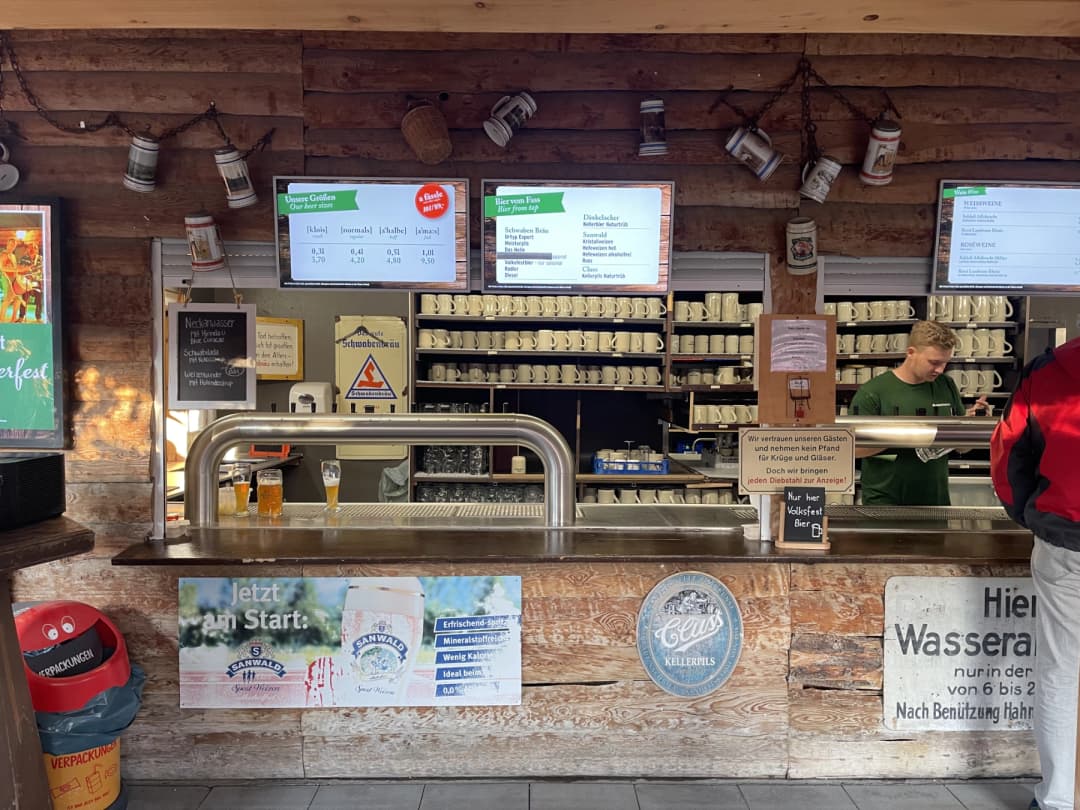
To wrap up our culinary tour, we spent the final evening at Schwabengarten, a sprawling beer garden. True to its name, we indulged in beer served in hefty steins alongside plates of chicken nuggets, wings, and fries. It was a casual, relaxed end to the trip, a chance to sit back, enjoy some laughs, and take in that unique blend of Bavarian tradition with a modern twist.
All in all, the food in Stuttgart was as hearty and welcoming as the people. While pork-heavy meals aren't something I'll necessarily crave afterward, I thoroughly enjoyed the cultural experience that came with every bite.
Conclusion
As the whirlwind of briefings, tours, and meetings wound down, I found myself on the long journey back home, replaying the trip in my mind. It felt like a mosaic—a collection of moments and conversations that together painted a vivid picture of the command's mission and the people dedicated to it. From the watch floors to the bustling operations centers, every interaction reinforced the resilience and adaptability of the teams working to keep us secure.
But even though the trip ended, the work didn't stop there. Action items and After Action Review reports kept everyone busy, translating the insights from each visit into tangible next steps. Whether fine-tuning workflows, addressing identified gaps, or coordinating across teams, we each had a role in carrying those lessons forward. It's a reminder that while SAVs may end, the commitment to supporting these commands and enhancing our collective capabilities is ongoing, driving us to keep moving forward, one improvement at a time.
Arriving in Philadelphia, I realized my luggage hadn't quite made it back with me—temporarily lost somewhere in London. It seemed a fitting reminder of the unpredictable nature of travel, of missions, of this line of work. But in the end, like all things on this trip, it found its way back. The memories of Germany—new landscapes, meaningful conversations, and the insight gained—are the lasting souvenirs, ones that made every moment on this journey worthwhile.
See the associated LinkedIn post.
Comments
To leave feedback or questions, simply login using your preferred social network. I will read and answer your comments promptly, but please keep in mind that they will be public.