

Introduction
Back in March 2025, I set foot on a path that I knew would demand time, energy, and focus—the Naval Command and Staff (NC&S) Program at the U.S. Naval War College, completing Joint Professional Military Education (JPME) Phase I. I've already navigated the Foundational Knowledge Course (FKC) and Module 1: Fundamentals of Strategy, and now I've just come through one of the most comprehensive, fast-moving segments of the journey—Module 2: The Security Environment.
If Module 1 was about learning the rules of the chessboard, Module 2 was about seeing the whole room in which the game is played—every piece, every player, and the walls closing in. It's the longest stretch in the series, and it lives up to its name. Over 26 sessions, we explored the security landscape from three levels of analysis:
- The International and Strategic Level Environment - Weeks 7-9 set the scene. We studied how national interests, global trends, and strategic documents like the National Security Strategy (NSS) shape the ways and means available to combatant commanders. We pulled apart instruments of national power (DIME) and looked at the interplay between diplomacy, deterrence, and security cooperation.
- The State, Society, and Policy-Making Environment - Weeks 10-12 moved inside the machinery of government. We examined the powers and limits of the Presidency, Congress, and the National Security Council, as well as the influence of domestic actors, international organizations, and belief systems. This was the "two-level game" in action—balancing the push and pull of domestic pressures against the demands of the international stage.
- The Leader and the Operational Environment - Weeks 13-15 brought the lens back to leadership. From moral and ethical foundations to leading without direct authority, to translating strategy into actionable force structures, we wrestled with the decision-making frameworks and organizational realities of operating in the profession of arms.
Module 2 kept the pace relentless. Every week meant new readings, videos, and discussion boards—plus formative and summative assessments that pushed me to synthesize and apply concepts. It was less a casual jog and more a series of sprints stitched together, each one demanding a fresh burst of focus.
And with that, we're halfway through JPME Phase I. Module 3: Operational Art waits on the horizon, promising a deep dive into the theater-level application of what we've been building. But before we set sail toward that, let's break down the lessons and insights from Module 2—and yes, I'll share my own work along the way, from discussion board posts to essays, so you can see the journey unfold from the inside.
The International and Strategic Level Environment

The first of Module 2's three main areas pulled the camera all the way back to the global stage. Over Weeks 7-9, we tackled the big picture—how national interests, national strategies, and the realities of the security environment shape the options available to combatant commanders. This wasn't just theory for theory's sake; it was about understanding the tides before you set sail.
Framed as the International and Strategic Level Environment, this block explored how strategic documents like the National Security Strategy, National Defense Strategy, and Tri-Service Maritime Strategy serve as both compass and constraint. We examined the instruments of national power—diplomatic, informational, military, and economic—and how they can be wielded in concert to advance U.S. objectives.
The pace was relentless: one week we were mapping the global security environment, the next we were pulling apart interlocking strategy documents, and then we were right into the mechanics of applying national power. Each session built on the last, creating a layered understanding of how Washington's policy priorities ripple outward to shape theater-level cooperation, deterrence, and engagement. It was the strategic equivalent of reading the weather, charting the currents, and knowing exactly which sails to raise before leaving port.
The Security Environment
Block 1 opened with a question every strategist must answer before deciding anything else: What environment are we actually operating in? Over three weeks, we moved from defining the terrain, to mastering the language we'd use to describe it, to examining the national strategies that guide U.S. actions. It was the first leg of Module 2's marathon pace, and the reading stack each week felt like prepping for a J2 morning brief—dense, layered, and constantly connecting dots across disciplines.
Session 2.1 - Introduction to Module 2: The Security Environment framed the journey ahead by outlining how 26 sessions would build a structured understanding of the complex factors shaping U.S. national security. Drawing from the Naval Command and Staff Program Syllabus and Study Guide (CDE, 2023) and Professor Michael Pratt's Introduction to Module 2 video, the session explained that this block would examine the security environment at multiple levels of analysis, from the systemic to the individual. David Burbach's Levels of Analysis: Conceptual Approach to Understanding National Security Affairs (2015, updated 2023) provided the conceptual backbone, showing how the international/systemic, national/organizational, and individual/leadership perspectives frame policy challenges and responses. The accompanying Module 2 schedule served as both a roadmap and a pacing guide, underscoring the cumulative nature of the learning objectives. The first deliverable—a personal introduction to the cohort—was more than an icebreaker; it began building the shared identity and collaborative mindset essential for navigating the intensive weeks ahead.
From there, Session 2.2 - Writing with Military Precision reinforced that in national security, clarity is not optional—words are weapons. At the tactical level, unclear communication can slow a squad; at the strategic level, imprecise writing can undermine policy before it leaves the White House. Michael Pratt's Writing with Military Precision (2023) outlined principles for structured, concise communication, emphasizing the elimination of ambiguity and the prioritization of substance over style. The Joint Officer Handbook, Staffing and Action Guide (2018) provided concrete formatting and correspondence standards for joint environments, while the open-source Air Force Handbook 33-337: The Tongue and Quill (2015, with Change 1 in 2015) served as a masterclass in saying exactly what needs to be said—and nothing more—through precise word choice, disciplined structure, and polished presentation.
In this more contested world, communities are increasingly fractured as people seek security with like-minded groups based on established and newly prominent identities; states of all types and in all regions are struggling to meet the needs and expectations of more connected, more urban, and more empowered populations; and the international system is more competitive—shaped in part by challenges from a rising China—and at greater risk of conflict as states and nonstate actors exploit new sources of power and erode longstanding norms and institutions that have provided some stability in past decades.
With the pen sharpened, Session 2.3 - The International Security Environment widened the lens to the trends shaping the next decades and the forces reshaping the global operating picture. The National Intelligence Council's Global Trends 2040 (2021) outlined alternative futures—some cooperative, some contested, some fractured—highlighting how demographic shifts, technological acceleration, and climate pressures will intersect with both state and nonstate actors. The Joint Staff's Joint Operating Environment 2035 (2016) explored how these dynamics might manifest operationally, stressing that competition, disruption, and hybrid conflict will define the coming decades. The 2024 Annual Threat Assessment of the U.S. Intelligence Community grounded these forward-looking scenarios in today's realities, detailing active threats from major powers, rogue states, and transnational challenges. Finally, the National Defense University's A National Security Strategy Primer provided the conceptual foundation for understanding how the United States frames its strategic environment, setting the stage for how national policy and defense planning respond to these global trends.
We are in the midst of a strategic competition to shape the future of the international order. ... We will modernize the joint force to be lethal, resilient, sustainable, survivable, agile, and responsive, prioritizing operational concepts and updated warfighting capabilities.
Finally, Session 2.4 - The National Security Strategy (NSS) brought the conversation home to the nation's top public strategy document, examining how grand strategy is communicated and operationalized. The 2022 U.S. National Security Strategy outlined the Biden Administration's priorities, balancing competition with China, alliances, technological leadership, and domestic resilience. Hal Brands's What Good Is Grand Strategy (pp. 1-16) framed the NSS within the broader tradition of American statecraft, arguing that grand strategy is less about perfect foresight than about aligning means and ends over time. Nikolas Gvosdev's Waiting for the Documents explained the purpose and signaling function of strategic documents in the U.S. system, while Melanie Sisson's U.S. Grand Strategy Under President Biden and Beyond lecture (Brookings, 2022) contextualized the NSS against contemporary geopolitical pressures. The Atlantic Council's expert reactions provided a spectrum of critiques, identifying strengths in alliance-building and climate policy, while noting gaps in resourcing and execution. Together, these readings and discussions underscored that the NSS is more than a glossy PDF—it is a political and strategic compass, signaling intentions abroad while shaping interagency priorities at home.
Note: Linked readings here are only a fraction of what we covered. Each week included several readings, extensive lectures, and faculty papers that cannot be shared publicly.
📄 Assignments:
Following Discussion Board Forum (DBF) 2.1, a short introduction post to connect with the cohort, DBF 2.2 spanned sessions 2.1-2.4 and asked students to compare the five key trends in Global Trends 2040 with President Biden's 2022 National Security Strategy, identifying which trends were incorporated, whether any were prioritized, and why. Primary posts (200-250 words) and secondary responses (150-200 words) tested critical thinking, strategic analysis, and clear communication while fostering debate on how long-term global forces shape the "ways" in U.S. strategy.
Strategic Documents and National Priorities
If Sessions 2.1-2.4 gave us the lay of the land, Sessions 2.5 and 2.6 zoomed in on the blueprints that tell the U.S. military how to navigate it. This was where the abstract vision of the National Security Strategy met the hard directives of the National Defense Strategy (NDS), National Military Strategy (NMS), and the Tri-Service Maritime Strategy (TSMS)—and where the theoretical "instruments of national power" started turning into real-world levers.
The Department will advance our priorities through integrated deterrence, campaigning, and actions that build enduring advantages.
Session 2.5 - NDS, NMS, and Maritime Strategy pulled back the curtain on the "tiered" nature of U.S. strategic guidance, showing how top-level vision flows into service-level execution. The 2022 National Defense Strategy translated the NSS's broad priorities into DoD-specific objectives, emphasizing integrated deterrence, campaigning, and building enduring advantages. The 2022 National Military Strategy further refined these aims for the Joint Force, aligning force design and posture with operational demands. At the maritime level, the Tri-Service Maritime Strategy - Advantage at Sea provided a coordinated roadmap for the Navy, Marine Corps, and Coast Guard to prevail in an era of all-domain competition. The Joint Doctrine Note 1-19: Competition Continuum reframed global engagement as a seamless spectrum—cooperation, competition, and conflict—informing how Combatant Commanders plan and campaign. Public perspectives such as the Atlantic Council's Seven Points on the Next NDS and Robert Rubel's Reading Between the Lines of the TSMS surfaced key insights, highlighting both the explicit direction in these documents and the strategic signals embedded between the lines. Colin Kahl's Brookings discussion on the NDS reinforced the interplay between policy, force planning, and resource allocation. Together, these materials revealed the structured hierarchy of U.S. strategic guidance—and how each layer connects ends, ways, and means in practice.
To put it simply, we need to worry a lot less about how to communicate our actions and much more about what our actions communicate.
Admiral Michael Mullen's Strategic Communication: Getting Back to Basics
With that foundation, Session 2.6 - Instruments of National Power introduced the DIME model—Diplomatic, Informational, Military, and Economic—as the core toolkit for implementing national strategy. Rather than treating it as a simple acronym, the session concentrated on the informational ("I") and economic ("E") elements, reserving diplomacy and the military instrument for later sessions. The D-I-M-E: Elements of National Power lecture by Col. Michelle Ryan (U.S. Army War College) provided a clear operational lens for understanding how these instruments function individually and in concert. Daniel Drezner's Serious About Sanctions unpacked the strategic calculus behind economic sanctions, while Edward Alden's Free Trade is Dead. Risky 'Managed Trade' is Here explored the geopolitical implications of shifting trade patterns. Admiral Michael Mullen's Strategic Communication: Getting Back to Basics reframed the informational instrument as a matter of credibility and consistency, not spin. Donald Bishop's DIME, not DiME argued for aligning the U.S. informational apparatus with the same rigor applied to diplomacy and defense. The [Joint Warfighting, JP 1 Volume 1][read-jp1-vol1] excerpt reinforced the doctrinal context, situating DIME within joint operations. Together, these materials demonstrated that mastering the informational and economic levers of power is essential for shaping the environment short of armed conflict—and for sustaining strategic advantage when competition intensifies.
By the end of this block, the connection between strategic documents and the instruments that animate them was clear: one sets the course, the other provides the means to sail it. The interplay between the two would carry forward into the next sessions on diplomacy, military application, and campaign planning.
📄 Assignment:
Covering sessions 2.1-2.6 and CLOs 5-9, Formative Assessment (FA) 5 required a 350-400 word essay identifying the most significant challenge and greatest opportunity from the 2022 National Security Strategy, then showing how the 2022 National Defense Strategy aligns with that presidential intent — a synthesis test of critical thinking, clear communication, and strategic analysis.
Wielding the Instruments of National Power
The last segment of the International and Strategic Level Environment block put theory into motion — taking strategic guidance and applying it through the national power toolkit. It began with Session 2.7, which wasn't lecture-heavy but instead marked the launch of Summative Assessment #3, where we were challenged to integrate the National Security Strategy, the National Defense Strategy, and the DIME framework into a coherent, actionable plan. From there, we shifted into the practical levers of statecraft.
If you don't fund the State Department fully, then I need to buy more ammunition.
Session 2.7 - Summative Assessment #3 (SA 3) served as the capstone for the International and Strategic-Level Environment block, evaluating mastery of CLOs 5-9 drawn from Sessions 2.1 through 2.10. This written essay required students to integrate the National Security Strategy, National Defense Strategy, and the DIME framework into a coherent plan addressing U.S. national security interests. The focus was on demonstrating a clear understanding of the changing global security environment, the interplay of top-tier strategy documents, and the practical application of the instruments of national power. SA 3 tested the ability to synthesize and apply major concepts rather than recall isolated facts, challenging students to produce a logical, well-supported narrative that linked strategic guidance to actionable recommendations.
Diplomacy should be the first thing that we do, and we should exhaust diplomacy before we go particularly to military action. And there's a simple reason for that: diplomacy is the low-cost, low-risk tool that we have. We can engage with it, and it doesn't preclude other options. That leads me to my second point, which is diplomacy may not be enough, but if it isn't, we can go to these other tools, whether they be information, military, or economics. We are not blocked in if we go with diplomacy first.
Session 2.8 - Diplomacy explored diplomacy not as a vague buzzword, but as a precise instrument of national power — one that, in Raymond Aron's classic formulation, is "the art of convincing without resort to force". José Calvet de Magalhães builds on Aron's definition in The Pure Concept of Diplomacy, distinguishing diplomacy from foreign policy itself and framing it as a process rather than an end state — the careful, continuous dialogue between states to manage relationships and prevent conflict. This foundation dovetailed with Joseph Nye's influential argument that modern diplomacy is inseparable from soft power, the ability to attract and co-opt rather than coerce. Nye makes the case that in an era of information saturation, credibility is currency, and public diplomacy becomes a force multiplier for national objectives. The session also drew from the U.S. Department of State's perspective as outlined in Chapter 10: Diplomacy, the State Department, and National Security in the Oxford Handbook of U.S. National Security, which details how embassies, consulates, and special missions serve as forward-deployed instruments of policy. These entities — through bilateral negotiations, multilateral forums, and even maritime engagements — quietly shape the international environment long before crises dominate the headlines. As former Secretary of Defense James Mattis told Congress, "If you don't fund the State Department fully, then I need to buy more ammunition" — a blunt reminder that neglecting diplomacy shifts the burden onto the military. In the maritime context, this means every port visit, multinational exercise, and freedom of navigation operation is also a diplomatic act, signaling intent and shaping perceptions without firing a shot.
... both deterrence and dissuasion require "getting into the heads" of others ...
Session 2.9 - Deterrence reframed deterrence as an ongoing psychological contest — not just the cold arithmetic of forces and ranges, but the lived perception of willpower. In Thomas Schelling's seminal Arms and Influence, deterrence rests on shaping an adversary's expectations: convincing them both that we have the capability and that we will use it if necessary. Elaine Bunn's Can Deterrence Be Tailored? pushes this idea further, arguing that a one-size-fits-all model no longer works in a landscape where state and nonstate actors weigh costs, risks, and cultural factors differently. We looked beyond Cold War nuclear paradigms, drawing on insights from cyber, space, and informational domains — areas where signaling, attribution, and escalation ladders are far less stable. Richard Betts' The Lost Logic of Deterrence warns against assuming that strategies that "won" the Cold War can simply be ported into today's multipolar, tech-saturated environment. In the end, deterrence in 2025 feels less like a fixed equation and more like a shifting conversation — one where credibility is built, tested, and sometimes lost in the spaces between words and action.
... we cannot succeed in the current national security environment unless we build partner capacity, unless we use allies to help us achieve our national security goals. It is critically important.
Examining Department of Defense Security Cooperation: When it Works and When it Doesn't
Session 2.10 - Security Cooperation pulled together the threads from diplomacy and deterrence into the sustained work of shaping environments, strengthening alliances, and building interoperability well before crises erupt. The NWC Talks: Security Cooperation - Advancing and Defending U.S. Interests lecture set the stage, complemented by insights from the House Armed Services Committee hearing Examining Department of Defense Security Cooperation: When it Works and When it Doesn't (2015), which revealed both successes and persistent challenges in aligning ends, ways, and means. From Commodore Matthew Perry's opening of Japan to Admiral William Crowe's Cold War diplomacy, naval leaders have long acted as de facto envoys, a tradition echoed in Admiral William Fallon's PACOM-era blueprint for integrating assistance, exchanges, exercises, technology cooperation, and outreach. The CRS Defense Primer on Title 10 Security Cooperation clarified the statutory foundation, while CRS analysis of The Quad illustrated modern multinational frameworks. As Mara Karlin argues in Why Military Assistance Programs Disappoint, these initiatives succeed only when grounded in political context, partner capacity, and sustained engagement — making security cooperation the quiet but essential connective tissue that makes deterrence credible and diplomacy effective.
📄 Assignments:
Covering sessions 2.6-2.10 and CLOs 5, 6, and 9, FA 6 required a 350-400 word analysis of U.S. efforts to foster closer military relations between Japan and South Korea. Drawing on CRS: South Korea - Background and U.S. Relations and CRS: U.S.-Japan Relations, students assessed which instrument of national power — Diplomatic, Information, or Economic — had the greatest potential, and which had the least, to close the gap, applying course concepts from sessions on instruments of power, diplomacy, deterrence, and security cooperation.
Spanning sessions 2.1-2.10 and CLOs 5-9, Summative Assessment (SA) 3 was a 750-800 word graded evaluation on how the U.S. could use specific instruments of national power to both deter and entice the People's Republic of China. Grounded in strategic trends and national-level guidance, the analysis required applying course concepts from the Security Environment, strategic documents, and the DIME framework to propose realistic, multi-domain approaches to counter PRC aggression while encouraging alignment with international norms.
The State, Society, and Policy-Making Environment
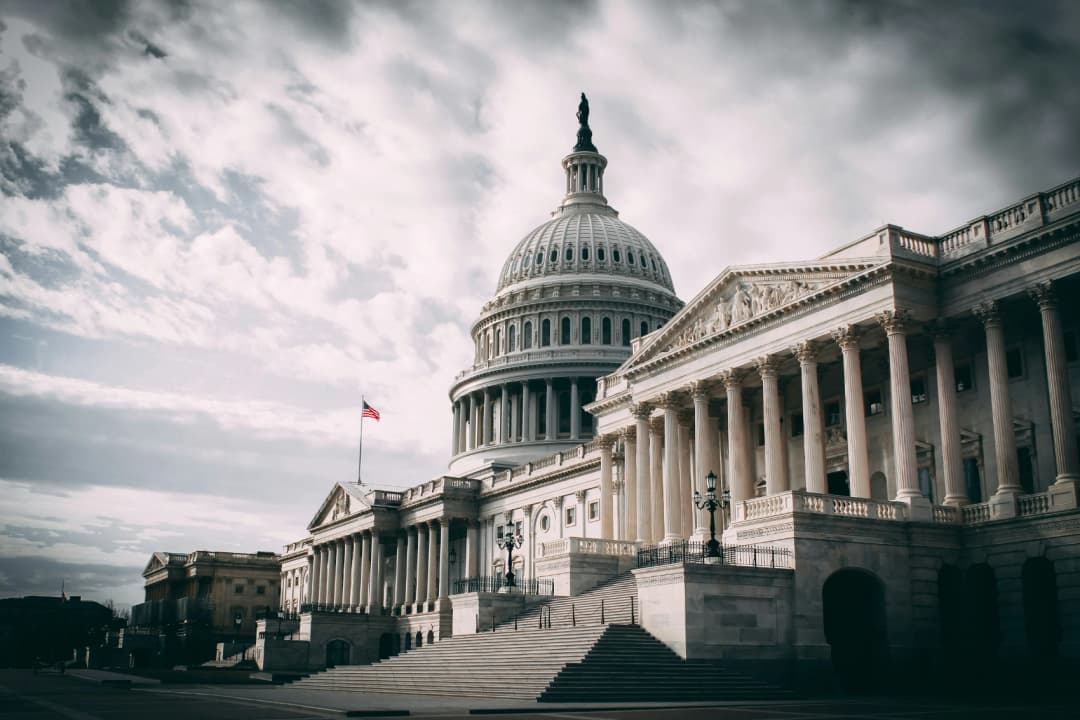
If the first block of Module 2 was about scanning the horizon, the second pulled us into the wheelhouse — the messy, human, and highly political process of turning strategy into action. Over Weeks 10-12, we shifted from the global stage to the national and organizational decision-making arenas, zeroing in on the staff environment of a combatant command (CCMD). Here, the question wasn't just what the United States should do, but who decides, how they decide, and whose agendas shape the outcome.
Framed as the State, Society, and Policy-Making Environment, this block dissected the internal machinery of large, complex national security organizations — their authorities, leadership, structures, roles, and missions — alongside the external forces that push and pull them. Robert Putnam's "two-level game" provided a recurring mental model: every national security decision is negotiated both at home and abroad, with domestic politics, interagency rivalries, allied expectations, and adversary perceptions all in play.
The pace was no less demanding than the first block. We moved from understanding the constitutional balance between the Executive and Legislative branches, to unpacking how domestic and international actors influence policy, to examining the "M" in DIME — the military instrument — at a level that tied force structure and planning directly to theater and national objectives. Each week built on the last, tracing a direct line from Capitol Hill hearings to combatant command campaign plans, showing how decisions in Washington ripple into operations half a world away.
National Level Policy Making
This week pulled the lens from the international arena to the highest decision-making tables in Washington, where national security strategy becomes policy. We examined how presidential authority, the National Security Council, and Congress interact—sometimes in concert, often in tension—to set the nation's course. These sessions revealed the constitutional foundations, institutional processes, and political dynamics that shape U.S. security decisions, underscoring that the balance of power is not static but a continual negotiation between branches, personalities, and priorities.
Rather than waiting at the end of an extended legislative process to sign or veto a bill, the president simply sets new policy and leaves it up to Congress and the courts to respond.
Session 2.11 - The Presidency opened with the constitutional foundation of presidential authority in national security, rooted in Article II of the U.S. Constitution, which vests the executive power in the president and designates them as commander-in-chief. The U.S. National Archives transcription of the Constitution provided the primary text, while Professor Stephen Knott's NWC Talks: Presidential Power and National Security lecture explored how presidents operationalize that authority in practice. William Howell's Presidential Power in the Modern Era (2003) challenged the notion that persuasion is the president's main tool, arguing instead that modern presidents often act unilaterally, setting policy and forcing Congress or the courts to react. Naval War College faculty paper The President, the Presidency, and Theater Security (Gvosdev, Knott, and Nichols, revised 2023) connected this authority to the combatant command level, showing how presidential decisions ripple through theater strategy. These materials underscored that while the presidency holds unmatched visibility and agenda-setting power, its effectiveness depends on navigating political constraints, institutional processes, and the interagency machinery.
Virtually everything about interagency collaboration and process is frustrating in practice. Some are the inevitable result of being a large government. Many processes have been built up over time and are deeply embedded in agency and bureaucratic culture, both military and civilian.
Demystifying the Interagency Process and Explaining the Ambassador's Role
Session 2.12 - The National Security Council (NSC) and Interagency traced the NSC's statutory origins in the National Security Act of 1947 and its evolution into the central coordinating body for U.S. national security policy. The White House - National Security Council site provided a current organizational snapshot, while the FPRI Primer: The National Security Council (Granieri, 2017) outlined the council's history, structure, and enduring challenges. R.D. Hooker Jr.'s The NSC Staff: New Choices for a New Administration argued for reforms to meet modern demands, from cyber threats to great power competition. Kori Schake's "The National Security Process" (Oxford Handbook of U.S. National Security, 2018) mapped how interagency processes are designed to integrate — and sometimes inevitably clash — across defense, diplomacy, and intelligence. Ronald Neumann's Demystifying the Interagency Process and Explaining the Ambassador's Role provided an insider's view of how ambassadors act as on-the-ground policy integrators, translating Washington's strategic decisions into actionable regional approaches. Finally, the Naval War College faculty paper Issues with the Interagency and Theater Security (Gvosdev & Cloud, revised 2020) examined the friction points and coordination gaps that often emerge when national directives meet theater-level realities. Together, these materials underscored that the NSC is not merely a statutory artifact but a living, adaptive hub whose effectiveness depends on how well it can bridge policy formulation in Washington with execution in the field.
... the country makes better national security decisions as a whole when Congress has a seat at the table.
Session 2.13 - Congress examined the legislative branch's Article I powers in national security, from declaring war and raising armed forces to making rules for the military and controlling appropriations — the critical "power of the purse." The U.S. Constitution, Article I provided the legal foundation, while the CRS: Congress's Constitutional Authority with Regard to the Armed Forces clarified the scope and limits of that authority. Serafino and Ekmektsioglou's "Congress and National Security" (Oxford Handbook of U.S. National Security, 2018) mapped the legislative tools for influencing policy, from authorizations and appropriations to oversight hearings and confirmation powers. In the Interview with Professor Kate Walsh on Congress and National Security (Spring 2023), Walsh highlighted the institutional dynamics and political considerations shaping congressional engagement. War on the Rocks perspectives — Guenov & Ross, "At a Crossroads" and Murphy, "National Security is Stronger When Congress is Involved" — framed the relationship between Congress and the Executive as an enduring "invitation to struggle," especially over defense spending and oversight priorities. Together, these materials emphasized that while the presidency often dominates the spotlight, Congress wields decisive leverage over U.S. national security through its constitutional powers, budgetary authority, and capacity to set the terms of engagement.
📄 Assignment:
Spanning sessions 2.11-2.13, DBF 2.3 asked students to apply their understanding of the authorities, responsibilities, and interplay between the executive and legislative branches in U.S. national security policy-making. Divided into BLUE and GOLD teams, the exercise prompted debate on either the modern presidency's unilateral power (BLUE) or Congress's most effective avenues for influence (GOLD). As a member of the GOLD team, I analyzed where Congress can exercise its authority most effectively, drawing on Serafino and Ekmektsioglou's Congress and National Security to assess the "power of the purse," oversight, and agenda-setting leverage. Primary posts (200-250 words) and secondary responses (150-200 words) fostered cross-team engagement and tested the ability to think critically, communicate clearly, and ground arguments in constitutional authority and course readings.
Influences on National Security Policy
If the previous week focused on the structures and authorities of government, this week examined the forces that shape and pressure those structures from both inside and out. Over Week 11, we looked at how domestic actors, international players, and deeply rooted belief systems influence the formulation of U.S. national security policy — sometimes reinforcing official strategies, other times pulling them in new directions.
.. media and public opinion can become important enablers, or checks, on various policy decisions ...
Session 2.14 - Domestic Actors examined how domestic non-governmental actors—think tanks, interest groups, lobbyists, the media, multinational corporations, and political parties—shape U.S. national security policy. Professor Pratt's lecture stressed that foreign policy is inseparable from domestic politics, illustrating how actors like AIPAC, defense contractors, and policy institutes influence agendas and specific decisions. Gvosdev's Deploying Influence and Expertise (2023) showed how think tanks act as "idea brokers" and how lobbyists tailor narratives to policymakers, while Faulkner's Media, Public Opinion and U.S. Foreign Policy (2023) explained how media framing and public sentiment can pressure leaders in crises. Jones & Marsh's "The Politics of Weapons Procurement" (2011) detailed how political support, industrial interests, and strategic value determine which defense programs survive. Supporting media included Gvosdev's Interview on Influencing Defense Policy and the Council on Foreign Relations' The Role of Public Opinion and the Media in Foreign Policy (2017), which underscored that public opinion often constrains policy indirectly, with organized subgroups wielding outsized influence. Together, these materials showed that domestic actors shape not only the policy menu but also the boundaries of what is politically possible.
For seven decades, the North Atlantic Treaty Organization has been the backbone of American and European security, in tandem with nuclear deterrence, as a guarantor of peace in Europe and a major force for global stability.
Session 2.15 - International Actors examined the "external international" environment and its influence on U.S. security decision-making, emphasizing that while sovereign states remain the core players, non-state actors, IGOs, NGOs, armed resistance movements, multinational corporations, and transnational threats increasingly shape outcomes. Charbonneau's Global Influences on Policy Decision-Making (2023) outlined how these actors interact with globalization, creating both opportunities for cooperation and risks of instability. Hooker's "The State of NATO: An American View" (2022) assessed NATO's strategic relevance, highlighting U.S. leadership challenges and the alliance's adaptation to Russian and Chinese competition. Travers' "The Terrorist Threat is Not Finished" (2020) warned that terrorism remains a persistent and evolving danger, demanding sustained attention even as strategic focus shifts elsewhere. The TED Talk by Arindam Bhattacharya: Globalization Isn't Declining - It's Transforming (2018) reframed globalization as a dynamic, reconfigured network rather than a retreating trend, underscoring its continuing impact on policy. Together, these materials conveyed that U.S. strategy must account for a crowded, interconnected, and rapidly changing global arena where statecraft is no longer solely state-to-state.
The latter half of the twentieth century saw the rise of the 'culture wars,' political conflicts over issues like the separation of church and state, abortion, and same-sex marriage that are defined by fundamental conflicts over moral values. These conflicts were rooted in social group identities, typically evangelicals and the highly religiously committed facing off against the religiously unaffiliated and those with low religious commitment.
The "Culture Wars" Go Global: Three Cases of Religious Conflict in Foreign Policy
Session 2.16 - Belief Systems (Culture, Religion, Ideology) explored how deeply rooted cultural norms, religious beliefs, nationalist sentiment, and ideological frameworks can shape, justify, or undermine national security policy. Charbonneau's The Role of Religion, Ideology, and Culture on U.S. Policymaking (2023) outlined how these factors influence both domestic consensus and foreign perceptions, stressing the need for strategists to anticipate their impact on policy reception and legitimacy. Castle & Stepp's "The Culture Wars Go Global" (2021) presented case studies showing how religious divisions extend into foreign policy disputes, driving conflict beyond national borders. Wimmer's "Why Nationalism Works" (2019) argued that nationalism remains a powerful, enduring force in mobilizing populations and legitimizing state actions, countering narratives of its decline. Together, the readings emphasized that understanding belief systems is essential for crafting effective theater security policies, as they can either reinforce strategic aims or create enduring obstacles to cooperation and stability.
📄 Assignment:
FA 7 drew on sessions 2.11-2.16 to integrate understanding of executive-legislative dynamics with the domestic and international influences on U.S. national security policy. Students analyzed Case Study No. 5 - Military Strike against Syria (2017) from Decision-Making in American Foreign Policy: Translating Theory into Practice, applying course concepts to identify and assess the key factors influencing President Trump's decision to launch a limited cruise missile strike on Syria following the Assad regime's April 2017 chemical weapons attack in Khan Shaykhun. The case highlighted the interplay of institutional processes, interagency coordination, and presidential decision-making—shaped by intelligence assessments, military options, diplomatic considerations, public opinion, allied perspectives, and personal influences. Students were tasked with determining which factors were most decisive in this policy outcome and explaining why, in a concise 350-400 word essay.
Understanding the M in D-I-M-E
If the prior weeks examined the broad machinery of U.S. national security and the actors that shape it, Week 12 turned to the "M" in DIME — the Military instrument of national power. Across Sessions 2.17-2.19, we studied the Department of Defense's structure, the operational role of the combatant commands, and how strategic guidance is translated into force design and capability planning. Together, these sessions revealed the interplay between strategy, organization, resources, and operational demands in sustaining U.S. military power.
To reorganize the Department of Defense and strengthen civilian authority in the Department of Defense, to improve the military advice provided to the President, the National Security Council, and the Secretary of Defense, to place clear responsibility on the commanders of the unified and specified combatant commands for the accomplishment of missions assigned to those commands and ensure that the authority of those commanders is fully commensurate with that responsibility, to increase attention to the formulation of strategy and to contingency planning, to provide for more efficient use of defense resources, to improve joint officer management policies, otherwise to enhance the effectiveness of military operations and improve the management and administration of the Department of Defense, and for other purposes.
Session 2.17 - The Department of Defense provided a structural deep dive into the DoD as the largest bureaucracy in the world, examining its evolution, authorities, and major components—the Office of the Secretary of Defense (OSD), Joint Chiefs of Staff (JCS), the individual military services, and the Joint Staff. Professor Pratt's lecture outlined the constitutional basis for civilian control, the legislative milestones of the National Security Act of 1947 and Goldwater-Nichols Act of 1986, and the legal authorities under Titles 10, 32, 14, and 50, clarifying the divide between the Services' role to organize, train, and equip, and the Combatant Commands' role to execute operational control. The Joint Staff Officer's Guide (2019) detailed command relationships, the advisory—not command—role of the CJCS, and the integration of Service cultures in joint operations. O'Hanlon's Defense 101 emphasized balancing modernization, readiness, and global commitments while avoiding overreliance on technology and assumptions of uncontested dominance. Together, the materials stressed that understanding both the formal command chain and the informal influence networks within DoD is essential to navigating its decision-making and aligning force capabilities with national strategy.
Beijing's aggressive maneuvers around Taiwan are not just exercises - they are dress rehearsals for forced unification.
Session 2.18 - The Combatant Commands examined the role of the unified and specified commands charged under Title 10 U.S.C. with the operational employment of joint forces and execution of missions assigned by the National Command Authority. Lucas's Defense Primer: Commanding U.S. Military Operations clarified CCDR authorities, responsibilities, and their position in the chain of command, while LtCol Ross Coffey's NWC Talks: Combatant Command 101 provided a practitioner's view on integrating joint capabilities to execute theater strategies. Reveron, Cook, and Coffey's Competing Regionally tied CCDR theater strategies directly to the larger framework of global competition, illustrating how operational plans are influenced by national strategic priorities and regional dynamics. The USINDOPACOM, EUCOM, and CENTCOM posture statements offered concrete insight into geographic priorities, force requirements, and resource shortfalls, showing the operational implications of strategic guidance. Eaglen's "Demand Signal Diet" critiqued the tendency of CCDRs to expand their scope beyond available resources, prompting debate over whether the current command structure optimally balances strategic ambition with the means provided.
Few of my predecessors have assumed office without first observing that the Navy was facing heavy seas and our country difficult times. Today is no exception. Dynamic changes are at work in our nation and abroad - changes that serve only to emphasize the need for a determined military posture built upon a solid foundation of powerful Naval Forces.
Session 2.19 - Translating Strategy to Force Structure examined how national strategic guidance is translated into concrete decisions on force design, composition, and allocation across theaters. The Chief of Naval Operations' NAVPLAN 2024 and rollout speech at the Naval War College articulated a modernization vision focused on deterring and, if necessary, defeating the PRC, emphasizing distributed maritime operations, readiness, and technological integration. CRS primers on Geography, Strategy, and Force Design and Navy Shipbuilding Plans illustrated how geographic considerations, global commitments, and congressional oversight converge in shaping fleet composition. The CBO's Force Structure Primer (2021) outlined baseline force requirements and trade-offs among capability, capacity, and cost. Sullivan's Combatant Command's Role in Force Planning highlighted CCDR input through theater strategies, operational plans, and testimony, while his Planning, Programming, Budgeting, and Execution (PPBE) Workbook explained how the planning, programming, budgeting, and execution cycle institutionalizes these choices but can also delay adaptation. Finally, War on the Rocks' "A Better Approach to Organizing Combatant Commands" challenged whether current structures enable optimal force alignment with strategy, sparking debate on reform options to better link planning with operational demands.
📄 Assignment:
FA 8 (GOLD Team) drew on Sessions 2.17-2.19 to assess the most consequential gaps, threats, and opportunities within the INDOPACOM theater as outlined in the current U.S. Indo-Pacific Command Posture Statement. Students evaluated whether the proposed structure and employment of U.S. naval forces is prepared to counter PRC challenges, integrating perspectives from posture statements, CRS reports, and NAVPLAN 2024. The task required a concise ≤300-word essay posted both as a Blackboard FA submission and as a DBF primary post, followed by a ≤150-word response to an opposite-group classmate. The exercise tested the ability to link strategic guidance to force posture, weigh operational feasibility, and identify where current plans may fall short.
The Leader and the Operational Environment
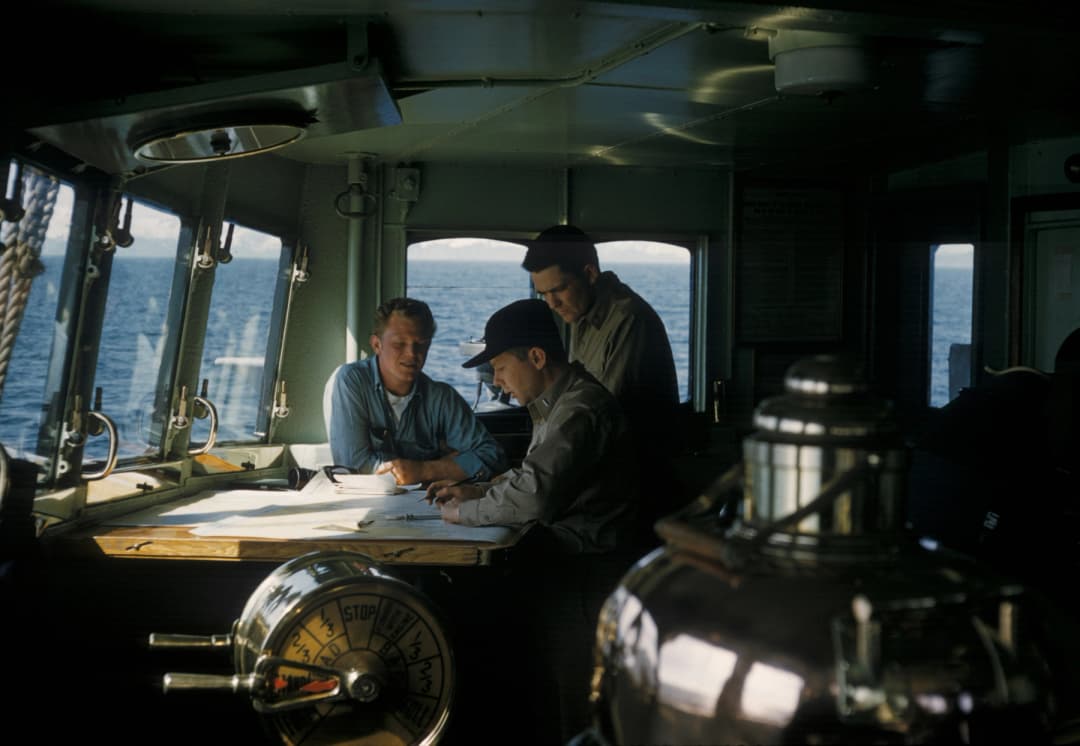
The final level of analysis shifts focus from the structures and systems that shape national security policy to the individuals charged with leading within them. Over Weeks 13-15, the emphasis moves to the theater-strategic level, where leadership requires navigating complex joint environments, influencing without direct authority, and managing organizations toward strategic objectives. Students examine the foundations of the profession of arms, exploring the ethical and moral responsibilities inherent in military service and the expectations of professional conduct. The block also addresses the realities of leading when not in command, highlighting the interpersonal, communicative, and adaptive skills required to build consensus and drive action across diverse organizations. Building on these foundations, the curriculum applies a decision-making framework for conducting organizational assessments, crafting and implementing strategies, and measuring outcomes to ensure alignment with desired end states. Collectively, these sessions prepare students to operate effectively in senior staff roles or command, balancing professional values with the demands of a dynamic and often ambiguous security environment.
Foundations of the Profession of Arms
Weeks 13-15 shift the course's focus to the Leader and the Operational Environment, emphasizing how individual leaders navigate ethical, moral, and professional demands at the theater-strategic level. The opening theme for Week 13, Foundations of the Profession of Arms, grounds this discussion in the moral and ethical underpinnings of military service and the unique relationship between the armed forces, the state, and society. Across Sessions 2.20-2.21, the materials examined how personal values, professional standards, and civil-military relations intersect to shape the conduct and legitimacy of the military profession. Students confronted the tensions between what is legal, what is moral, and what is ethical—recognizing that in the profession of arms, these lines do not always align—and explored the centrality of public trust, professional identity, and obedience to civilian authority.
Ethical decisions are sometimes less about choosing between right and wrong than about choosing between right and right.
Session 2.20 - Moral and Ethical Foundations introduced the moral standards that distinguish a profession from a vocation, with the military holding specialized authority that legitimizes acts—such as the use of lethal force—that would otherwise be unlawful. McPherson and Pratt's Personal Ethics and Moral Decision Making outlined how upbringing, worldview, and decision-making styles influence moral judgment, while requiring alignment with collective professional norms. Cook's Moral Foundations of Military Service explored the ethical obligations inherent in military life, emphasizing stewardship, loyalty, and integrity as the bedrock of public trust. Walzer's Just and Unjust Wars (pp. 34-47) provided the moral-philosophical frame for distinguishing justified from unjustified uses of force, reinforcing the necessity of aligning professional action with both the laws of armed conflict and ethical principles. The session highlighted that senior leaders not only make life-and-death decisions but also set the ethical tone for the organization, influencing culture, cohesion, and legitimacy.
We must renew our commitment to the Profession of Arms. We're not a profession simply because we say we're a profession. We must continue to learn, to understand, and to promote the knowledge, skills, attributes, and behaviors that define us as a profession.
General Martin E. Dempsey, U.S. Army, Chairman of the Joint Chiefs of Staff
Session 2.21 - The Military Profession and the State expanded the lens to civil-military relations, stressing that the profession of arms derives legitimacy only through service to the state under civilian control. Dempsey's America's Military - A Profession of Arms reaffirmed that military obedience to civilian leadership is foundational to U.S. democracy, even when leaders privately disagree with decisions. Ratcliff and Pratt's Thinking Critically About the Military Profession interrogated what it means to be a "true professional," challenging the assumption that membership alone confers professional status. Blankshain's A Primer on U.S. Civil-Military Relations and supporting video discussions by Dr. Risa Brooks and Lindsay Cohn explored the norms that govern military-political interactions and the risks when those norms erode. Johnson et al.'s Norms at Home, Norms Abroad examined how U.S. conduct in security force assistance missions affects perceptions of professionalism both domestically and internationally. Together, these works underscored that professional identity in the military is inseparable from the ethical exercise of specialized expertise, adherence to legal and moral standards, and fidelity to the constitutional principle of civilian control.
📄 Assignment:
DBF 2.4 drew on Sessions 2.20-2.21, requiring both teams to apply the Rules, Results, People (2RP) tool to realistic ethical vignettes. The Gold Team analyzed Hiding in Plain Sight, where leaders debated concealing sailors out of standards before an admiral's inspection, weighing short-term optics against honesty, fairness, and lawful compliance. The Blue Team addressed The Sea Daddy, involving whether to report a senior officer for misconduct, balancing loyalty, integrity, and the consequences of action or inaction. Both scenarios forced students to navigate tensions between legality, morality, and professional duty while considering the impacts on trust, cohesion, and public confidence. Primary posts were followed by structured peer critiques, reinforcing CLO 15 through collaborative ethical reasoning.
| Team | Vignette | Core Ethical Issue | Rules Lens | Results Lens | People Lens |
|---|---|---|---|---|---|
| Gold | Hiding in Plain Sight | Concealing sailors from inspection to avoid embarrassment | Violates inspection integrity and Navy standards | Protects short-term reputation, risks long-term trust | Duty to fairness, transparency, and setting ethical example |
| Blue | The Sea Daddy | Reporting senior officer's misconduct | Uphold Navy regs and UCMJ | Action could harm careers/relationships; inaction erodes trust | Obligation to protect subordinates and maintain institutional integrity |
Leading When Not in Charge
Week 14 continued the focus on The Leader and the Operational Environment by examining how mid-level leaders exert influence, drive change, and foster organizational health without relying solely on positional authority. The theme, Leading When Not in Charge, highlighted that leaders in joint environments often operate without direct command over all stakeholders, making influence, credibility, and an understanding of organizational dynamics essential. Sessions 2.22-2.23 provided complementary perspectives: how leaders in the middle can shape outcomes through influence, decision-making, and change management, and how understanding and shaping organizational culture and climate is critical to long-term success.
Mission command is the conduct of military operations through decentralized execution based upon mission-type orders. Successful mission command demands that subordinate leaders at all echelons exercise disciplined initiative and act aggressively and independently to accomplish the mission.
Session 2.22 - Leading from the Middle explored how mid-level leaders can shape outcomes without the authority of top command. Opening with General Dempsey's Mission Command White Paper, the session stressed the importance of initiative, trust, and decentralized execution in complex, fast-moving environments. Sullivan and Baird's How to Lead When You're Not in Charge offered practical influence strategies, emphasizing credibility, relationship-building, and reframing challenges to align with shared goals. Nickerson's Leading Change from the Middle underscored that mid-level leaders must master organizational assessment, strategy formulation, and implementation—while navigating resistance from both above and below. Pratt's Power and Influence clarified the sources of informal authority, while Williams's Heuristics and Biases in Military Decision Making detailed cognitive shortcuts that can distort judgment, from confirmation bias to anchoring. Miller and Turner's Leading Organizational Change provided a blueprint for implementing new initiatives in entrenched systems, and the U.S. Navy's Navigating a New Course to Command Excellence reinforced the need to blend leadership, management, and ethical conduct when influencing from the middle.
The Services and the Joint Force share the responsibility in ensuring that mission command is a common attribute of our Profession of Arms. Our collective efforts must institutionalize mission command by adopting and formalizing the character traits that enable a bias for action and responsible initiative at all levels of the force.
Session 2.23 - Organizational Culture and Climate examined the foundational role of culture and climate in shaping an organization's performance and adaptability. RAND's Movement and Maneuver highlighted how service cultures compete for influence, shaping joint priorities and operational approaches. Kotter's classic Leading Change explained why transformation efforts fail, pointing to under-communicated vision and insufficiently anchored change in culture. Edgar Schein's video lecture provided a framework for understanding culture as deeply held, often unconscious assumptions, while Watkins's What Is Organizational Culture? argued for its direct connection to organizational effectiveness. Groysberg et al.'s The Leader's Guide to Corporate Culture categorized cultural archetypes and linked them to strategy execution. Jay's What Is Organizational Climate? clarified that climate reflects members' perceptions of the work environment, shaped by leadership behavior and policies, and can shift quickly—unlike the slower-changing, deeply ingrained culture.
| Aspect | Organizational Culture | Organizational Climate |
|---|---|---|
| Definition | Deep-rooted values, traditions, and shared beliefs of the group | Members' perceptions of the work environment and daily reality |
| Timeframe | Long-term, evolves slowly | Short-term, can shift quickly |
| Source | History, norms, collective experiences | Leadership behavior, policies, and current conditions |
| Changeability | Hard to change; requires sustained effort | Easier to influence through immediate actions |
| Leader's Role | Model values, reinforce traditions, align changes with history | Shape morale, set tone, address concerns directly |
| Example | The Marine Corps' warrior ethos | Unit morale under a supportive vs. toxic commander |
📄 Assignment:
FA 9 required students to analyze the relationship between organizational culture, organizational climate, and leadership based on Session 2.23 materials. The question challenged students to determine which—culture or climate—is more significant for a leader's success and to justify their position. This analysis required integrating theoretical definitions with practical leadership implications, considering how each factor affects morale, adaptability, and mission accomplishment. After submitting their ≤300-word primary post, Gold Team members engaged in the DBF by responding to a Blue Team classmate who analyzed decision-making heuristics and biases from Session 2.22. These exchanges tested the ability to apply CLO 16, communicate with precision, and critically evaluate peer perspectives.
Organizational Decision Making
Weeks 15-16 concluded the Leader and the Operational Environment theme by turning to the challenge of deliberate, strategic decision-making at the organizational level. The focus, Organizational Decision Making, introduced the Assess-Decide-Implement-Assure (ADIA) framework as a structured approach for leaders to identify priorities, select strategies, execute them effectively, and measure results. In joint environments, where complexity, competing priorities, and finite resources are constants, this framework provides a disciplined way to align organizational action with mission objectives. Week 15 explored the "Assess" and "Decide" phases, while Week 16 moved to "Implement" and "Assure," linking analysis to action and evaluation.
Session 2.24 - SA 4 Preparation served as a dedicated bridge between learning and assessment, orienting students toward the Summative Assessment that would close Module 2. This session reinforced CLOs 5-6 and 10-18 by revisiting the major themes from Sessions 2.11 through 2.26, emphasizing the integration of political, organizational, ethical, and leadership concepts into a coherent analytical approach. Professor guidance focused on how to synthesize readings, discussion insights, and formative assessments into well-reasoned, clearly articulated essays. The preparation underscored that SA 4 was not a test of recall, but of integration — requiring students to connect national security structures, policy-making dynamics, and leadership frameworks into actionable analysis.
Reports that say that something hasn't happened are always interesting to me, because as we know, there are known knowns; there are things we know we know. We also know there are known unknowns; that is to say we know there are some things we do not know. But there are also unknown unknowns—the ones we don't know we don't know. And if one looks throughout the history of our country and other free countries, it is the latter category that tends to be the difficult ones.
Session 2.25 - Strategy Development: Assess and Decide opened with the fundamental questions: Who are we? Where are we? Where should we go? Professor Pratt's Organizational Decision Making and Assessment papers emphasized that accurate diagnosis is the foundation of sound strategy. His SWOT and Structured Assessment outlined how a balanced internal and external review—identifying strengths, weaknesses, opportunities, and threats—can illuminate critical gaps. "If not done correctly," Pratt warned, "subsequent steps of the ADIA framework lose credibility." The Decide phase shifted focus to the decision-making environment, selection criteria, and the integration of risk assessment into strategy choice. His Decision Elements paper underscored that leaders must weigh alternatives systematically, asking what level of risk is acceptable in pursuit of the desired end state. Together, the readings stressed that effective decisions rest on disciplined analysis, clarity of priorities, and a realistic appraisal of constraints.
Effective managers empower their organizations because they believe in the innate potential of people to innovate and add value.
Session 2.26 - Strategy Execution: Implement and Assure examined the practical and often messy realities of turning decisions into results. Ratcliff's Implementation - The Art of Execution and Owens' Domains of Implementation outlined how execution requires aligning resources, sequencing actions, and adapting to friction. Kotter and Schlesinger's classic "Choosing Strategies for Change" offered tools for overcoming resistance, from negotiation to participation, warning that misaligned approaches can stall progress. The Assure phase focused on performance measurement and feedback loops. The NSA Faculty's Assuring Organizational Excellence stressed that assurance is not a one-time check but a continuous process of monitoring, learning, and adjusting. Simons' "Control in an Age of Empowerment" added that in empowering organizations, leaders must balance autonomy with clear boundaries and accountability mechanisms. This session reinforced that implementation without assurance risks drift, while assurance without implementation is meaningless.
📄 Assignments:
FA 10 required students to apply the ADIA framework to ADM Paparo's 2025 U.S. Indo-Pacific Command Posture Statement. The task: identify the top two strengths, weaknesses, opportunities, and threats facing INDOPACOM, each supported by a one-sentence rationale. From this SWOT analysis, students had to determine the single most critical gap to address and justify why. This exercise tested the ability to move from comprehensive assessment to a focused strategic priority, linking analysis directly to actionable recommendations.
SA 4, due in Week 16, served as the capstone for Module 2, drawing on Sessions 2.11-2.26. Students addressed two case studies. Question 1, based on Closing American Detainee Facilities at Guantanamo Bay (2009), asked for an analysis of the most influential factors behind President Obama's inability to close GITMO despite early executive action. Question 2, based on The Least Worst Place, placed students in the role of CAPT Boone, dual-hatted as CO of Naval Base Guantanamo Bay and Deputy Commander of JTF-160, to identify the highest-priority issue, anticipated resistance, and risk mitigation strategies in addressing it. The SA required integrating political, organizational, ethical, and leadership concepts from across the block, testing mastery of CLOs 5-6 and 10-18.
Conclusion
Module 2 was less a linear course and more an operational campaign—dense, multidimensional, and relentless in pace. Across 26 sessions, the journey moved from surveying the global security environment to dissecting the machinery of policy-making, and finally, to mastering the leadership tools and frameworks needed to navigate complex organizations. The constant thread was the requirement to connect theory to practice—whether that meant linking strategic documents to the instruments of national power, assessing how domestic and international forces shape policy, or applying the ADIA framework to real-world posture statements. Discussions and assignments consistently intersected with headlines being made in real time, from strategic competition in the Indo-Pacific to deterrence challenges in Europe, reinforcing that the concepts studied were not abstract—they were actively shaping today's security landscape. The sessions on presidential powers, congressional authorities, and the interplay between the two were particularly timely, echoing ongoing debates in Washington over war powers, defense funding, and what leaders at all levels can—and should—be doing to safeguard U.S. national interests. This immediacy gave the coursework a sharper edge and underscored its direct relevance to the decisions and debates unfolding in the current strategic environment. The workload demanded discipline, but it also rewarded precision, synthesis, and adaptability.
None of this would have been as effective without the guidance of Professor Becky Rouse. Her attentiveness to student needs, timely engagement in discussions, and incisive feedback were a constant force multiplier throughout the module. She didn't just mark assignments; she offered course corrections when needed, clarified complex points, and challenged assumptions in ways that deepened understanding. That level of commitment not only elevated the quality of work but also reinforced the collaborative spirit that defines the best learning environments.
As Module 2 closes, the takeaway is clear: understanding the security environment is not a static skill—it's a continuous process of assessment, decision, execution, and assurance. With the foundation now set, the next stage, Module 3: Operational Art, will move from diagnosing the world to maneuvering within it. The strategic picture is in focus; now it's time to act within it.
See the associated LinkedIn post.
Comments
To leave feedback or questions, simply login using your preferred social network. I will read and answer your comments promptly, but please keep in mind that they will be public.