
Introduction
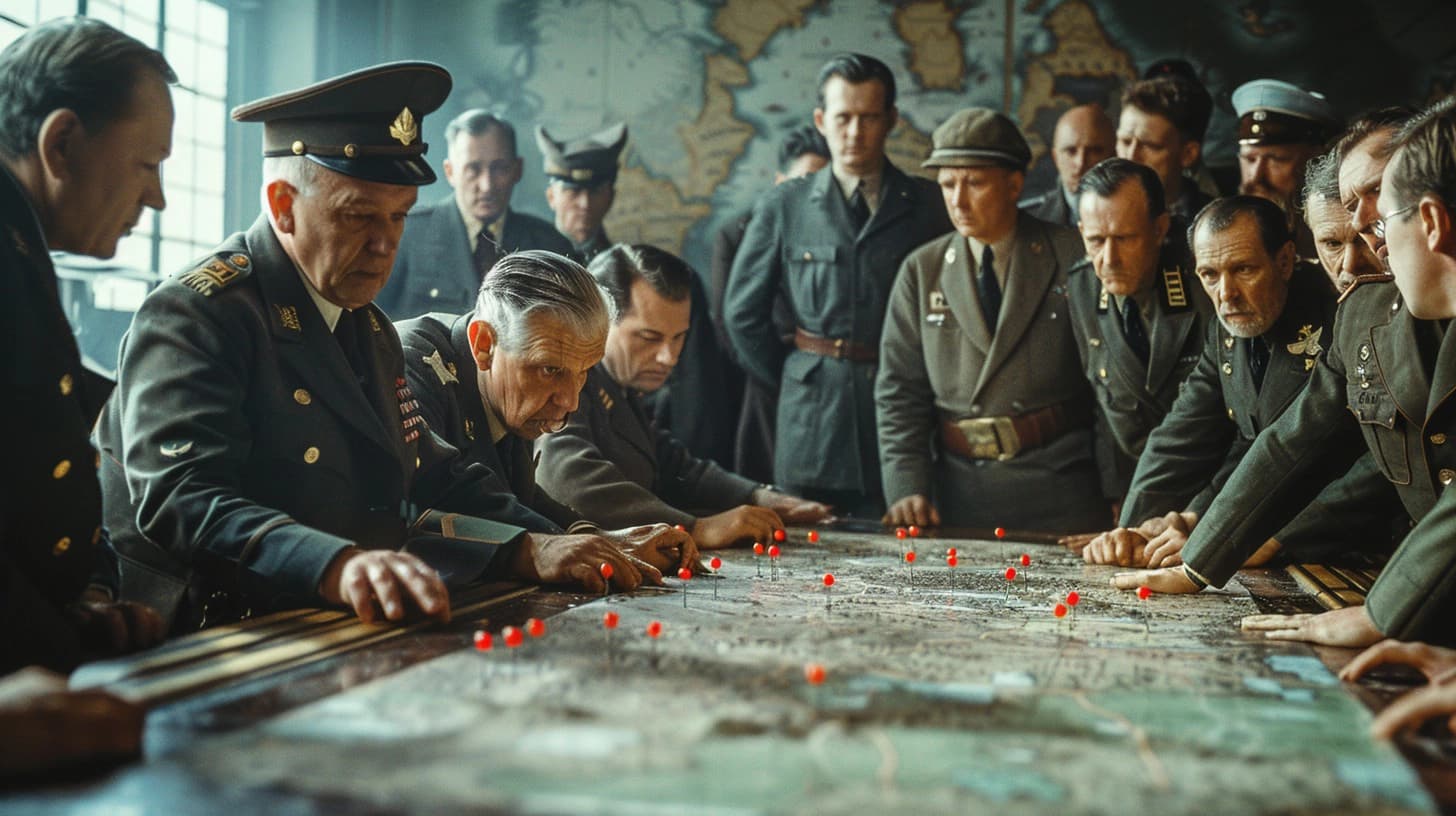
After completing the fast-paced Foundational Knowledge Course, which laid out the intellectual groundwork for thinking strategically, Module 1: Fundamentals of Strategy marks the true start of the journey into applying theory to war. This second post in my JPME Phase I series picks up where the first left off, diving into the messy, interactive space where policy meets military operations. The module introduces a set of analytical tools drawn from political science, international relations, and military history, and asks us to apply them with intellectual discipline to real-world strategic problems. Clausewitz, Sun Tzu, Mahan, and Corbett are no longer just names in theory—we're asked to evaluate their ideas through detailed case studies and see how their thinking holds up under the pressure of war's uncertainty, friction, and competing aims. Strategy here isn't a formula; it's a continuous process of assessing goals, matching means, and adapting in the face of a thinking enemy. The module challenges us to think critically and creatively about the past in order to prepare for the future. The next sections walk through each session, starting with the American Revolution and the challenges of understanding the true nature of that conflict.
Case Study 1: The American Revolution
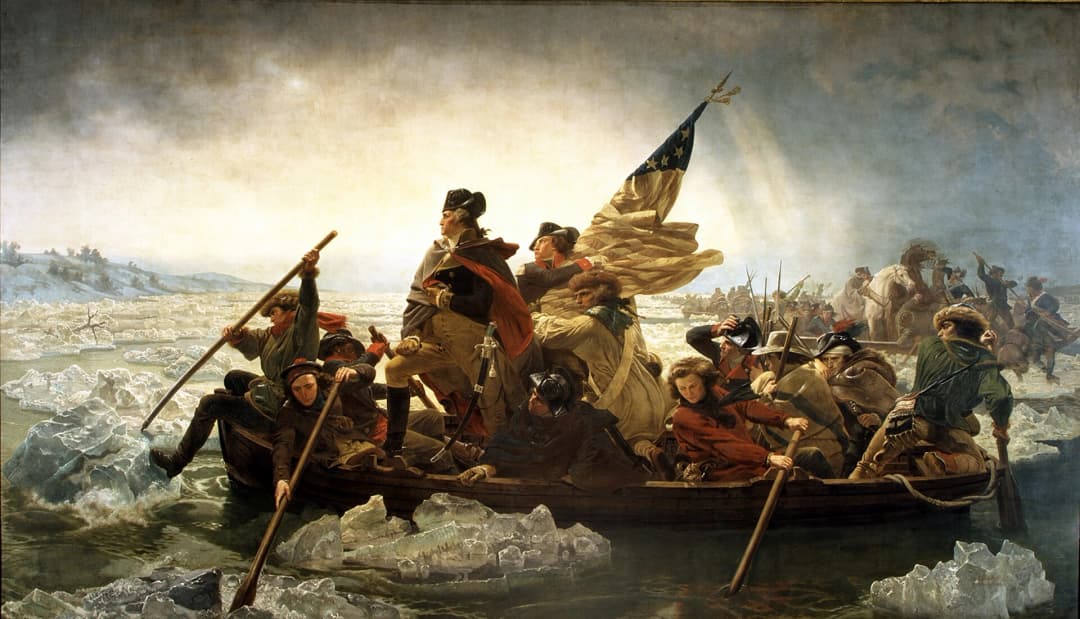
We opened Module 1 with a familiar conflict—but saw it with fresh eyes. The American Revolution wasn't just a war for independence. It was a strategic case study in misjudged objectives, mismatched means, and the power of time and terrain.
Clausewitz and Sun Tzu served as our guides. Clausewitz warned of the danger in misreading the nature of war—something Britain did repeatedly. Sun Tzu emphasized deception, patience, and exploiting the enemy's weakness—concepts the Americans, often outgunned and outnumbered, leaned into.
Across three sessions, we examined British failures, American adaptability, and the turning point brought by France's entry. We weren't just studying history—we were learning to think like strategists.
Next, we dig into each of those sessions, starting with how the war began—and how the British misunderstood it from the start.
Session 1: Origins of the War and Strategic Theory
The first, the supreme, the most far-reaching act of judgment that the statesman and commander have to make is to establish… the kind of war on which they are embarking.
We kicked things off with 1776—the year of declarations and decisions. The British still believed this was a rebellion they could stamp out with enough redcoats and resolve. The Americans, fresh off their break from the Crown, were still figuring out how to survive. On both sides, leadership choices mattered—but what mattered more was how each side understood the war they were actually fighting.
Clausewitz was our anchor this week. His warning that the "first, supreme, most far-reaching act of judgment" is knowing the kind of war you're in hit especially hard here. British leaders like Lord George Germain and the Howe brothers didn't see the full picture. They treated the conflict like a conventional insurrection, not a revolution rooted in ideology, geography, and politics.
My take? The British failure wasn't about battlefield fog or logistical friction. It was about misjudging the nature of the conflict itself. That misunderstanding drove flawed strategy, reactive leadership, and, ultimately, missed opportunities.
📄 Click here to download my full submission for Formative Assessment #1
Next, we look at how the global dimension of the war changed everything—with France entering the chat.
Session 2: Global Strategy and Sea Power
If you know the enemy and know yourself, you need not fear the result of a hundred battles.
By 1778, the American Revolution had exploded into something far bigger than a colonial rebellion. France's entry into the war turned it into a global conflict. Spain joined a year later. The Dutch got pulled in soon after that. The British were suddenly stretched thin, not just across North America, but across the world. And yet—they still tried to force a victory in the South.
This session shifted our focus to that Southern Campaign and asked whether British joint operations between 1778-1781 ever had a real chance. Our team argued no. Despite tactical victories, the British underestimated the complexity of the environment. Clausewitz would have pointed to their failure to grasp the true nature of the war. Sun Tzu might have warned that they didn't know their enemy—or themselves—well enough to win.
Carpenter's paper laid it out plainly: British strategy was flawed from the start. They misread Loyalist support, misjudged terrain and supply lines, and failed to integrate operations across domains. The result wasn't just friction—it was strategic incoherence. Meanwhile, American forces used irregular tactics and leveraged local support to erode British strength over time.
In short, the Southern Campaign showed how sea power and joint operations aren't enough if they aren't grounded in a strategy that matches the war's political and social reality.
📄 Click here to download my full submission for Formative Assessment #2
Next up: how the war ends—and how maritime power, French intervention, and British missteps all converge at Yorktown.
Session 3: Southern Campaigns and British Failure
It is almost impossible that a war can be decided by naval action alone.
By the third week of the module, the war had gone global—but Britain still couldn't figure out how to win it. Despite commanding the world's most powerful navy, the British failed to convert maritime supremacy into strategic success. This session asked the hard question: Why?
My essay argued that the problem wasn't the lack of sea power—it was the misuse of it. Mahan emphasized that naval strength must support broader objectives, not operate in a vacuum. Corbett took that further, warning that control of the sea must be integrated with operations on land. Clausewitz and Sun Tzu reminded us that knowing the war you're in—and adjusting to its nature—is essential. The British struggled with all of this.
The Southern Campaign showed these failures in sharp relief. British land forces were overextended and unsupported, Loyalist backing was far weaker than expected, and naval assets weren't used in concert with ground operations. The French, on the other hand, brought their naval power to bear at the right moment—cutting off Cornwallis at Yorktown and helping to bring the war to a close.
📄 Click here to download my full submission for Summative Assessment #1
That wrapped up our look at the American Revolution. Next, we shift to a different kind of war in a different part of the world: the Pacific.
Further Reading: Case Study #1
These readings grounded our analysis of strategy, leadership, and failure during the American Revolution and the ensuing global conflict:
- Carl von Clausewitz - On War: The foundational military theory text. We focused on Book 1, covering the nature of war, fog and friction, and the importance of understanding the type of conflict you're in.
- John Ferling - Whirlwind: The American Revolution and the War that Won It: A narrative history showing how political transformation, leadership, and strategic choices shaped the uncertain path to American independence.
- Andrew Jackson O'Shaughnessy - The Men Who Lost America: A "red team" perspective highlighting the strategic reasoning and internal dilemmas of British leaders like the Howe brothers and Lord Germain.
- Sun Tzu - The Art of War (trans. Lionel Giles): A classic treatise on strategy emphasizing deception, tempo, and indirect approaches—complementary to Clausewitz, but offering a distinct philosophical lens.
- Stanley D.M. Carpenter - British Strategic Failure in the Southern Campaign, 1778-1781: A Naval War College paper analyzing British operational mistakes during the Southern Campaign and how they failed to integrate joint operations effectively.
- Alfred Thayer Mahan - The Influence of Sea Power upon History: Chapter 14 focuses on the global maritime conflict beginning in 1778, introducing Mahan's influential views on naval power and strategic maritime control.
- Alan Taylor - American Revolutions: A Continental History, 1750-1804: Explores the post-1778 global scope of the war, showing how other threats forced Britain to treat North America as a secondary theater.
- Piers Mackesy - British Strategy in the War of American Independence: Offers insight into British political and military strategy, emphasizing that American victory was far from inevitable.
- James Pritchard - French Strategy in the American Revolution: A Reappraisal: Reassesses France's strategic goals and contributions, especially its global naval coordination and alliance with Spain.
Case Study 2: The Pacific War (WWII)
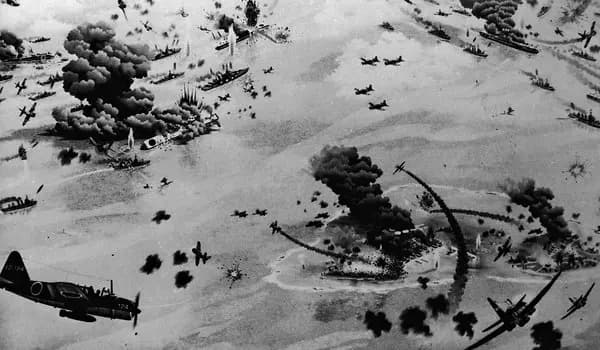
With the second case study, the scale gets bigger—and so do the stakes. The Pacific Theater of World War II introduced us to total war on a global scale, where vast distances, industrial capacity, and the will of nations all played defining roles. The clash between the United States and Imperial Japan wasn't just a naval war, or a war of attrition, or a battle for ideology. It was all of those at once.
This portion of the module challenged us to bring everything we'd learned into sharper focus. Clausewitz and Sun Tzu still mattered—but now we added J.C. Wylie to the mix, whose theory of cumulative and sequential strategies helped frame how each side approached the conflict. Where Japan sought rapid, decisive blows, the U.S. favored a grinding, island-hopping campaign—slow, deliberate, and increasingly overwhelming.
In the next two sessions, we explored how war plans were made, how assumptions shaped outcomes, and how both sides sought (and often misjudged) the culminating point of victory. What emerged was a clearer picture of strategy as a living process, shaped not just by theory but by culture, geography, leadership, and chance.
Let's start with how the war began—and how well (or poorly) each side understood the kind of war they were entering.
Session 4: Prewar Planning and Strategic Assumptions
War is never an isolated act.
This session zoomed in on the lead-up to the Pacific War, where planning collided with assumptions—and neither side got it completely right. The United States and Japan both anticipated conflict, but they approached preparation in very different ways. Clausewitz's concept of critical analysis helped frame the central question: who actually understood what kind of war they were getting into?
Japan opened the war with bold action—most famously, the attack on Pearl Harbor—but that tactical brilliance masked deep strategic flaws. They failed to account for the long-term nature of the conflict and fell back on outdated ideas of decisive battle. Meanwhile, the U.S., though tactically unready, came into the war with a more coherent maritime strategy, shaped by thinkers like Mahan and Corbett and anchored in strategic patience.
Ultimately, we concluded that Japan was operationally prepared but strategically blind, while the U.S. was the opposite—slow to start, but ready to sustain. Clausewitz would have seen Japan's failure to anticipate the true nature of the war as the fatal flaw.
📄 Click here to download my full submission for Formative Assessment #3
Next, we shift from planning to execution—where Midway and Guadalcanal turn the tide.
Session 5: Turning Points—Midway and Guadalcanal
If Midway itself did not harm Japan's military in absolute terms as much as the following year's worth of warfare in the Solomons would, it clearly opened the gates to this hellish attritional cycle.
This week we were asked to choose sides in one of the great debates of the Pacific War: Which battle marked the true turning point—Midway or Guadalcanal? I was assigned to argue for Guadalcanal, even though I probably lean Midway in a vacuum. Still, it made for a compelling case.
Midway delivered the shock—crippling Japan's carrier force—but Guadalcanal delivered the shift. Clausewitz's concept of the culminating point helps frame it: Guadalcanal is where Japan's offensive momentum broke for good. It wasn't a single clash—it was a grinding, multi-domain campaign that bled Japan's logistics, manpower, and initiative dry. After that, the Allies never looked back.
The readings reinforced this. Symonds and Prados emphasized Guadalcanal's position on key sea lanes. Lee and Mahnken highlighted how it showcased joint operations and tactical evolution. Even Parshall and Tully, the Midway champions, admitted that Guadalcanal inflicted the more sustained damage.
📄 Click here to download my full submission for Formative Assessment #4
Next, we wrap with the challenge of war termination—and Truman's search for options short of the bomb.
Session 6: Ending the War and Strategic Decisionmaking
Cumulative strategies...can have decisive results, though not always in ways that are immediately obvious.
— J.C. Wylie, Military Strategy: A General Theory of Power Control
The final session brought us to the closing chapter of the Pacific War and introduced a fifth strategic thinker—J.C. Wylie—whose theory of cumulative vs. sequential strategies helped us rethink how wars are actually won. We weren't just looking at battles anymore. We were evaluating how logistics, morale, and political signaling could combine to break an enemy's will.
Our task was to recommend a strategy for President Truman in April 1945 to end the war—without using atomic weapons. My argument: double down on the blockade, strategic bombing, and psychological pressure, while leaving the threat of invasion on the table. Japan was already crippled economically, cut off at sea, and reeling from urban destruction. Clausewitz, Corbett, and Wylie all supported the logic of grinding pressure over time, especially when combined with strategic diplomacy.
It wasn't about avoiding combat. It was about understanding the right kind of combat. Wylie's insight was clear: small, seemingly disconnected actions—like submarine warfare, leaflet drops, and firebombing—can collapse an enemy from within. When paired with clear political messaging and a conditional offer of peace, that pressure could have brought Japan to the table without crossing the nuclear threshold.
📄 Click here to download my full submission for Summative Assessment #2
With that, Module 1 came to a close—ending not with a bang, but with a strategic framework for understanding how wars begin, evolve, and conclude.
Further Reading: Case Study #2
This case study pushed us to analyze strategy at scale—evaluating the interplay between theory, planning, and operational execution across vast distances and years of conflict:
- Carl von Clausewitz - On War: This selection introduced Clausewitz's concept of "critical analysis," guiding how we evaluated pre-war assumptions and alternative strategic choices.
- D. Clayton James - American and Japanese Strategies in the Pacific War: A comparative analysis of national strategy, tracing Japan's descent into militarism and America's approach to encirclement and attrition.
- George W. Baer - One Hundred Years of Sea Power: A detailed look at the evolution of U.S. naval policy, sea control, and operational strategy against Japan from 1940 through war's end.
- David C. Evans and Mark R. Peattie - Kaigun: Strategy, Tactics, and Technology in the Imperial Japanese Navy: A deep dive into the doctrinal rigidity and institutional shortcomings that hampered Japanese naval operations.
- S.C.M. Paine - Pearl Harbor and Beyond: Japan's Peripheral Strategy to Defeat China: Reframes Japan's entry into war with the West as an outgrowth of its failing strategy in China and its search for a peripheral solution.
- Jonathan B. Parshall and Anthony B. Tully - Shattered Sword: The Untold Story of Midway: A detailed account of the Japanese side of the Battle of Midway, critiquing their operational planning and strategic assumptions.
- John Prados - Combined Fleet Decoded: Chronicles the role of U.S. codebreaking and signals intelligence in shaping the outcome of the Midway campaign.
- Craig Symonds - World War II at Sea: A Global History: Offers a broad view of the naval campaigns, with attention to American adaptation and strategic momentum after Pearl Harbor.
- Thomas Mahnken - Asymmetric Warfare at Sea: The Naval Battles off Guadalcanal, 1942-1943: Explores how the U.S. Navy adapted tactically and technologically to defeat the Japanese in protracted, uneven engagements.
- Bradford A. Lee - A Pivotal Campaign in a Peripheral Theatre: Guadalcanal and WWII in the Pacific: Makes the case for Guadalcanal as the strategic turning point, highlighting the campaign's significance within a broader maritime strategy.
- J.C. Wylie - Reflections on the War in the Pacific (in Military Strategy: A General Theory of Power Control): Introduces Wylie's concepts of sequential vs. cumulative strategies, providing a powerful framework for understanding the path to Japanese defeat.
- Stephen Peter Rosen - Winning the Next War: Innovation and the Modern Military: Focuses on the transformation of the U.S. submarine force and its strategic effects on Japanese shipping and war-sustainment capacity.
- Sheldon Garon - On the Transnational Destruction of Cities: Compares strategic bombing doctrine in Europe and the Pacific, exploring how both sides adapted their campaigns based on lessons from WWII.
- Barton Bernstein - The Alarming Japanese Buildup on Southern Kyushu…: Uses counterfactual analysis to explore whether the U.S. could have ended the war without nuclear weapons, considering invasion plans and casualty projections.
Key Takeaways from the Theorists
One of the most valuable aspects of Module 1 was learning to apply classical strategic theory to real-world conflicts. These weren't just abstract ideas from long-dead generals—they were living frameworks that helped me analyze everything from George Washington's retreats to Admiral Nimitz's operational decisions.
To make sense of it all, I put together this quick-reference table summarizing the key takeaways from each theorist we studied. It helped clarify how each one views war, how their ideas showed up in the case studies, and why they still matter today:
| Theorist | Core Concept(s) | View of War | Application in Module 1 | Modern Relevance |
|---|---|---|---|---|
| Clausewitz | Fog & friction, center of gravity, culminating point | War is a continuation of politics by other means | Misreading war's nature (Britain, Japan); war termination | Align political aims with military means |
| Sun Tzu | Deception, intelligence, indirect strategy | War as a rational, psychological contest | American flexibility vs. British rigidity; U.S. vs. Japan | Influence ops, cyber, gray zone warfare |
| Mahan | Decisive naval battle, sea control, commerce raiding | Maritime power determines global power | British sea power vs. strategy; U.S. naval dominance in WWII | Sea lane security, power projection, naval resourcing |
| Corbett | Limited war, joint ops, maritime communications | Naval strategy supports land objectives | Global war post-1778; Guadalcanal as joint campaign | Joint ops, coalition warfare, sea-land integration |
| Wylie | Sequential vs. cumulative strategy | Strategy balances attrition and decisive ops | Submarine warfare, bombing, psychological pressure | Hybrid warfare, pressure campaigns, deterrence planning |
Each theorist added a new lens to how I now think about strategy—not as a static plan, but as an evolving conversation between objectives, means, and the adversary's response. As we head into the next module, these concepts won't just stay in the rearview—they'll shape how I interpret the modern strategic environment ahead.
Conclusion
Strategy is the bridge between policy and operations.
— U.S. Naval War College, Module 1: Fundamentals of Strategy Overview
If there's one idea that stuck with me throughout this module, it's that strategy is more than just a plan—it's a process. A bridge. A constant negotiation between what we want, what we have, and what the enemy is doing in response. Whether in the forests of the Carolinas or across the vast waters of the Pacific, the theories of Clausewitz, Sun Tzu, Mahan, Corbett, and Wylie gave us the language and lens to analyze not just what happened, but why it happened—and what else could have.
Looking at both the American Revolution and the Pacific War, I saw how easy it is to misjudge the nature of a war, and how devastating those errors can be. I also saw how strategic patience, cumulative effects, and a deep understanding of one's political objectives can make the difference between a temporary success and a lasting victory. Strategic theory moved from the abstract to the applied, from "classic quotes" to tools I now reach for instinctively when evaluating campaigns or planning joint operations.
What makes this learning stick is its relevance. These aren't just historical case studies they echo in modern planning rooms, in today's debates about deterrence, limited war, and great power rivalry. Whether considering maritime presence in the Indo-Pacific or the role of coalition warfare in Europe, the need to match ends, ways, and means—while staying alert to friction, fog, and the enemy's vote—has never felt more immediate.
As we head into Module 2: The Security Environment, we'll leave the past behind (at least for now) and face the world we live in today. This next module will take us into the complexity of modern geopolitics—rising powers, gray zone operations, cyber threats, and the ethical responsibilities that come with holding the keys to national defense. If Module 1 taught me how to think like a strategist, Module 2 promises to challenge me to act like one.
Let's go!
See the associated LinkedIn post.
Comments
To leave feedback or questions, simply login using your preferred social network. I will read and answer your comments promptly, but please keep in mind that they will be public.