
Executive Summary
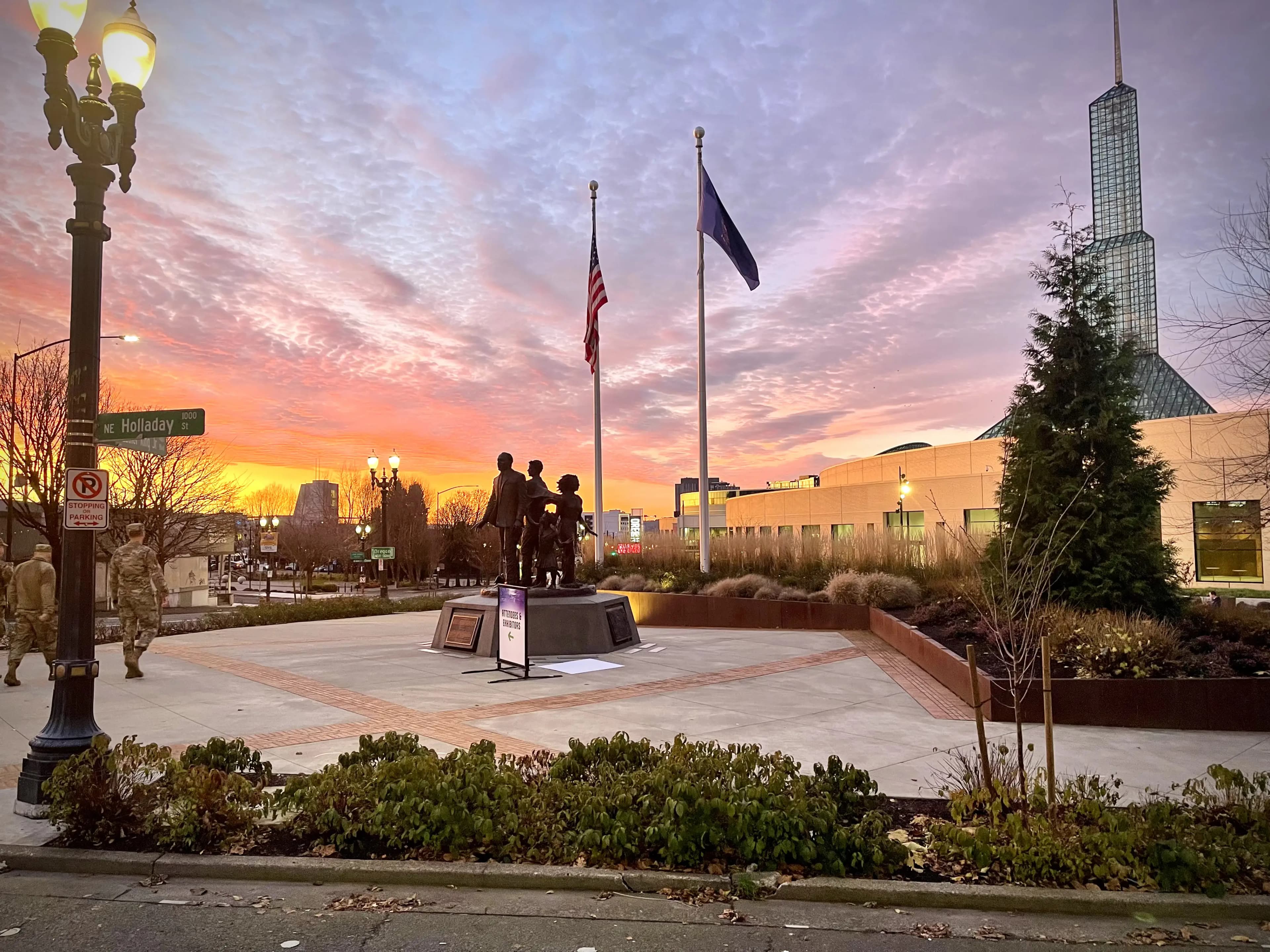
The DODIIS Worldwide 2023 Conference, held from December 12th to 14th at the Oregon Convention Center in Portland, Oregon, was an insightful event, embodying the theme "Chaos to Clarity." Set against the backdrop of Portland's vibrant '90s culture and its contrasting issues of poverty, homelessness, and drug addiction, the conference was a poignant reminder of the complex world we navigate.
While the conference felt scaled down compared to previous years, reflecting broader economic challenges, the focus on crucial themes remained undiminished. The necessity of strong partnerships across allied countries, industry, academia, and national labs was a recurring message, highlighting the critical role of collaboration in addressing global issues. The conference also reinforced the Intelligence Community's (IC) role as a fundamentally data-centric organization, emphasizing the importance of Artificial Intelligence/Machine Learning (AI/ML) and Zero Trust architecture.
A significant part of the discussions revolved around the People's Republic of China (PRC) as a pacing challenger in strategic competition, underscoring the urgency in addressing the emerging threats and complexities in global defense.
The Machine-Assisted Analytic Rapid-Repository System (MARS), while a notable topic in the past, was given less prominence this year, possibly due to its development challenges and shifting timelines.
Above all, DODIIS Worldwide 2023 highlighted the invaluable role of its participants. The opportunity for networking remained a crucial element, with valuable discussions from organizations like Peraton, Northrop Grumman, and Second Front. The expo provided an excellent platform for learning about the capabilities of various industry partners and their potential contributions to the Department of Defense and the Intelligence Community.
In conclusion, DODIIS Worldwide 2023, though somewhat constrained in scale, successfully maintained its focus on critical discussions and networking. The event highlighted the importance of collaborative efforts and a data-driven approach in intelligence and defense, especially in the context of the escalating strategic competition with the PRC, encapsulating the theme of moving from "Chaos to Clarity."
I would like to clarify that the observations and summaries I have shared are based on my personal experience at the DODIIS Worldwide 2023 conference. These reflections do not represent the views or opinions of my employer or any other individuals or entities. My aim was to provide an objective summary of the sessions I attended, and it's important to note that I did not participate in all the sessions offered at the conference. My account is solely based on the content and discussions from the specific sessions I was able to attend.
Day One
Plenary Session: Opening Remarks
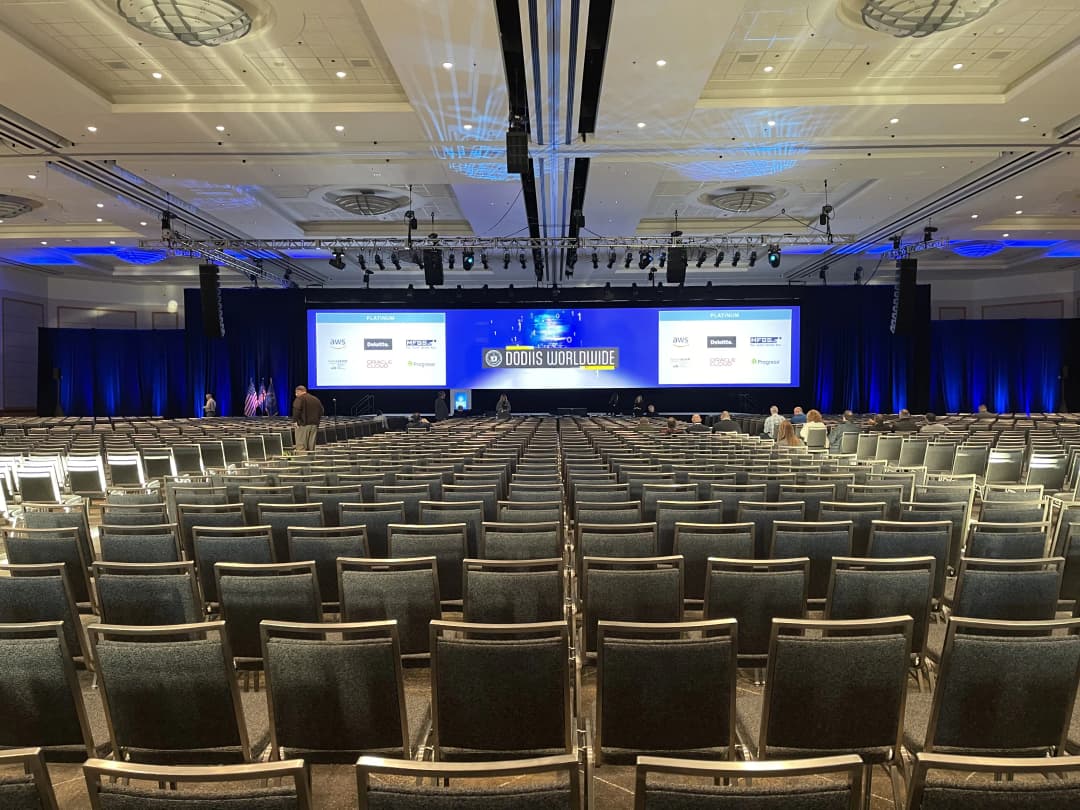
Speaker: Mr. Douglas O. Cossa, Chief Information Officer (CIO), Defense Intelligence Agency (DIA)
In his opening speech at the DoDIIS Worldwide Conference, now in its 20th year and first time in Portland, Oregon, Mr. Douglas O. Cossa, the Chief Information Officer of the Defense Intelligence Agency, emphasized the importance of innovation in times of chaos. Highlighting Portland's tech-driven environment, known as the "Silicon Forest," he introduced the conference's theme, "Chaos to Clarity." Mr. Cossa invoked Michael Gelb's words, "Confusion is the welcome mat at the door of creativity," aligning it with the theme to underline that chaos, while not completely predictable, isn't random and spurs innovative thinking.
Mr. Cossa underscored the urgent need to approach problem-solving differently, noting that significant innovations often arise during challenging times, such as war or economic hardship, referencing historical events like 9/11 and the Great Recession. He pointed out that these periods of turmoil have historically refocused efforts on assessing and improving systems, urging a proactive stance to anticipate and address challenges.
He highlighted the Defense Intelligence Agency's (DIA) evolution in response to various historical and contemporary challenges, citing examples like the JWICS Modernization stemming from the early '90s Gulf War and the DODIIS Modernization during the sequestration period. The development of capability pipelines, he noted, was a response to the COVID-19 pandemic, among other examples.
Mr. Cossa boldly stated that "DIA is a technology company that happens to win wars for our nation," emphasizing the foundational role of technology in the agency's mission. To illustrate this, he showcased a DIA video highlighting a future driven by advanced technologies such as AI/ML, robotics, synthetic biology, and quantum computing. This vision set the tone for the conference, underscoring the critical role of technological innovation in national defense and intelligence.
Watch the recording of this session.
Plenary Session: DIA Mission
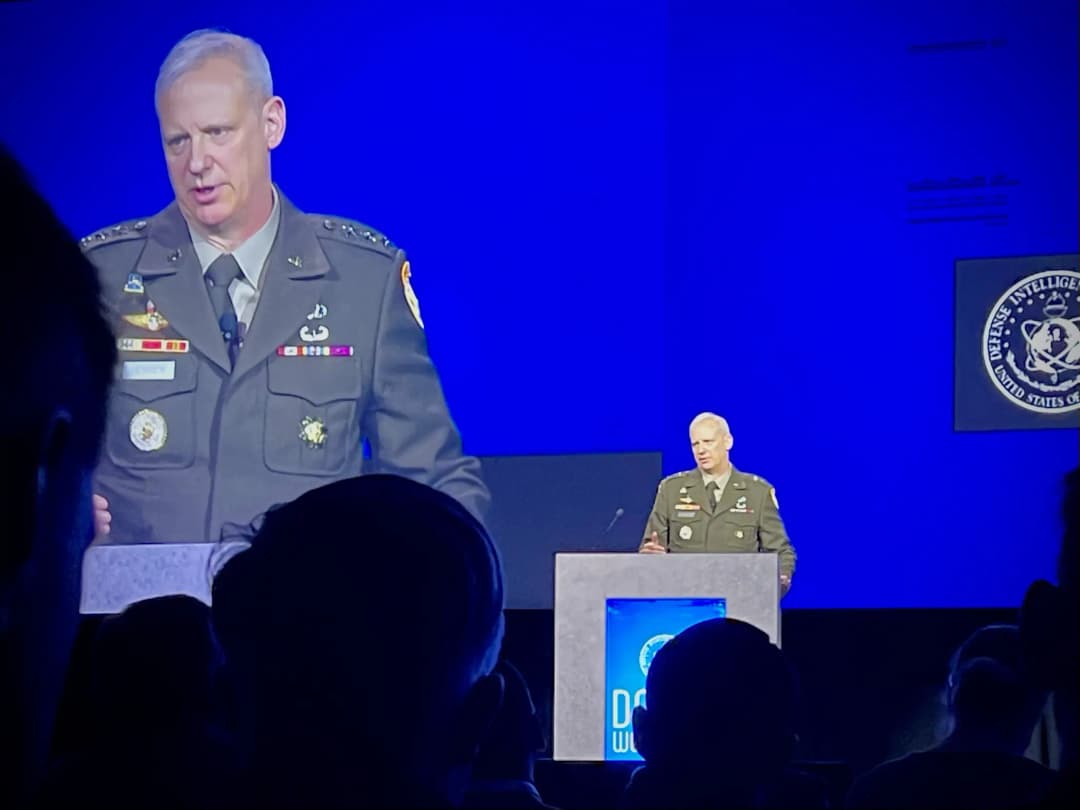
Speaker: Lieutenant General Scott D. Berrier, USA; Director, Defense Intelligence Agency (DIA)
Lieutenant General Scott D. Berrier, Director of the Defense Intelligence Agency (DIA), discussed the evolving mission of the DIA, hinting at his impending retirement. He outlined the Foundational Military Intelligence (FMI) goal of providing comprehensive insights into global military capabilities and stressed the need for DIA to adapt to strategic competition through reorganization, retooling, and cultural change. He referenced the pivot towards the Pacific initiated in 2013 under President Obama's direction and drew parallels between the current geopolitical landscape and the strategic tensions of 1984.
Lt. Gen. Berrier emphasized the transformation of intelligence practices post-9/11 and the need to adjust strategies in response to challenges from the PRC, Russia, and regional actors like Iran. The importance of JWICS (Joint Worldwide Intelligence Communications System) and providing decisive support to Combatant Commands (COCOMs) was highlighted.
In discussing the DIA's technological progress, Lt. Gen. Berrier excitedly noted, "Recall in past years we discussed MARS? Well, it's here!" This comment, though optimistic, perhaps refers more to the initial stages of development showing some success, rather than indicating the project's completion. To me, it implies the beginning of MARS' implementation rather than its full operational status, as there remains a substantial amount of work to achieve even basic capabilities comparable to MIDB.
The speech concluded with the announcement of Jeff Cruz as his likely successor.
Watch the recording of this session.
Plenary Session: USAF Mission
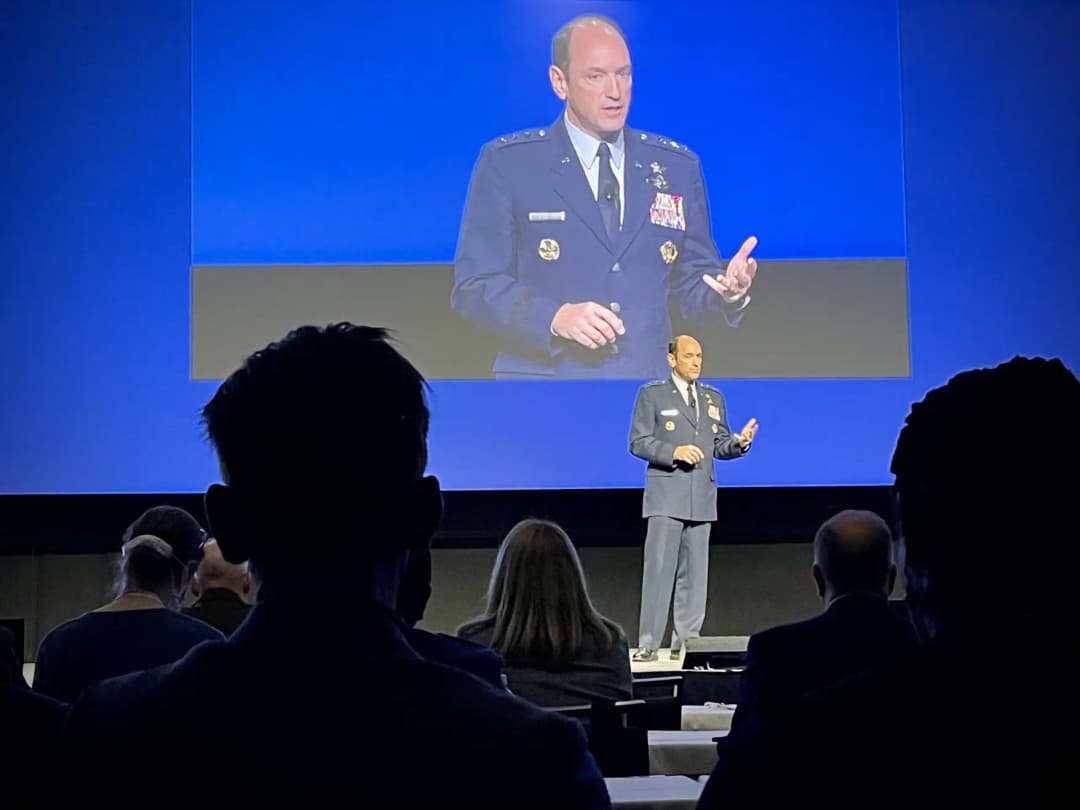
Lieutenant General Kevin B. Kennedy, USAF, Commander of the Sixteenth Air Force, began his plenary, titled "The Power of Information in Competition," with a Dropkick Murphy's song, reflecting his Boston roots. He showcased a video discussing threats like disinformation, the role of the 16th Air Force, ISR, global strike, and command and control (C2), emphasizing the theme "empowered airmen delivering outcomes for our nation." His mission focuses on generating insights, competing, and preparing for crisis and conflict in a connected, proliferated, and persistent information environment.
Kennedy compared today's landscape to the 1980s, highlighting the technological evolution and the great power competition, particularly with the People's Republic of China (PRC). He noted the democratization of innovation brought by technology, which includes threat actors, and stressed the challenge of gaining an advantage, especially as China continues to steal US technology, illustrated by the similarities between the US F-22 Raptor and China's Shenyang J-35.
Lt. Gen. Kennedy stressed the critical role of information sharing in modern conflict, as exemplified by the situation in Ukraine. He emphasized the need for rapid coalition building, sharing information at the speed of conflict, and having confidence in networks, advocating for proactive measures rather than reactive ones in crises. He highlighted the importance of resilience through partnerships with entities sharing similar ideals, interests, and values, like NATO.
He also presented the Phoenix Initiative, outlining goals such as Strengthening Resilience, Growing Readiness, Increasing Combat Effectiveness, and Maturing Information Warfare. These goals are to be achieved through partnerships with academia, industry, and government sectors in science and technology, emphasizing the necessity of driving innovation, talent recruitment, and global research and development to drive mission outcomes. Acknowledging the budgetary constraints of the military, he underlined the need for forming partnerships to build and leverage technology swiftly.
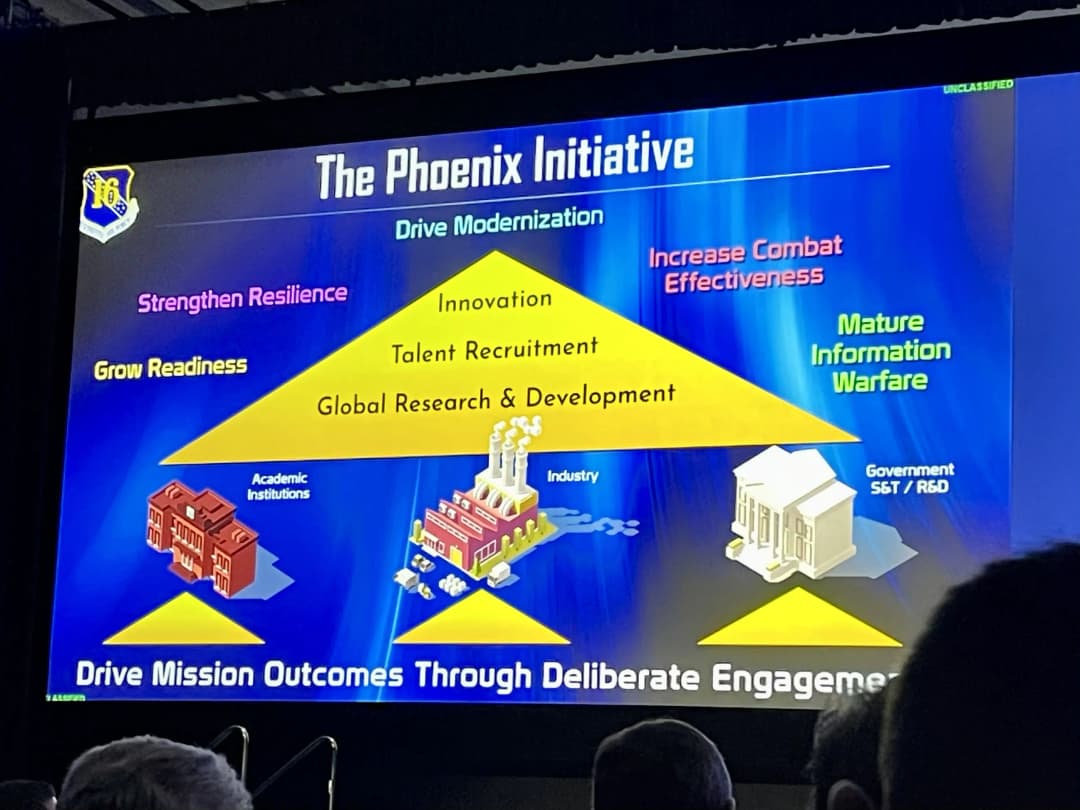
Kennedy also expressed a growing concern over the pacing threat of the PRC and outlined strategies such as "reveal to deter," "conceal to defeat" (preventing adversaries from building solutions to circumvent ours), and "expose and disrupt" to deny adversaries' plans. He stressed the importance of these diverse approaches in maintaining a strategic edge in an increasingly complex global environment.
Watch the recording of this session.
Plenary Session: Fireside Chat
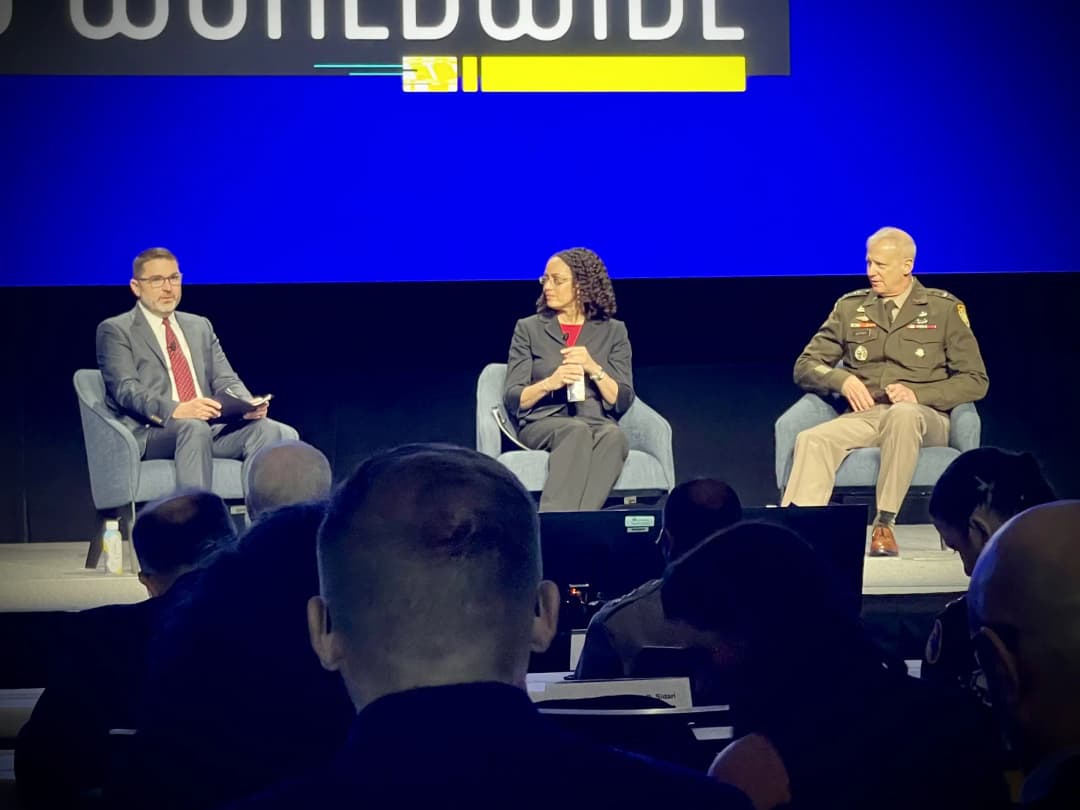
Panelists:
- Mr. Douglas O. Cossa, Chief Information Officer, Defense Intelligence Agency
- Lieutenant General Scott D. Berrier, USA, Director, Defense Intelligence Agency
- Dr. Stacey A. Dixon, Principal Deputy Director of National Intelligence
In a fireside chat at the DODIIS WW conference, Mr. Douglas O. Cossa, Chief Information Officer of the Defense Intelligence Agency (DIA), engaged in a thoughtful dialogue with Lieutenant General Scott D. Berrier, Director of the DIA, and Dr. Stacey A. Dixon, Principal Deputy Director of National Intelligence.
Mr. Cossa began by asking about progress areas in intelligence. Dr. Dixon noted that cyber and climate change are evolving challenges, with significant strides made in strengthening relationships within the intelligence community (IC) and with Five Eyes (FVEY) partners. On the role of technology in strategic competition, Dr. Dixon emphasized the criticality of Artificial Intelligence (AI), stating that whoever leads in AI will have a significant advantage.
Discussing lessons from Ukraine-Russia and Israel-Hamas conflicts, Lt. Gen. Berrier highlighted the importance of leadership in quickly sharing sensitive information to expose the truth and the effectiveness of having robust networks in place.
In terms of data and emerging technology, Dr. Dixon described the intelligence business as fundamentally a data organization, stressing the need to effectively manage data collection, utilization, and disposal.
Regarding the Machine-Assisted Analytic Rapid-Repository System (MARS) and its use by the DIA, Lt. Gen. Berrier shared that MARS will provide a significant intelligence advantage, integrating graphics from the Modernized Integrated Database (MIDB) and kinetic operations, with plans to fully implement AI and Machine Learning (ML) by 2025/2026.
The conversation then shifted to alliances and partnerships, where Dr. Dixon advocated for expanding collaborations, including with industry and academia, while Lt. Gen. Berrier emphasized the importance of a maintaining diverse partnerships.
On human resources and recruitment, Lt. Gen. Berrier discussed modernizing DIA's legacy HR systems and streamlining the clearance process without compromising security. Dr. Dixon expanded on this, aiming to reduce onboarding time and advocating for proactive recruitment strategies, especially in STEM-focused high schools. Lt. Gen. Berrier emphasized the value of people, empathy, and engagement.
As for the worst existential threat, Dr. Dixon identified cyber threats due to their low barrier to entry, while Lt. Gen. Berrier pointed out strategic surprises and the challenge of recruiting and nurturing talent.
Reflecting on their successes, Dr. Dixon highlighted achievements in interoperability, information sharing, and AI/ML initiatives. Lt. Gen. Berrier cited the breaking down of silos and the strategic repositioning of the DIA.
Finally, when asked for their best advice, Dr. Dixon recommended considering opportunities suggested by trusted individuals, and Lt. Gen. Berrier shared his insights on trusting one's gut instinct, being a good leader, and the importance of engaging people respectfully.
Watch the recording of this session.
Plenary Session: NGA Mission
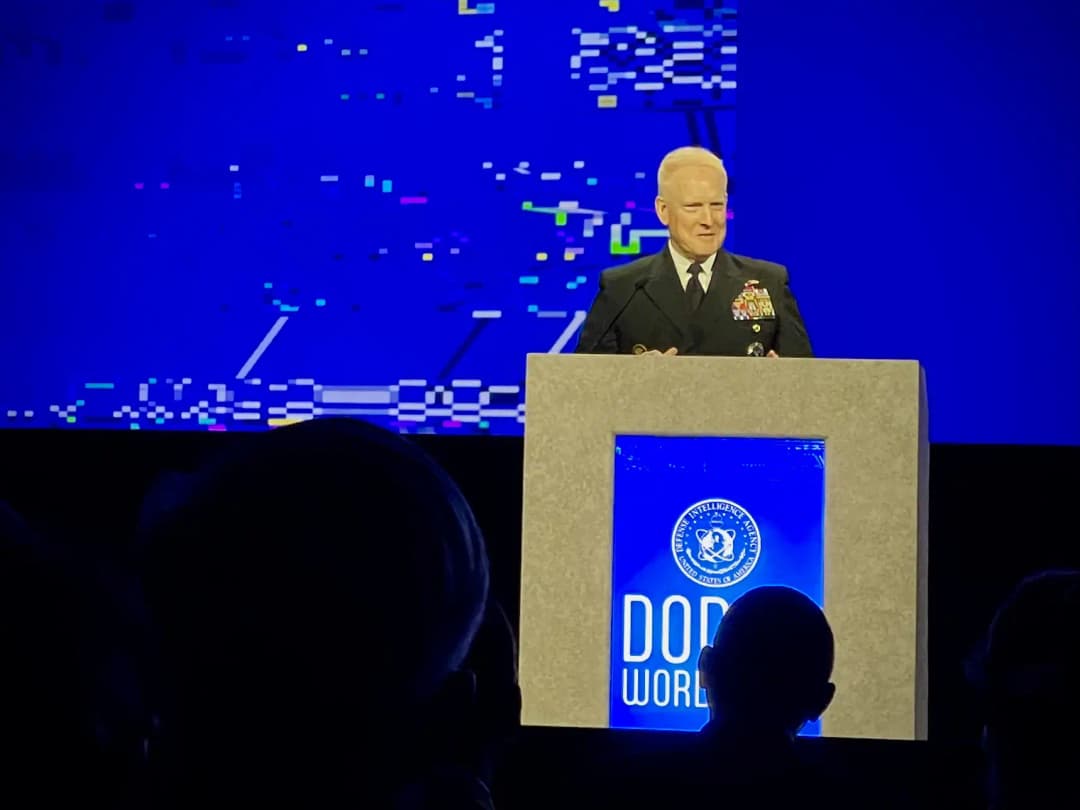
Speaker: Vice Admiral Frank Whitworth, USN; Director, National Geospatial-Intelligence Agency (NGA)
Vice Admiral Frank Whitworth, USN, Director of the National Geospatial-Intelligence Agency (NGA), entered his session to the Foo Fighters' song "Times Like These," and proceeded to discuss the NGA's mission. He outlined three key aspects: orchestrating informed collection of geospatial intelligence (GEOINT), integrating AI/ML with data dissemination, and embracing innovation.
For the first aspect, Whitworth described GEOINT collection as a natural process for the NGA, emphasizing their significant work for Combatant Commands (COCOMs) over internal needs, highlighting their role as a Combat Support Agency.
The second aspect involved managing the overwhelming influx of data, necessitating AI for rapid interpretation. He mentioned the NGA's takeover of Project Maven, now a Program of Record, which enhances data fusion capabilities. Whitworth underscored the importance of AI assurance and governance, referencing Presidential Executive Order 14110, and the training of intelligence analysts in GEOINT AI. The AI's role extends to machine learning, computer vision, social media analysis, monitoring arctic sea ice melting, humanitarian efforts, and more, with a particular focus on China.
The third aspect, embracing innovation, revolves around understanding the centrality of data. Whitworth stated the NGA processes vast amounts of data, more than any other agency. He touched upon the use of Joint Regional Edge Nodes (JREN) to transition from raw data to actionable intelligence while maintaining a robust cybersecurity posture through a zero-trust approach.
Watch the recording of this session.
Plenary Session: Joint Staff (JS) J2 Mission
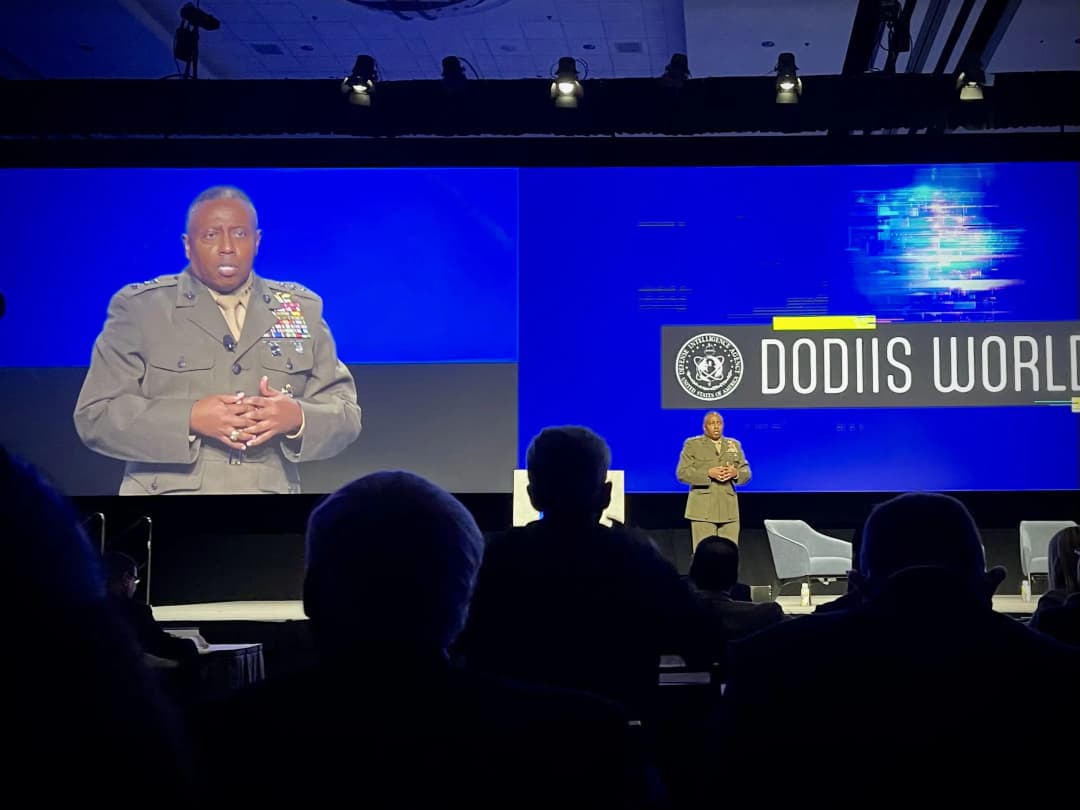
Speaker: Lieutenant General Dimitri Henry, USMC; Director for Intelligence, Joint Staff (J2)
Lieutenant General Dimitri Henry, USMC, Director for Intelligence on the Joint Staff (J2), made a memorable entrance to his session with the Darth Vader theme, symbolizing "hope" and his role in bringing balance to his team and the Defense Intelligence Enterprise (DIE), aligning with the DoDIIS WW 2023 theme of moving from chaos to clarity. He emphasized the importance of readiness against the pacing threat of China, referencing General Milley's quote, "The time is now and the window for strategic victory is closing." He expressed concern about not acting at scale or pace, recalling a chilling statement from Adm. Aquilino of INDOPACOM comparing the current situation to the eve of 9/11.
Lt. Gen. Henry highlighted the issue of China acquiring and sometimes improving upon U.S. technology. He asserted that the real advantage lies in people, innovation, and attitude, noting the value of allies and partners. Throughout his speech and a subsequent panel discussion, he humorously teased Mr. Cossa for excluding him from an earlier fireside chat, sharing his career advice to "never walk past a problem."
He acknowledged challenges in domains traditionally dominated by the U.S. and stressed the importance of retaining and nurturing Subject Matter Experts (SMEs). His talk covered not just China, but also other adversaries, AI, and climate change. As Director for Intelligence, his role at DoDIIS WW 2023 includes ensuring necessary authorizations, requests, and funding for various intelligence efforts, like CIP/COP, JWICS, and disconnection operations.
Lt. Gen. Henry emphasized that the strength of the organization lies in its people, underscoring the need for proper training, education, and problem understanding. He cautioned against missing solutions due to a lack of problem comprehension, quoting, "The only thing worse than walking past a problem, is not understanding the problem and walking past it." He concluded on a positive note, discussing the joint staff's involvement in experimentation projects like the Global Information Dominance Experimentation (GIDE) and the Joint Warfighter Concept (JWC) v3.0, offering a message of hope amidst challenges.
Watch the recording of this session.
Plenary Session: Intelligence Integration Panel
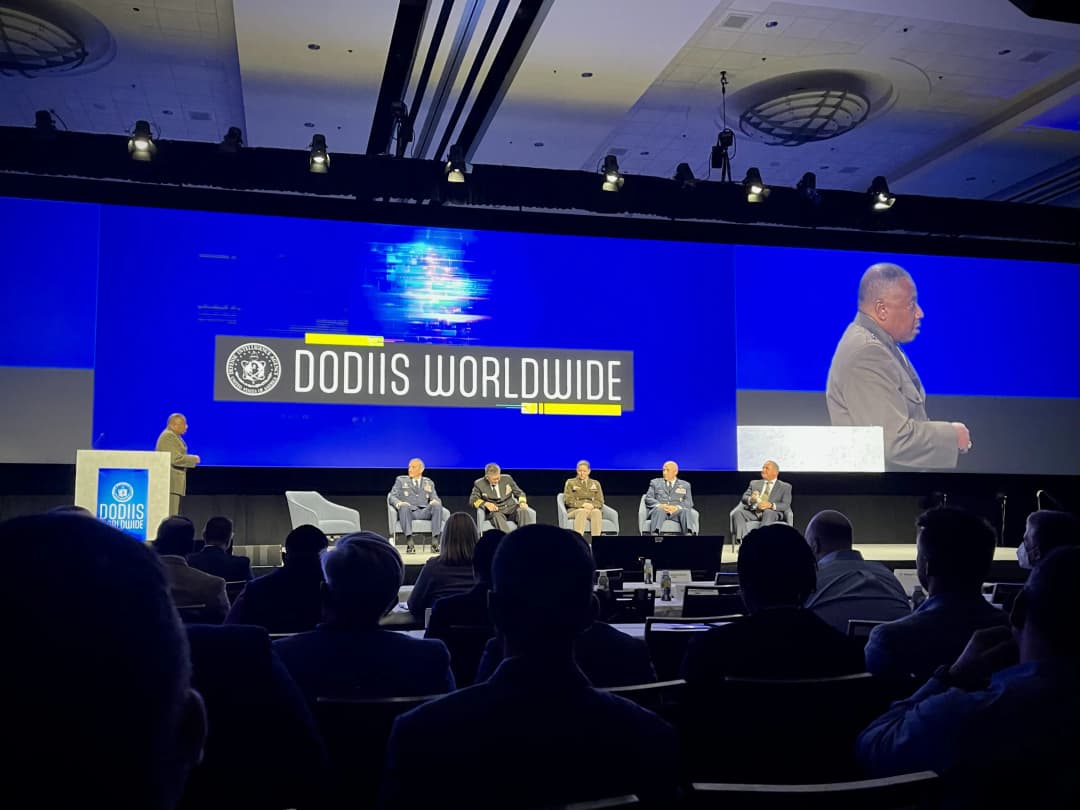
Moderator: Lieutenant General Dimitri Henry, USMC; Director for Intelligence, Joint Staff (J2)
Panelists:
- Brigadier General Maurizio D. Calabrese, USAF; Director of Intelligence and Information, North American Aerospace Defense Command (NORAD) and United States Northern Command (USNORTHCOM)
- Major General Dustin A. Shultz, USA; Director of Intelligence, J-2, United States Southern Command (USSOUTHCOM)
- Captain John W. Shone, USN; Director for Intelligence (J2), United States Forces Japan (USFJ)
- Brigadier General Brian D. Sidari, USAF; Director of Intelligence, United States Space Command (USSPACECOM)
- Mr. Peter J. Tragakis; Director, Communications Systems and Chief Information Officer, United States Special Operations Command (USSOCOM)
In an engaging Intelligence Integration Panel moderated by Lieutenant General Dimitri Henry, USMC, Director for Intelligence, Joint Staff (J2), panelists from various military commands discussed critical technology issues and the importance of partnerships in intelligence and defense. The panel included Brigadier General Maurizio D. Calabrese from North American Aerospace Defense Command/Northern Command (NORAD/NORTHCOM), Major General Dustin A. Schultz from Southern Command (SOUTHCOM), Captain John W. Shone from United States Forces Japan (USFJ), Brigadier General Brian D. Sidari from United States Space Command (SPACECOM), and Mr. Peter J. Tragakis from Special Operations Command (SOCOM) J6.
The panelists addressed specific technological challenges they face. SOCOM J6 emphasized the need for cross-domain solutions and zero-trust cybersecurity. SPACECOM highlighted the lack of a unified facility and the transition from peacetime to wartime lexicon, underscoring the need to align industry solutions with military needs. SOUTHCOM pointed out their limited Intelligence, Surveillance, and Reconnaissance (ISR) capabilities and the complexities in intelligence sharing. USFJ discussed the difficulties in supporting multilateral efforts due to network challenges, while NORAD/NORTHCOM emphasized the need for global awareness and providing policymakers with comprehensive domain awareness.
Lt. Gen. Henry questioned the distinction between peacetime and wartime processes, advocating for a unified approach. SPACECOM clarified the need for consistent terminology across different operational scenarios. The panel then discussed the value of partnerships. SOCOM J6 highlighted the importance of establishing early relationships, as evidenced in Ukraine. SOUTHCOM emphasized building trust for effective partnerships, while USFJ noted the increasing strategic competence of the People's Republic of China (PRC), prompting Japan to bolster its defense spending.
The panelists proudly shared their advances in technology. NORAD/NORTHCOM discussed Northstar's capabilities in decision-making operations, SPACECOM highlighted their use of the National Geospatial-Intelligence Agency's (NGA) MAVEN for data integration, and SOCOM J6 mentioned their advancements in digital force protection and acquisitions.
In discussing the era of strategic competition, the panelists acknowledged the need for a global approach, the importance of keeping pace with technological and policy changes, and the challenges posed by existing policies. SPACECOM emphasized focusing on controllable aspects and avoiding conflict in space due to its complexity.
Finally, Lt. Gen. Henry asked about the future of the joint force and maintaining up-to-date partnerships. The responses included automating processes (SPACECOM), user-friendly systems (USFJ), enhanced cybersecurity (SOCOM), and the necessity of trusting data, networks, and systems, especially considering the opening Northern sea route (NORAD/NORTHCOM). The panelists emphasized the importance of expanding intelligence-sharing from the Five Eyes to broader alliances.
Watch the recording of this session.
Plenary Session: IC CIO Mission
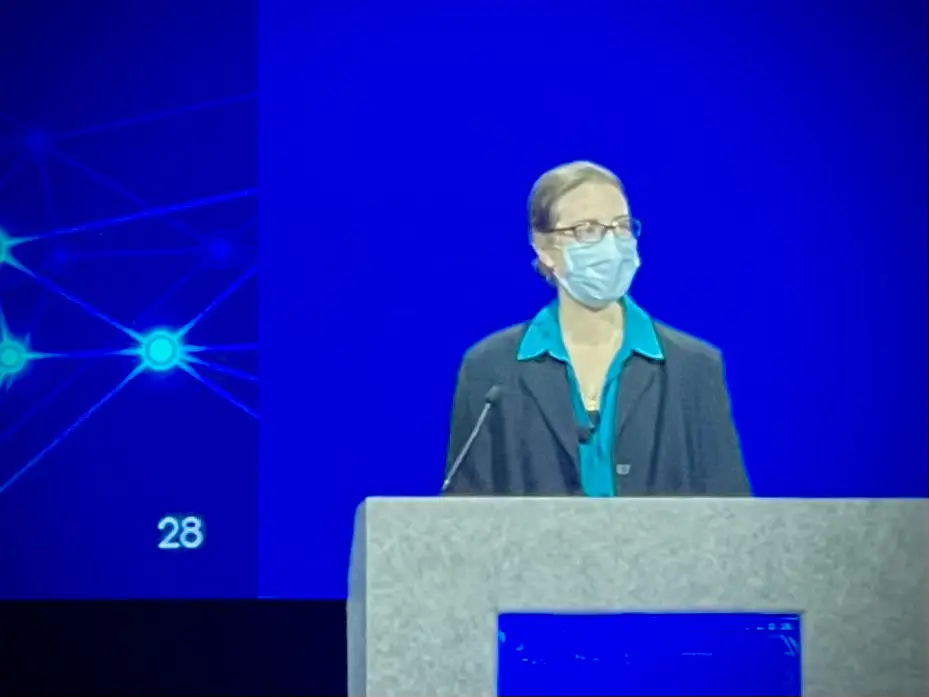
Speaker: Dr. Adele J. Merritt, Intelligence Community (IC) Chief Information Officer (CIO)
Dr. Adele J. Merritt, the Intelligence Community Chief Information Officer (IC CIO), delivered an insightful presentation covering her priorities, challenges, and solutions in the realm of intelligence technology. She referenced the National Intelligence Strategy 2023 and elaborated on the path of the Office of the Director of National Intelligence (ODNI) under her leadership as the IC CIO. In her role, Dr. Merritt provides vision and oversight for IT transformation, emphasizing the modernization of the Intelligence Community Information Technology Enterprise (IC ITE).
Dr. Merritt outlined her main strategy, which focuses on four key areas: architecting for the future, improving cybersecurity, empowering the workforce, and enriching partnerships. She detailed these strategies further in the IC ITE 2022-2027 Project Herald document and the IC Data Strategy 2023-2025 document.
Acknowledging the dynamic nature of technology, she stressed that modernization and transformation are ongoing processes. Dr. Merritt also highlighted that serving in the government can take various forms, including roles as civilians or contractors. She pointed out that the smooth functioning of systems often goes unnoticed, but shortcomings are quickly evident, emphasizing the need for zero-trust environments in cybersecurity.
Dr. Merritt concluded by underscoring the importance of taking care of government civilians who commit to service every day, acknowledging their vital role in the successful operation of the intelligence community.
Watch the recording of this session.
Plenary Session: Five Eye Panel
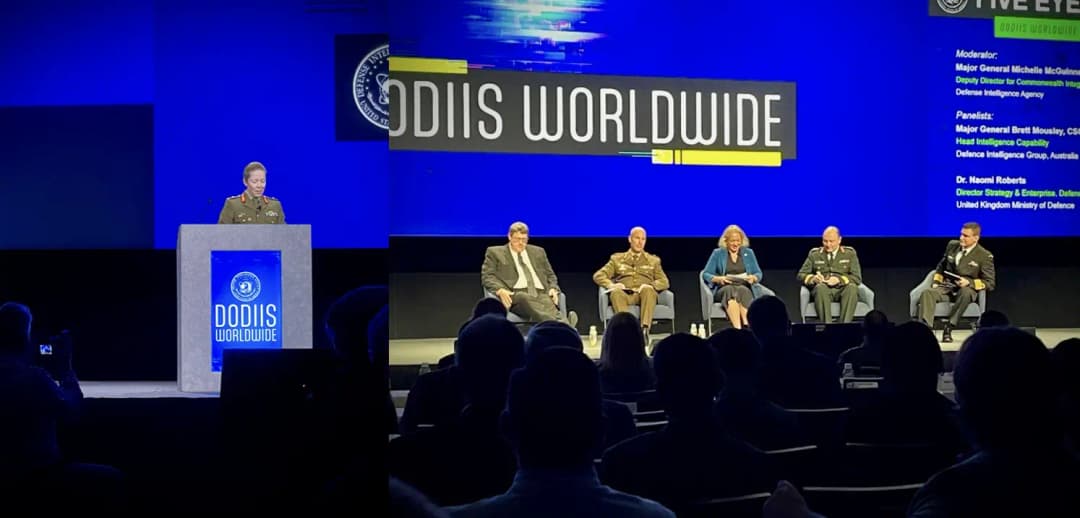
Panelists:
- Major General Brett Mousley, CSC; Head Intelligence Capability, Defence Intelligence Group, Australia
- Dr. Naomi Roberts; Director Strategy & Enterprise, Defence Intelligence, United Kingdom Ministry of Defence
- Brigadier-General Eric Vandenberg; Director, General Intelligence Enterprise, Canadian Department of National Defence
- Captain Brendon Oakley, RNZN; Deputy Chief of Defence Intelligence, New Zealand Defence Force
- Mr. Gregory L. Ryckman, Deputy Director for Global Integration, Defense Intelligence Agency
In the first-of-its-kind Five Eyes Panel at the DODIIS WW conference, Major General Michelle McGuinness, Deputy Director for Commonwealth Integration at the Defense Intelligence Agency, led a discussion with a distinguished panel. Walking out to AC/DC, in a nod to her Australian heritage, McGuinness opened by highlighting the effectiveness of the Torch system on JWICS for Five Eyes (FVEY) partners and the in-development early access to the MARS system.
The panelists, representing intelligence agencies from the Five Eyes nations, discussed their specific challenges and technological needs. Mr. Gregory L. Ryckman from the DIA expressed concerns about apathy and emphasized the importance of Pacific partnerships akin to NATO's role in Europe. Major General Brett Mousley from Australia discussed the challenges of scaling data, people, and processes. Dr. Naomi Roberts from the UK highlighted the need for a pivot from platform-driven to data-centric approaches, advocating for hyper-agility, scale, and connectivity, particularly in the context of limited budgets. Brigadier-General Eric Vandenberg from Canada stressed the importance of personnel retention and the difficulties of operating in a bureaucratic environment with outdated systems. Captain Brendon Oakley from New Zealand emphasized creating simple, sustainable systems.
Regarding the most pressing technological needs, Captain Oakley from New Zealand advocated for broad thinking, secure, interoperable, scalable, resilient, automated solutions with good user experience. Brigadier-General Vandenberg from Canada called for coherent cloud transition, zero trust, adaptability, and the utilization of existing resources. Dr. Naomi Roberts from the UK reiterated the need for 'hyper' approaches and zero trust, highlighting the value of diverse partnerships. Major General Mousley from Australia emphasized the need for secure collaboration and rapid integration with MARS in DDIL environments. Mr. Ryckman from the DIA spoke about operating in denied environments and the importance of commonality in Common Intelligence Picture (CIP).
In response to what can be learned from industry, Captain Oakley from New Zealand mentioned mimicking the agility and speed of industry in experimentation and scaling. When asked about what they want from industry, Brigadier-General Vandenberg from Canada expressed interest in niche expertise, particularly in the Arctic, while Dr. Naomi Roberts from the UK urged for more integrated partnerships with industry, moving away from a traditional supplier-purchaser model to a partnership approach. Major General Mousley from Australia spoke about the need for software-defined warfare solutions.
The panel also discussed trust within the alliance. Mr. Ryckman from the DIA highlighted the frequent engagement with Five Eyes partners but noted the challenges posed by the disparity between policy and technology. Captain Oakley from New Zealand emphasized the centrality of people to trust. Brigadier-General Vandenberg from Canada and Dr. Naomi Roberts from the UK both addressed the evolving concept of trust in the context of the information age, with a focus on zero trust and the need to understand trust more maturely. Major General Mousley from Australia mentioned the importance of partners for their regional expertise and the constraints posed by policy on technology.
Watch the recording of this session.
Day Two
Plenary Session: USMC Mission
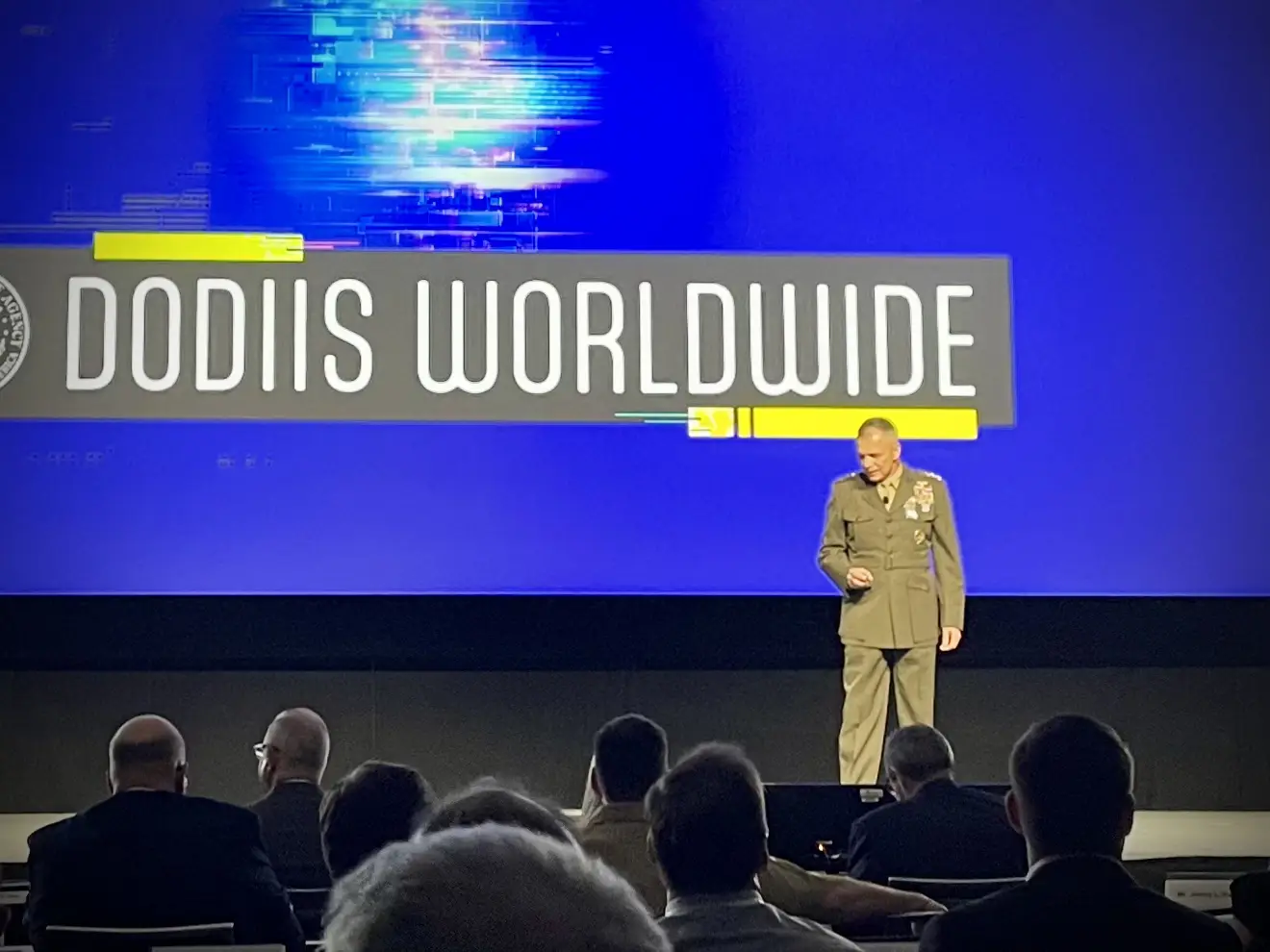
Lieutenant General Matthew G. Glavy, USMC, Deputy Commandant for Information of the United States Marine Corps, opened his session by discussing the challenges of change, quoting Niccolò Machiavelli on the difficulties associated with introducing new orders. He emphasized that "change is the mother of all risk" and identified the People's Republic of China as the primary Pacific threat, underscoring the need for an asymmetric data advantage.
It ought to be remembered that there is nothing more difficult to take in hand, more perilous to conduct, or more uncertain in its success, than to take the lead in the introduction of a new order of things. Because the innovator has for enemies all those who have done well under the old conditions, and lukewarm defenders in those who may do well under the new. This coolness arises partly from fear of the opponents, who have the laws on their side, and partly from the incredulity of men, who do not readily believe in new things until they have had a long experience of them.
Lt. Gen. Glavy drew parallels between the current situation and the Marine Corps' advantages in the Korean War, such as helicopters, carrier-based aircraft, and superior weaponry. He invoked Aristotle's belief that "the whole is greater than the sum of its parts" and likened today's era to the "fourth industrial revolution," highlighting the transformation in warfare. In this new context, he stressed that data is the new advantage and space-based weapons are critical, with a motto of "no space … no chance." He advocated accepting some risks to remain relevant.
Discussing maneuver warfare, Lt. Gen. Glavy emphasized the importance of the force, partnerships, and modernization, ensuring that warriors have an advantage in the "1's and 0's war." He presented a diagram illustrating a data-centric organization involving Command and Control (C2), Intelligence, Logistics, and force protection.
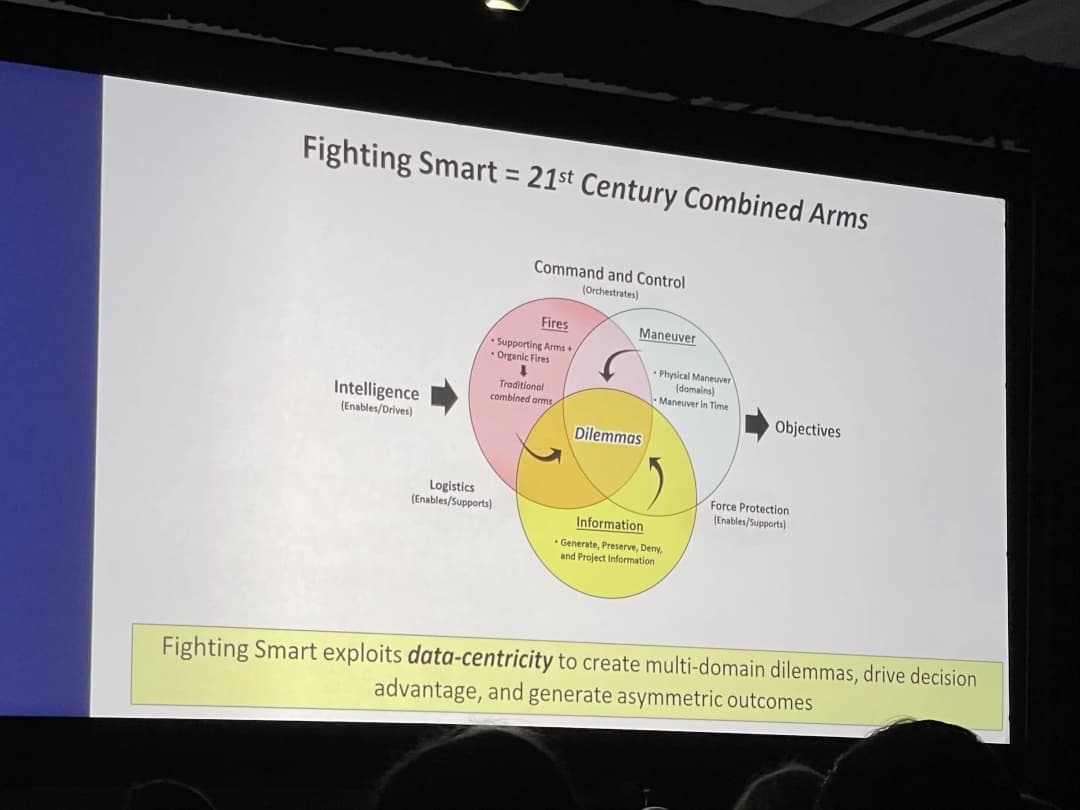
He highlighted the significance of location in force design, mentioning the U.S. investment in more bases in the Philippines and the strategic placement of Stand In Forces (SIF) at choke points. He described SIF as an extension of the fleet commander, instrumental in the strategy to "locate, close, and destroy" adversaries.
Lt. Gen. Glavy also discussed the various levels of authority and approval processes in leadership, emphasizing the necessity of partnerships to navigate these chains.
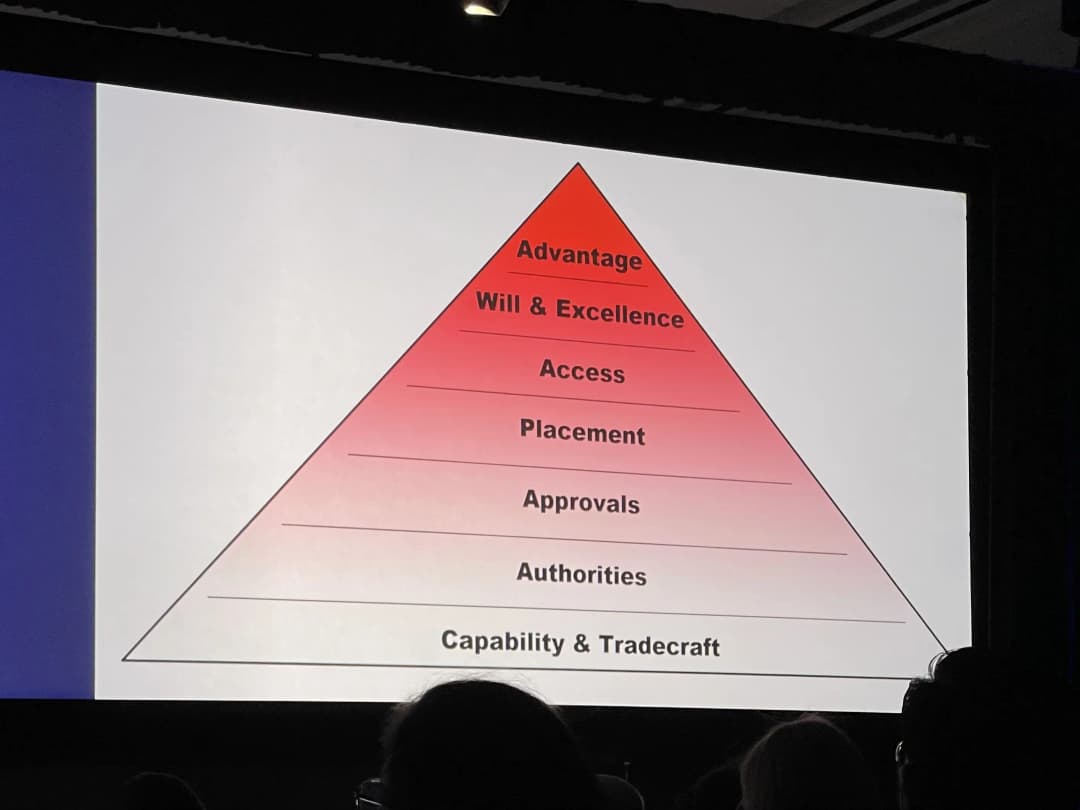
He then showed a chart on leveraging these partnerships, advocating for creating tempo and staying close to the action.
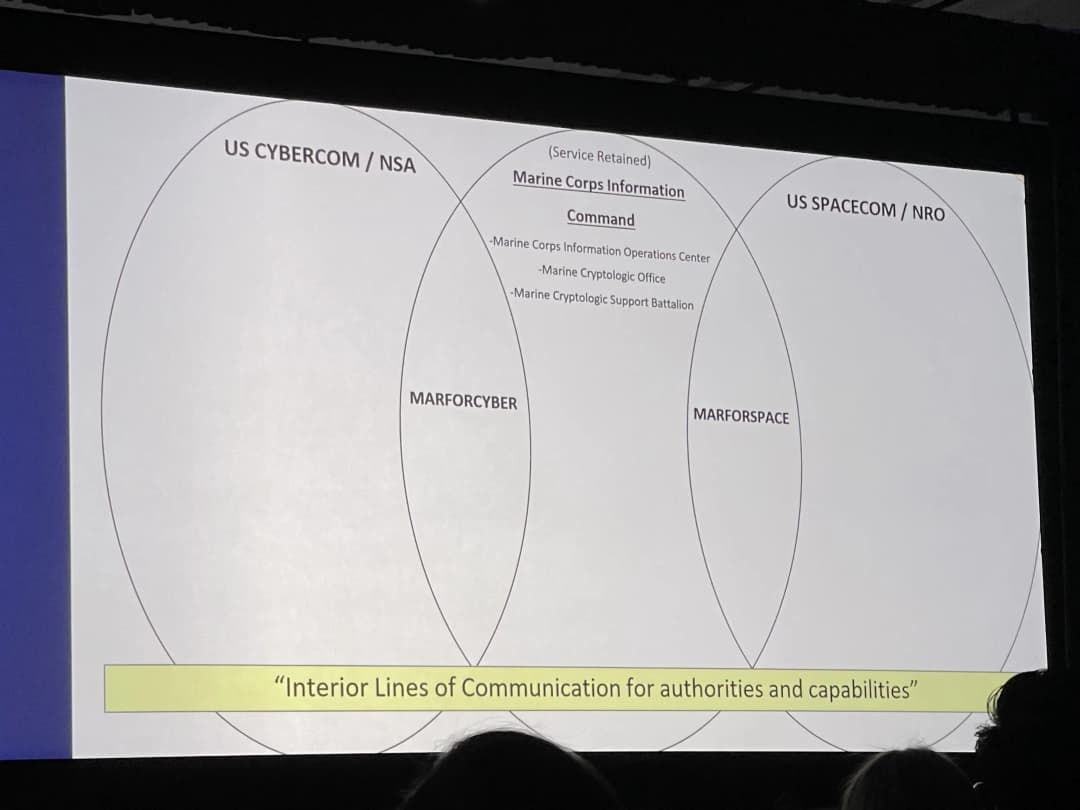
He concluded by discussing Colonel John Boyd, often cited for revolutionizing air combat and the OODA loop. He emphasized Boyd's "People, Ideas, Things" trinity, placing people first and highlighting the importance of integrating capabilities into the joint force.
Watch the recording of this session.
Plenary Session: DOD CIO Mission
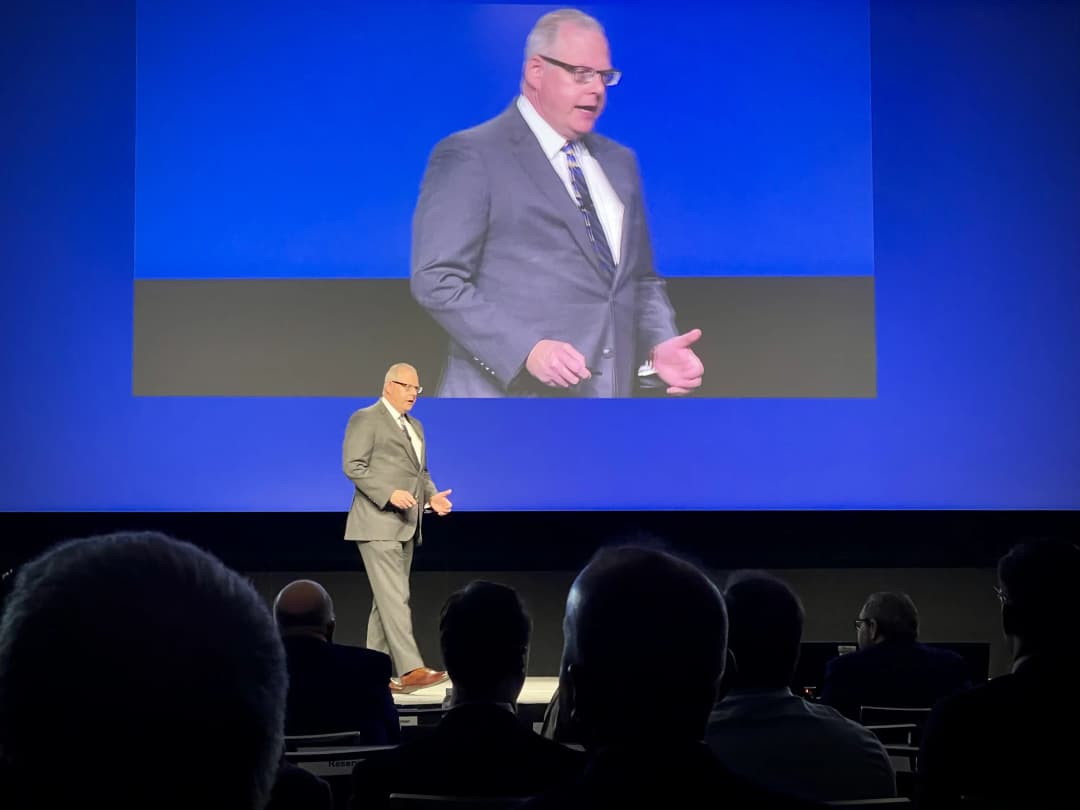
Speaker: Honorable John Sherman, Department of Defense Chief Information Officer
Honorable John Sherman, the Department of Defense Chief Information Officer, energetically walked out to DJ Snake and Lil Jon's "Turn Down for What" at his speaking session. He began by identifying the People's Republic of China (PRC) as the United States' pacing challenge, specifically addressing the ongoing tensions in the Taiwan Strait and the U.S.'s commitment to freedom of navigation and air and maritime patrols in the region. He also touched upon the Ukraine-Russia conflict, noting the juxtaposition of a 21st-century digital battlefield with traditional trench warfare.
Sherman highlighted U.S. successes in the Red Sea, where the USS Carney has effectively countered Houthi drone threats. Emphasizing the unpredictable nature of conflict, he remarked, "the enemy also gets a vote," underlining the necessity of adaptable training.
In his talk, Sherman outlined the characteristics of future information and Command, Control, and Communications (C3) technology, showing a chart to illustrate these principles.
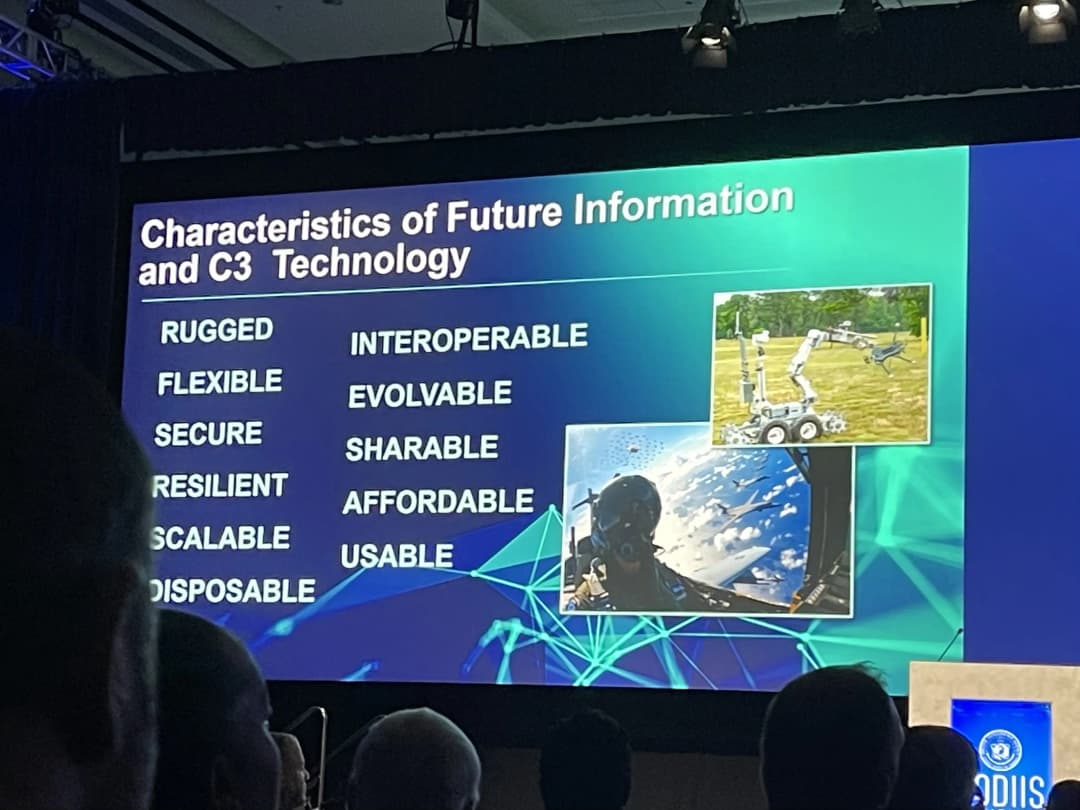
He delved into the Department of Defense's Future Priorities, which include:
- Edge and Cloud Computing: Transitioning from today's Joint Warfighting Cloud Capability (JWCC) to future endeavors like the Joint Operating Environment (JOE) and advanced Edge Capabilities, leading up to JWCC v2.0.
- Cybersecurity: Achieving zero trust by 2027, securing the Defense Industrial Base (DIB), and implementing the Cybersecurity Maturity Model Certification (CMMC).
- Transport, Positioning, Navigation, and Timing (PNT), and Environmental Sensing: Focusing on Satellite Communications (SATCOM), 5G/Open Radio Access Network (O-RAN), Optical Network Terminal (ONT) Modernization, and spectrum sharing within the Continental United States (CONUS).
- Software Advantages: Learning from soldier coders in Ukraine, moving towards DevSecOps, building a software factory ecosystem, creating continuous Authority to Operate (cATO), and encouraging more reciprocity for ATOs.
- Combat-Ready Technology: Moving away from the status quo, focusing on practical and effective technology, establishing User Experience (UX) efforts, addressing technical debt, technology refreshes, and better enterprise licenses.
- Foundational Capabilities: Prioritizing people and talent, focusing on Combined Joint All-Domain Command and Control (CJADC2), AI data utilization, and technologies like Replicator.
Sherman concluded his session by challenging the audience with the question, "Are we ready to shock our adversaries again?" - a call to action for continuous innovation and preparedness in the face of global threats.
Watch the recording of this session.
Plenary Session: IC CDO Mission
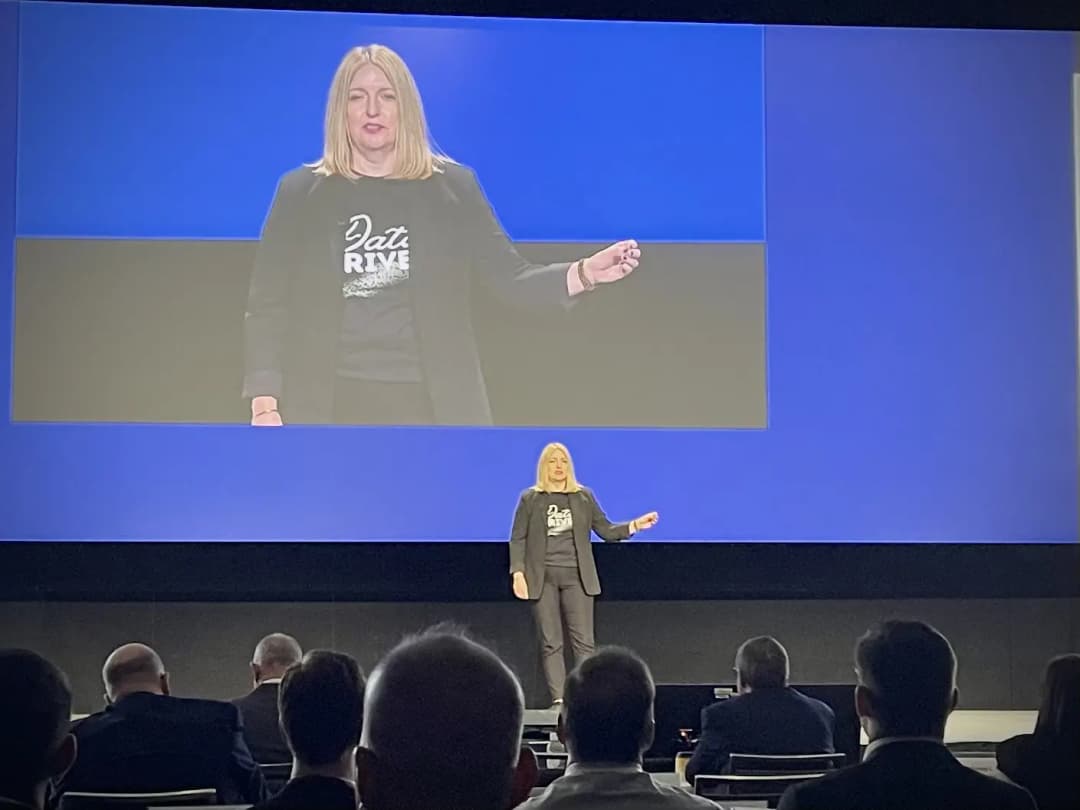
Speaker: Ms. Lori Wade, Intelligence Community Chief Data Officer (IC CDO) and Assistant DNI for Data and Partnership Interoperability
Ms. Lori Wade, the Intelligence Community Chief Data Officer (IC CDO) and Assistant Director of National Intelligence for Data and Partnership Interoperability, made a memorable entrance to her session with The White Stripes' "Seven Nation Army," signaling her determination and strength in the field of data. Emphasizing her commitment, she donned a "Data-driven" t-shirt, perfectly setting the stage for her briefing titled "Clarity out of Data Chaos."
Ms. Wade reiterated the point made earlier by the Principal Deputy Director of National Intelligence that intelligence fundamentally starts with data, reinforcing the concept that the Intelligence Community is a data-centric organization. However, she humorously observed that sometimes "we do easy hard, and hard easy," highlighting the need for a more streamlined approach to data handling.
In her presentation, Ms. Wade showcased a chart detailing the data-centric experience and strategic vision, emphasizing her goal for a laser-focused data-centric user experience. She expressed her concern about inefficient data practices, recalling her visit to the United States Indo-Pacific Command (USINDOPACOM), where she witnessed "swivel chair fat fingering" involving manual spreadsheets - an inefficient and error-prone method.
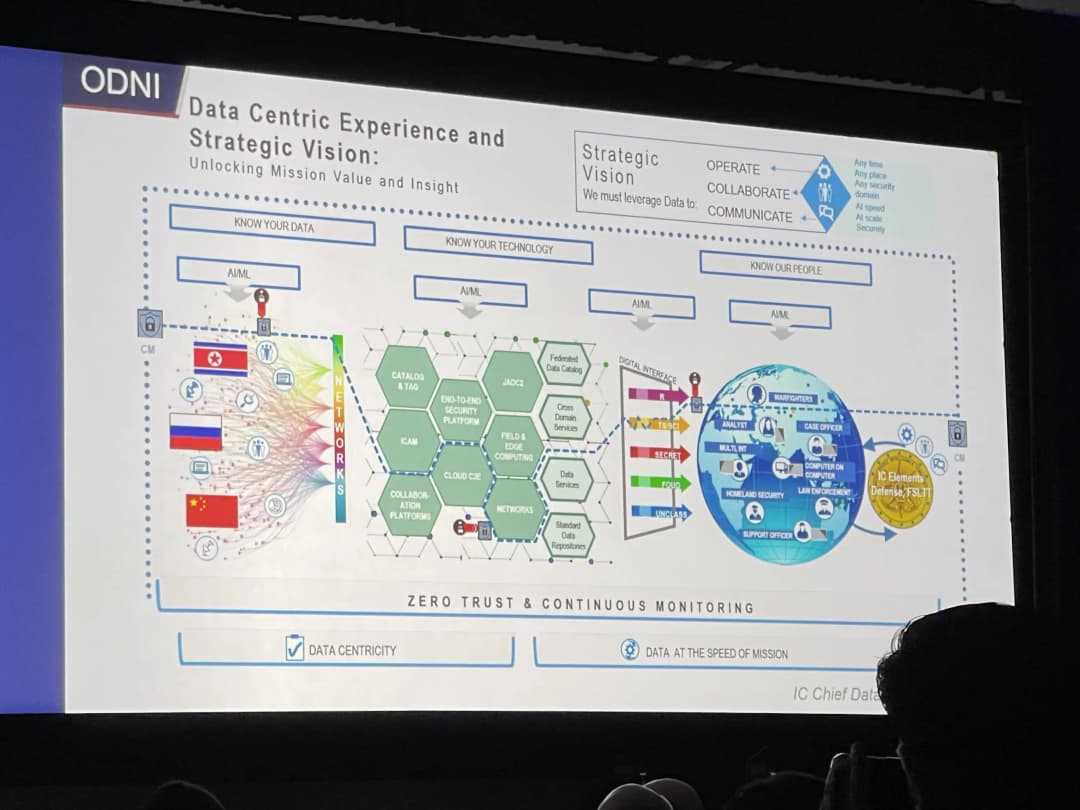
Ms. Wade stressed that data collection and integration should not be viewed narrowly but considered holistically for broader applicability. She showed an impactful video discussing the need for AI data foundations aimed at enabling real-time detection and response with efficient compute utilization. The video outlined steps like data preparation, collection, curation, AI data models, evaluation, testing, deployment, and maintenance.
Concluding her session, Ms. Wade mentioned that all these aspects are comprehensively detailed in the Intelligence Community Data Strategy for 2023-2025, which outlines the strategic focus areas and data management plans, indicating a clear roadmap for the IC's data-centric initiatives.
Watch the recording of this session.
Breakout Session: AI Roadmap
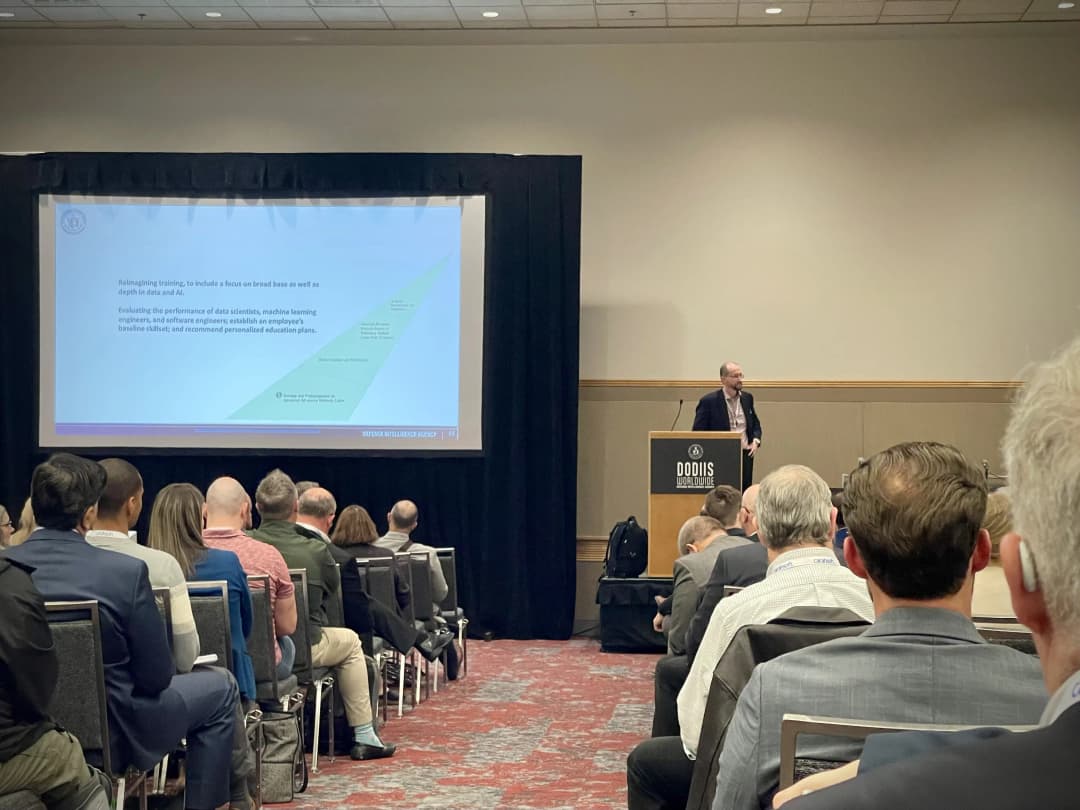
Speaker: Robert Williams, DIA
In a breakout session titled "AI Roadmap for All-source Analysis," Robert Williams from the Defense Intelligence Agency (DIA) discussed the agency's strategic approach to integrating Artificial Intelligence (AI) into all-source analytic modernization. He presented the AI Roadmap, designed to add clarity and cohesion to previously fragmented aspects of AI implementation. The Roadmap aligns six key objectives focusing on the application of AI methods, building an AI-ready analytic workforce, and ensuring compliance with analytic tradecraft standards. It addresses challenges such as upskilling analysts, reducing skills gaps with low-code solutions, and identifying human-machine teaming opportunities in analytic workflows. The roadmap also aims to pivot from reactionary to predictive analytics by leveraging machine learning methods at scale.
Williams suggested creating a repository for algorithms and emphasized the importance of trust in automation, noting that "without trust, automation doesn't mean anything." He covered the significance of data integrity, training models, and diverse data sets, and highlighted the plan for all analysts to receive high-level training in AI and data, focusing on understanding language and context.
He acknowledged the challenges in AI development and adoption, including the necessity of gated checks and signoffs to mitigate risk. While these processes may slow down the rapid development and flow of AI models, Williams believes they are essential, especially in the early stages, to balance risk effectively.
The session also touched on the distinction between augmentation and automation and the importance of human teaming with AI. Williams' presentation provided insights into the complexities of achieving AI-readiness within an all-source analytic organization, offering the audience and industry participants a deeper understanding of the unique challenges involved.
Breakout Session: DAF CLOUDworks
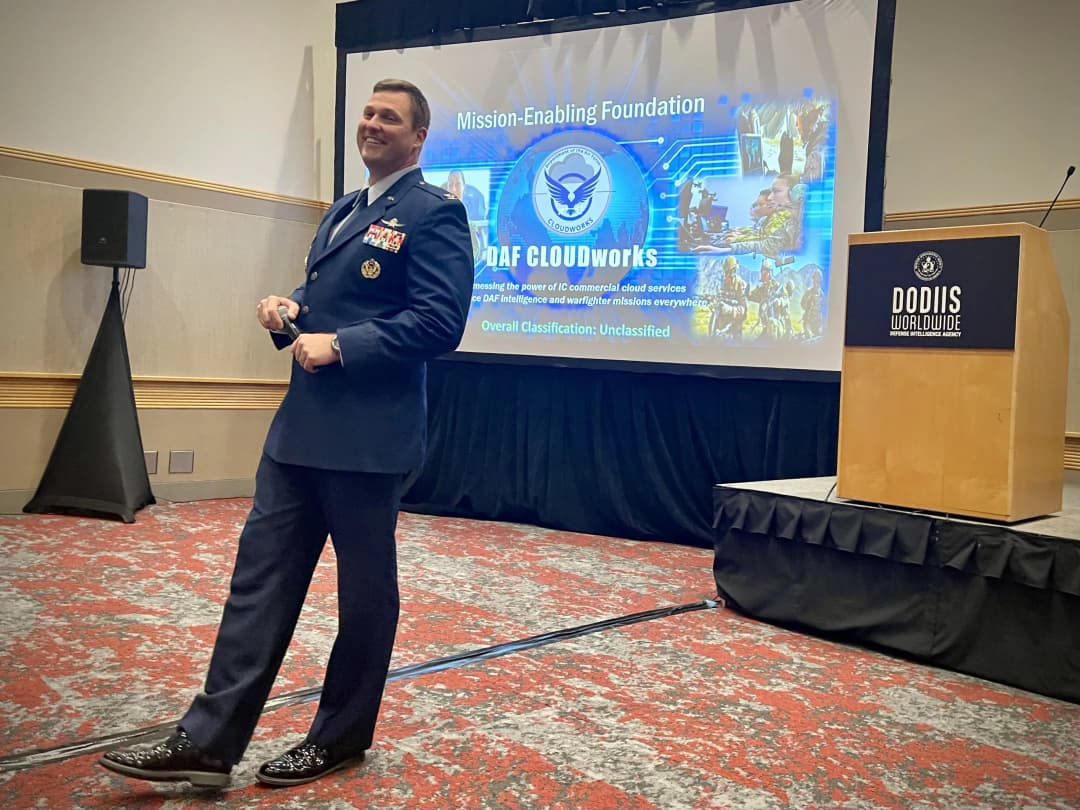
Speaker: Col Michael Medgyessy, USAF
In a breakout session titled "Department of the Air Force CLOUDworks - Powering Agile Development for the Department of Defense and Air Force Intelligence Community," Colonel Michael Medgyessy, USAF, delivered an insightful presentation. He discussed how the Department of the Air Force (DAF) CLOUDworks provides a suite of services to the Department of Defense (DoD) and Air Force Intelligence Community (AF IC), including Enterprise and Security Services through Infrastructure as a Service (IaaS), Platform as a Service (PaaS), and Collaboration tools through Software as a Service (SaaS). In partnership with Platform One, DAF CLOUDworks offers DevSecOps pipelines across Unclassified, Secret, and Top Secret cloud environments, enhancing the efficiency of developers by allowing them to focus on applications rather than underlying infrastructure. These services adhere to the security guidelines set by the Authorizing Official and are continually updated with common services for maximum value.
Col. Medgyessy, serving as the USAF Intelligence Community's Chief Information Officer (CIO) for Mission Enabling Foundation, impressed the audience with his balanced yet in-depth understanding of complex technical subjects. His presentation covered cloud models like IaaS, PaaS, SaaS, and the integration of platforms like ODIN (Operational Data Integrated Network) and Platform One (P1), facilitating the path to production on various networks including Unclassified, SIPRNet, and JWICS.
He also touched upon the use of commercial cloud services (C2S) in conjunction with the USAF Mission Modernization Office (M2O), collaborations with entities like Pivotal and Kessel Run (KR), and the role of Platform One. A notable mention was made of an excellent assessor from the 16th Air Force, Jose Varela, who has significantly contributed to these projects. Col. Medgyessy highlighted that while working with the 16th Air Force has its advantages in terms of assessment, other units might need to bring their own assessors for deployment purposes. The session was well-received, leaving the audience eager to see future developments and potential collaborations in this field.
Day Three
Breakout Session: MARS
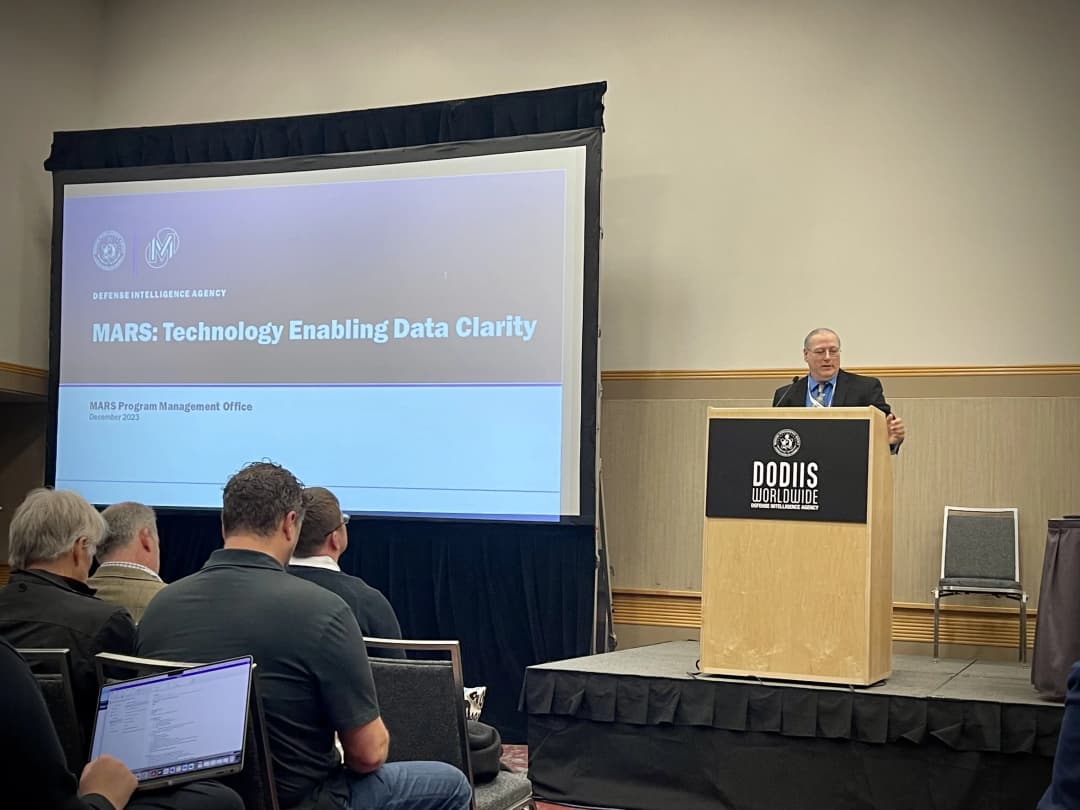
Speaker: Tim Wood, DIA
In a breakout session titled "MARS: Technology Enabling Data Clarity," Tim Wood, the acting Project Manager (PM) for the Machine-assisted Analytic Rapid-repository System (MARS) at the Defense Intelligence Agency (DIA), provided valuable insights into the development of MARS. He emphasized that MARS's development isn't just a technological endeavor but also involves significant policy changes. Wood discussed the importance of data sharing protection, which requires a balanced approach involving policy, technology, and tradecraft, essential for providing authoritative Foundational Military Intelligence (FMI) data.
Mr. Wood outlined that the goal for MARS to achieve Full Operating Capability (FOC) is set for the second quarter of Fiscal Year 2026. He touched upon key aspects like the Defense Intelligence Core Ontology (DICO) and stated the current objective for MARS is to enable external systems to have read-only access, thereby creating a trusted data environment.
Mr. Wood, in his presentation, portrayed the Machine-assisted Analytic Rapid-repository System (MARS) as being on par with the 1990s-era Modernized Integrated Database (MIDB). However, as an attendee with an engineering background who has tried to integrate with MARS through a tier 1 system, I found this characterization frustrating. From my experience, MARS still faces significant challenges in achieving parity with MIDB. This created a noticeable disconnect for me and likely other third-party integrators between the readiness of MARS as presented by the speaker and its actual state of readiness for integration.
The session also highlighted some confusion among attendees, as Mr. Wood intertwined discussions of MARS FMI and MARS Object Management Service (OMS), each at different stages of development and with distinct future objectives, particularly in AI/ML integration. When asked about the availability of a SIPRNet (Secret Internet Protocol Router Network) version of MARS, Wood indicated that it was part of their roadmap, suggesting ongoing efforts to expand MARS capabilities.
Overall, the session offered insights into the complexities and challenges in developing MARS, while also revealing the gaps between the project's current state and its goals, particularly from an integration and user standpoint.
Exhibit Hall
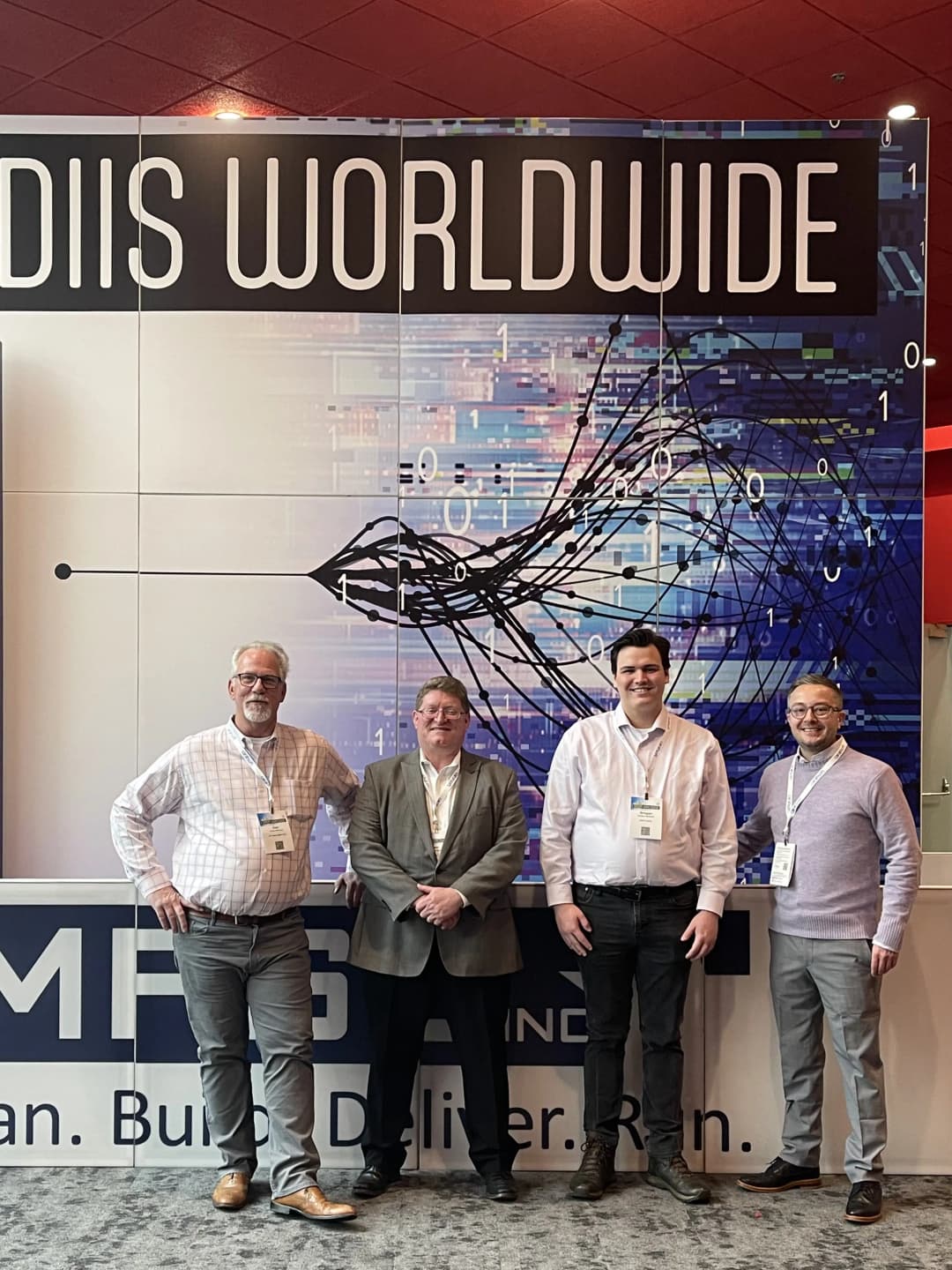
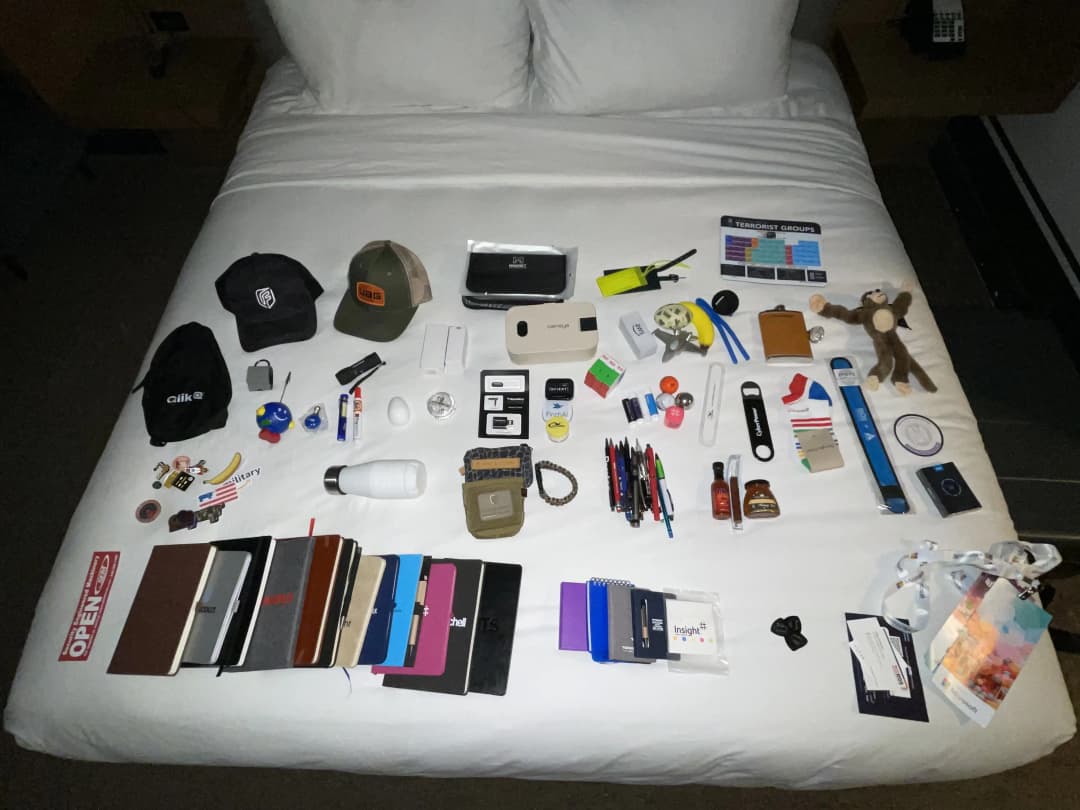
At the DODIIS Worldwide 2023 conference, the exhibit hall was open on the second and third days, likely to keep the focus on plenary speakers on the first day. This year's event saw a noticeably smaller turnout of vendors compared to previous years. The trend in giveaway items, or 'swag,' shifted from socks and fidget spinners to more varied items like chapstick and traditional notebooks. Despite my initial intention to only pick up practical items like notebooks, I ended up collecting a significant amount, which almost led to an overweight checked bag at the airport. My daughter, however, thoroughly enjoyed the assortment.
My program office sponsor, NAVWAR's PEO Digital - Joint Deployable Intelligence Support System (JDISS), had a booth showcasing Intelligence Mission Applications (IMAs) such as the Force Disposition Tracker (FDT) and the Program Of Record Global Command and Control - Integrated Imagery and Intelligence (GCCS-I3). Resource sponsors Mr. Chris Page and Mr. Ryan Walke visited the booth, and on the first day alone, we had about 70 visitors. The JDISS team provided several demos and distributed all of their bags, water bottles, notebooks, and pens. This also offered a great opportunity for team pictures and team-building exercises.
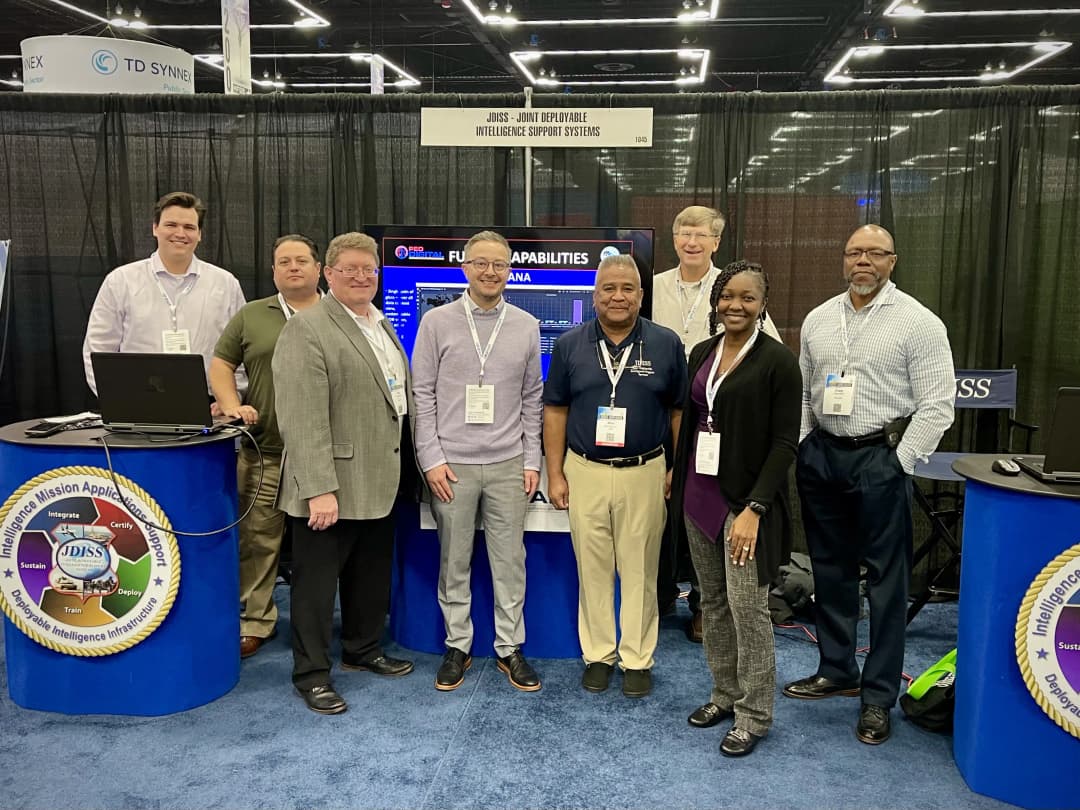
The exhibit hall was bustling with events and lunch breakouts. I met with several vendors, including Second Front, showcasing their Game Warden product and services. Discussions with Peraton were particularly enlightening, offering a more realistic view of the current progress, projected roadmaps, and challenges of projects like MARS. I also had the chance to catch up with former colleagues from Northrop Grumman, making it an excellent networking experience. Additionally, there were many vendors with impressive products for the Intelligence Community (IC) and the Department of Defense (DoD), further enriching the experience at the exhibit hall.
Please note that the next DODIIS Worldwide conference is scheduled to take place in Omaha, Nebraska, in October 2024. We look forward to seeing you there for another engaging and informative event.
See the associated LinkedIn post.
Comments
To leave feedback or questions, simply login using your preferred social network. I will read and answer your comments promptly, but please keep in mind that they will be public.